If you mainly want to reheat and defrost individual portions, choose a standard microwave if you don’t need to brown your food. A grill is useful if you occasionally want to brown a dish; a combination microwave is worth considering if you also need convection cooking, particularly if you don’t have an oven. In a small kitchen, always check the appliance’s dimensions, door clearance and the space required around it in the instructions against the space you have available.
Which option is right for you?
Your choice depends less on the type of home you live in and more on the cooking you actually need the appliance to do.
Student or studio flat dweller
If you mainly reheat a plate of food and defrost individual portions, start by looking at a standard microwave. A grill is worth considering if you’d also like to brown food, as long as you have space for the appliance on your worktop.
Owner of a basic second home
If there’s no oven, a combination microwave can bring together reheating, grilling and convection cooking. Check that you’ll use these functions and that the appliance can stay in place with the required clearance around it.
Occasional cook in a small kitchen
If you reheat food every day and brown a dish now and then, it’s worth comparing a grill model with standard microwaves. According to UFC-Que Choisir, convection cooking is one of the extra functions found on a combination microwave. You won’t need it if grilling is all you need.
What should you check before choosing?
First decide what kind of cooking you need, then measure the space and the dishes you’ll use.
| What to consider |
What to check |
Your needs |
| Cooking functions |
Choose a standard microwave for reheating and defrosting, a grill for browning, or a combination model with convection cooking for oven-style cooking. Check the functions of the specific model. |
If I only reheat food, I don’t need to make room for extra functions. If I don’t have an oven, I may want an appliance that can handle other types of cooking too. |
| Space and dishes |
Compare the appliance’s external width, depth and height with your measured space. Also check the turntable diameter, the size of your dishes, door clearance and space for the cable. |
My appliance must fit on the worktop without obstructing the door or making it difficult to use my usual plates. The stated capacity in litres doesn’t tell me everything I need to know. |
| Installation |
Check the model’s instructions for ventilation clearances and permitted installation types. Consider the weight if you plan to move or put the appliance away. |
In a narrow kitchen, I want to be able to put the appliance where it belongs without blocking its ventilation. |
| Everyday use |
Look at the power and defrost settings that suit your meals, as well as how easy the interior is to access for cleaning. Follow the instructions on packaging intended for microwave use. |
I reheat portions and clean up splashes after use, so I want controls that suit these everyday tasks. I won’t assume that any old takeaway tray is suitable. |
Mistakes to avoid
-
Choosing by capacity alone
The internal capacity doesn’t tell you how much worktop space the appliance will take up or how large a dish will fit and turn inside it.
Measure the space and your largest dish, then compare the external dimensions, turntable, door clearance and the clearances specified in the instructions.
-
Buying a combination microwave for functions you already have
UFC-Que Choisir distinguishes combination microwaves by their grill and convection functions. In a small kitchen, bringing these functions together in one appliance only saves space if it means you can do without a separate appliance.
List the cooking you usually do and the appliances you already have. Compare a standard microwave for reheating, a grill for occasional browning, and a combination model if you’ll use its oven-style functions.
-
Reheating food in a tray without checking its instructions
The Anses says that using too high a power setting increases the risk of substances migrating from certain types of packaging into food.
Check that the container is suitable for microwave use and follow the preparation instructions on its packaging.
-
Confusing similar model numbers
A different suffix may indicate a different variant, so you can’t automatically assume it has the same dimensions or accessories as another model.
Check the full model number on the product page, then confirm its dimensions, functions and the accessories supplied.
A few brands and models to consider
These examples can help you compare sizes and functions. Their specifications apply to the models listed, not every product range from each brand.
Panasonic
The NN-SD36 is an example of a standard microwave to consider when the size of your dishes matters as much as the space available.
- Panasonic lists a 29 L capacity, a 288 mm turntable and external dimensions of 495 × 378 × 292 mm for this model.
- This is a standard microwave. If you want to brown food or use convection cooking, check out another model designed for those tasks.
Whirlpool
The MCP349WH is an example of a combination microwave to consider if you want the appliance to handle some oven-style cooking.
- Whirlpool lists a 25 L capacity for this model.
- Its stated dimensions are 52 × 49,4 × 30,1 cm and it weighs 18,6 kg. Check the available space and whether you’ll be able to move it before choosing this model.
Electrolux
The EMZ421MMK is an example of a freestanding grill microwave for reheating and occasional browning.
- Electrolux lists 800 W microwave power, a 1 000 W grill and a 27 cm turntable for this model.
- Its stated dimensions of 262 × 442 × 345 mm apply to this specific model. Check the dimensions of the one you’re considering.
Microwaves for these uses on Joybuy
These options include standard microwaves for reheating and defrosting, as well as grill models for occasional browning. Start by choosing the function you need, then check the dimensions and installation instructions for the model you’ve chosen.
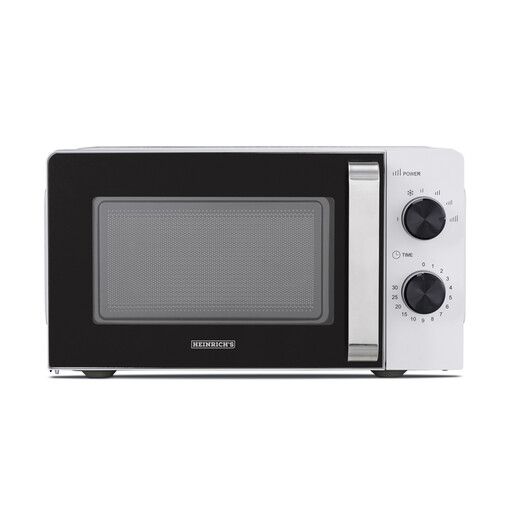 Image unavailable
Heinrich's, 20 L standard microwave
For reheating and defrosting in a studio flat, without the need for a grill function. The product title lists 700 W, six power levels and a 30-minute timer. Check the instructions for the required clearances and space to open the door.
View on Joybuy
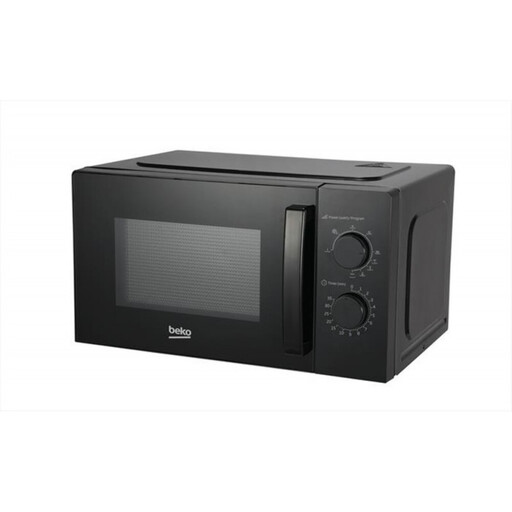 Image unavailable
Beko MGC20100B1, 20 L grill microwave
Worth considering if you reheat meals and would also like to brown food from time to time. The product title lists 700 W. Before installing it, check there’s enough space for the door to open and that you can meet the clearance requirements in the instructions.
View on Joybuy
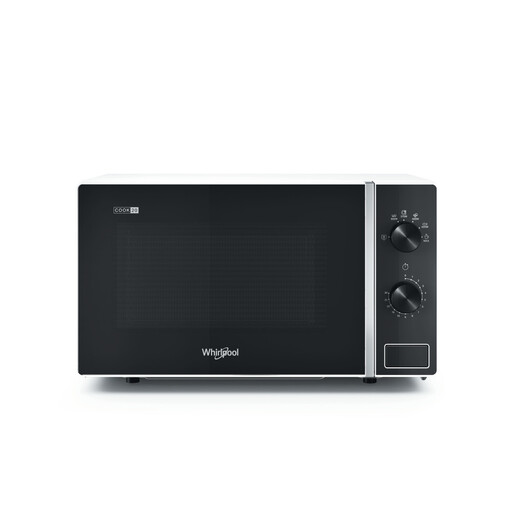 Image unavailable
Whirlpool MWP 101 W, 20 L microwave
An option to consider for everyday reheating and defrosting if you don’t need a grill. The product title lists 700 W. Compare its dimensions and ventilation requirements with the space you have available.
View on Joybuy
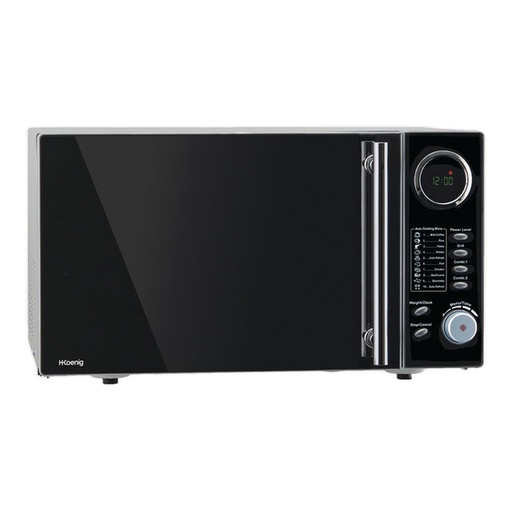 Image unavailable
Hkoenig VIO9, 25 L microwave
Worth considering if you want to reheat and defrost food, with the option to brown a dish too: this model is listed with a grill function. Before making room for it in a small kitchen, check its dimensions, weight and the clearances specified in the instructions.
View on Joybuy
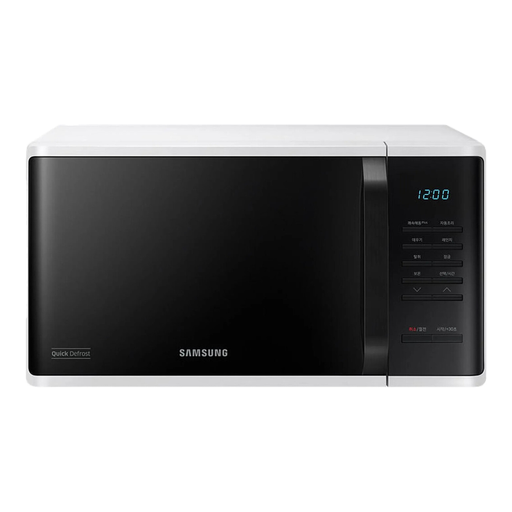 Image unavailable
Samsung MS23K3513 Quick Defrost, 23 L standard microwave
For reheating and defrosting without a grill function. The stated capacity is 23 L. Check that your dishes will fit inside and that the appliance can be positioned with the clearances specified in the instructions.
View on Joybuy
Frequently asked questions
How much space should you leave around a microwave in a small kitchen?
Follow the clearances specified in the instructions for the exact model: these depend on how it’s installed and where its ventilation openings are. Also measure the space needed for the cable, the door swing and access to the socket. The clearance specified for another appliance isn’t a universal rule.
Can a combination microwave replace an oven in a second home?
A combination microwave with a grill and convection cooking can handle some oven-style cooking, as UFC-Que Choisir explains, but that doesn’t mean it will cover everything you need. Check that it has the functions your dishes require, and make sure the cavity is large enough and you have space to install the appliance.
Can you reheat any food tray in a microwave?
No. Check that the packaging is suitable for microwave use and follow the preparation instructions. The Anses says that reheating at too high a power setting increases the risk of substances migrating from certain types of packaging into food.


