Studio flat renters who mainly reheat food
If you reheat and defrost more often than you cook, a freestanding appliance could suit your needs and is easier to move. Make sure you also have enough space around it.


Choose a solo microwave if you mainly reheat and defrost, a grill model if you’d also like to brown or crisp food from time to time, or a combination model if you’ll make real use of its extra cooking modes. In a small kitchen, check the external dimensions, door clearance and required ventilation gaps before relying on the capacity in litres. This is about occasional cooking, not replacing an oven you use every day to prepare full meals.
If you reheat and defrost more often than you cook, a freestanding appliance could suit your needs and is easier to move. Make sure you also have enough space around it.
You reheat meals every day, but would sometimes like to brown a dish. As UFC-Que Choisir points out, the grill function is useful for this, but it doesn’t provide fan-assisted cooking on its own.
If you sometimes make dishes that need oven-style cooking and don’t have room for several appliances, look at the modes offered by a combination microwave, as well as its actual dimensions.
UFC-Que Choisir distinguishes between a grill, which is useful for browning food, and a combination microwave, which can also offer fan-assisted cooking. In a small kitchen, start with the dishes you usually make, then measure the available space before choosing a capacity.
Choose this if: you mainly reheat and defrost.
Limitation: it can’t brown or crisp food.
Choose this if: you’d also like to brown or crisp food occasionally.
Limitation: a grill doesn’t mean the appliance has fan-assisted cooking.
Choose this if: you’ll use its extra cooking modes for occasional dishes.
Limitation: check that its dimensions and installation requirements suit your kitchen.
| Consideration | What to check | Who it matters to |
|---|---|---|
| Size and installation | Measure the appliance, check how far the door opens and note the clearances specified in the manual. For a built-in model, check the dimensions of the housing unit too. | When worktop space is limited, I want to be able to open the door and install the appliance without blocking its ventilation; around 40% of consumers would prioritise its footprint. |
| Occasional cooking | Know the difference between a grill and fan-assisted or convection cooking, then check which modes are available on the model you’re considering. | If I want to brown a dish or cook something occasionally without adding another appliance, cooking functions matter more than reheating alone; around 30% of consumers would put this first. |
| Reheating and defrosting | Look at the controls, power levels and defrosting functions to make sure they suit your routine. | If I often reheat leftovers or defrost portions, I prefer controls that are easy to understand; around 30% of consumers would prioritise this everyday use. |
The internal capacity doesn’t tell you whether the appliance, its door and the clearance needed for installation will fit in the space you have in mind.
Compare the external dimensions and the clearances in the manual with your measurements. For a built-in model, check the required housing unit too.
Its extra modes won’t be useful if you don’t plan to brown food or do occasional oven-style cooking.
Think about the dishes you actually make: a solo model is suitable for reheating and defrosting, while a grill or combination model meets different cooking needs.
Installation requirements vary by model. Don’t put a freestanding appliance in an enclosed cupboard simply because it fits.
Follow the clearances and installation instructions in the manual for your exact model, and don’t block the ventilation areas.
According to Anses, heating food for too long, particularly at a high temperature, can increase the migration of substances from some types of packaging.
Follow the food’s power and heating-time instructions, and only use a microwave-safe container that’s in good condition.
These range examples can help you identify useful features and installation requirements. Always check the specific model rather than assuming the same features apply across an entire brand.
The range includes solo, grill and combination models to compare, depending on which features will actually be useful in your kitchen.
A brand to compare if you’re considering a freestanding grill microwave or an option designed for a fitted kitchen.
The range lets you compare a freestanding grill microwave with a built-in model, once you know how your kitchen is laid out.
A range to consider if you’re looking for a freestanding solo model with defrosting controls.
These solo and grill models are mainly for reheating, defrosting and occasional browning. First choose the function you need, then check the available space and installation requirements for the specific model.
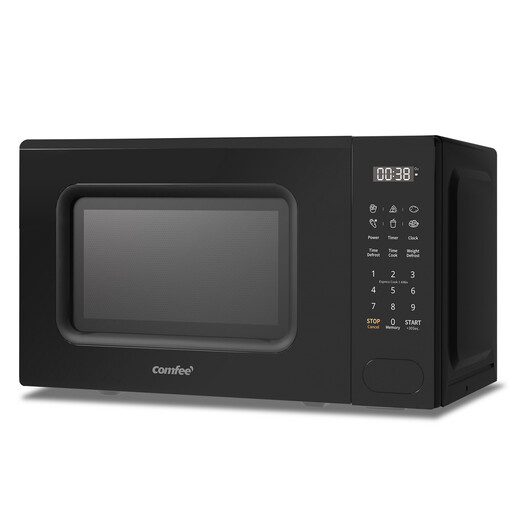 Image unavailable
For reheating and defrosting, without the need for a grill function.
Listed power is 700 W; six pre-set menus and 11 power levels are included in the model title. Check the clearances and electrical specifications before installation.
 Image unavailable
For switching between reheating and occasional browning, provided there’s space to install this model.
Listed microwave power is 700 W. Check the manual for the required clearances, particularly above the appliance, and confirm the plug type.
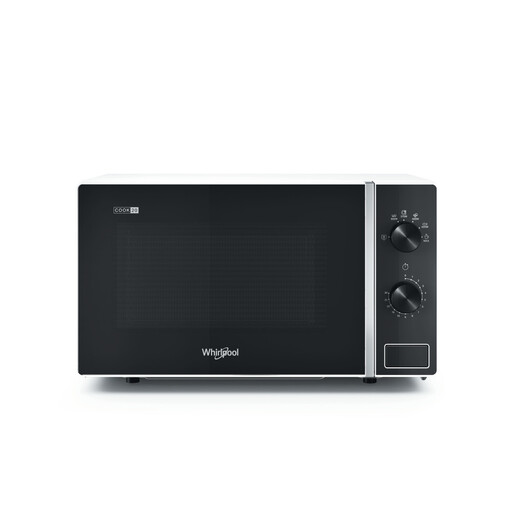 Image unavailable
For reheating and defrosting; a solo model won’t meet your needs if you want to brown food.
Listed power is 700 W. Check the clearances in the manual and the plug type before choosing a spot for it.
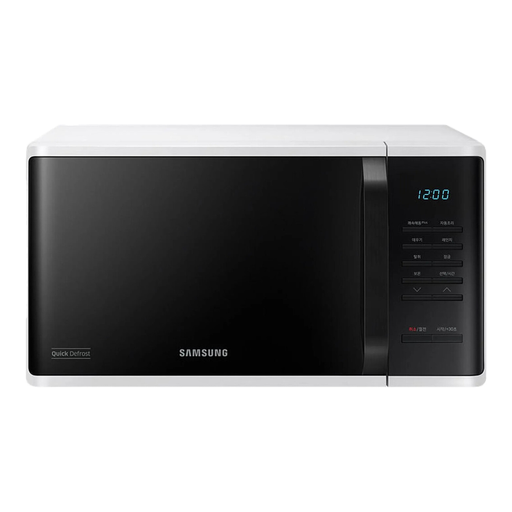 Image unavailable
For anyone who prioritises defrosting in a solo microwave over browning food.
The product title mentions an LED display. Don’t confuse the 1150 W shown in the title with the microwave cooking power; check the electrical specifications and clearances in the model documentation.
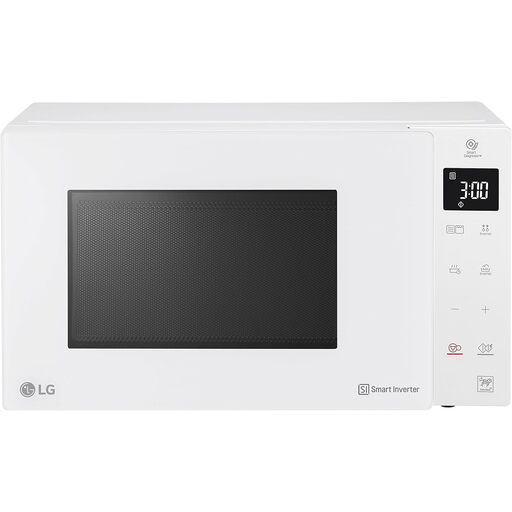 Image unavailable
For reheating and occasional browning, provided there’s room for the appliance in your kitchen.
A grill function alone doesn’t confirm that the appliance has fan-assisted cooking. Check the microwave power, clearances and electrical specifications in the model documentation.
A solo model is mainly for reheating and defrosting, a grill adds browning, and a combination model may offer fan-assisted or convection cooking, depending on the model. UFC-Que Choisir distinguishes between these functions, so check what’s included on the model you’re considering rather than assuming a grill microwave is also a combination model.
No. Install it in line with the model’s instructions, including the required ventilation clearances. Check that the door can open fully too, and don’t treat a freestanding model as a built-in appliance unless the manufacturer explicitly says you can.
If the packaging is microwave-safe, follow its instructions for power, heating time and container use. Anses says that heating food for too long can increase the migration of substances from some packaging into food, so use a suitable container that’s in good condition.
According to the French Ministry of the Economy, the legal guarantee of conformity applies to new goods sold by a trader to a consumer. It covers non-conformity of the goods and, in certain circumstances, issues relating to the packaging, instructions or installation.
When buying a new appliance, you can ask for an old appliance of the same type to be taken back under the “one-for-one” take-back scheme described by the French Ministry for Ecological Transition. Ask the retailer how to arrange the handover.