Students in studio flats with kitchenettes
If you mainly reheat meals and defrost food, start by looking at a solo model. A combi microwave is worth considering if you also plan to cook oven-style dishes regularly and have a suitable space for it.


If you mainly want to reheat and defrost food in a small home, start by looking at solo microwaves. They cover these needs without adding cooking modes you may not use. According to UFC-Que Choisir’s guide, a grill lets you brown dishes, while a combi microwave can also handle some tasks you’d normally use a conventional oven for. Choose the features that match the dishes you actually prepare, then check the dimensions and clearances required in the manual.
In a small home, how often you cook in an oven matters just as much as the space the appliance takes up.
If you mainly reheat meals and defrost food, start by looking at a solo model. A combi microwave is worth considering if you also plan to cook oven-style dishes regularly and have a suitable space for it.
If you only stay there occasionally, start with the dishes you prepare: reheating and defrosting may be enough, while a grill or convection function covers different types of cooking. UFC-Que Choisir lists holiday homes among the settings where microwaves are used.
If you’d like to cook dishes that would usually go in the oven, consider a combi microwave with convection. Make sure your worktop, supporting surface and available ventilation space can accommodate your chosen model.
Consider this if: you want to reheat and defrost food, but don’t plan to brown dishes.
The trade-off: it won’t do the job of a grill or a convection oven.
Consider this if: you’d also like to brown pizzas or gratins.
The trade-off: a grill doesn’t mean the appliance has a convection function.
Consider this if: you want the appliance to handle some dishes that would usually be cooked in an oven.
The trade-off: check its overall size and weight carefully before deciding where to put it.
Once you’ve chosen the cooking function, compare models with the dishes you usually make and the space you actually have.
| Priority | What to check | My needs |
|---|---|---|
| Everyday use | Check the reheating and defrosting modes, then compare the capacity and turntable size with your plates. Make sure the controls suit the tasks you’ll do most often. | I mainly reheat portions, and I want my usual dishes to fit inside. |
| Space | Measure the width, height and depth, allowing for the door to open and the clearances specified in the manual. Samsung gives 10 cm at the back and sides, and 20 cm above, as a general guide, but notes that requirements vary by model. | I need to be able to use my worktop while still leaving space for ventilation. |
| Cooking needs | Look for a grill if you want to brown dishes. For oven-style cooking, check that the model specifically has convection, and check its stated temperatures and included accessories. | Sometimes I want to brown a dish, or I genuinely plan to make recipes that need an oven. These are different needs. |
| Installation and follow-up | Check the exact model number against its manual, confirm the electrical requirements and keep the serial number so you can check for any recalls on RappelConso. | Before installing the appliance, I want to make sure it’s suitable for the space and be able to identify my exact model. |
Internal capacity doesn’t tell you how deep the appliance is or how much space it needs for ventilation. For example, Panasonic lists its 30 L NN-C69KSM combi microwave as 520 mm deep and weighing 22,2 kg.
Measure the space and check the model’s manual before you buy. Don’t block its ventilation openings to squeeze it into a recess.
Extra functions won’t add much if you don’t make gratins or dishes that need oven-style cooking.
Make a list of the meals you usually prepare, then distinguish between reheating and defrosting, browning, and oven cooking.
According to UFC-Que Choisir, microwaves with a grill can brown dishes, while combi models can also handle some tasks you’d normally use a conventional oven for.
For browning a dish, look for a grill. For recipes that need oven-style cooking, check separately that the exact model has a convection function.
A recall applies to the appliances listed in its notice, not every product made by a brand. In September 2025, for example, RappelConso published a notice for certain Brandt built-in microwaves due to a fire risk.
Keep the model number and serial number, check RappelConso notices and follow the instructions that apply to your exact appliance.
These models are examples of the features and dimensions you can compare; their specifications don’t apply to every model from the same brand.
The MS23K3513AS/EF is an example of a freestanding solo microwave for reheating and defrosting.
The MWP203SB is an example of a freestanding model with both microwave and grill functions.
The NN-C69KSM shows how much space to allow for a combi microwave with convection.
These solo and grill models suit the reheating, defrosting and browning needs covered here. If you also want convection cooking, check that the model you’re considering specifically includes this function.
 Image unavailable
Worth considering if you want a grill as well as a microwave. The stated capacity is 20 L. Check the ventilation clearances in the manual, and confirm it has convection if your recipes need it.
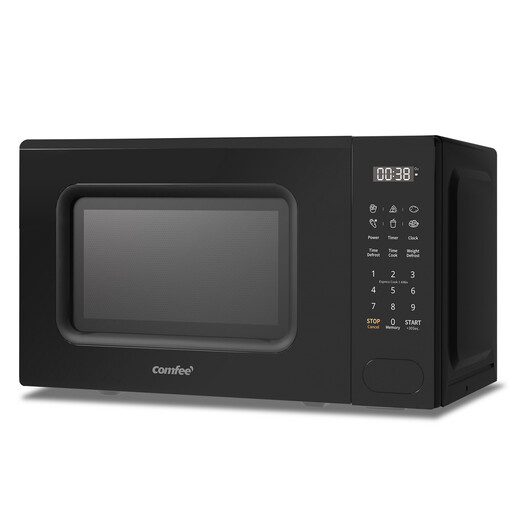 Image unavailable
For reheating and defrosting with digital controls. The product name lists six pre-set menus and 11 power levels. Check the turntable size, ventilation and electrical requirements before deciding where to put it.
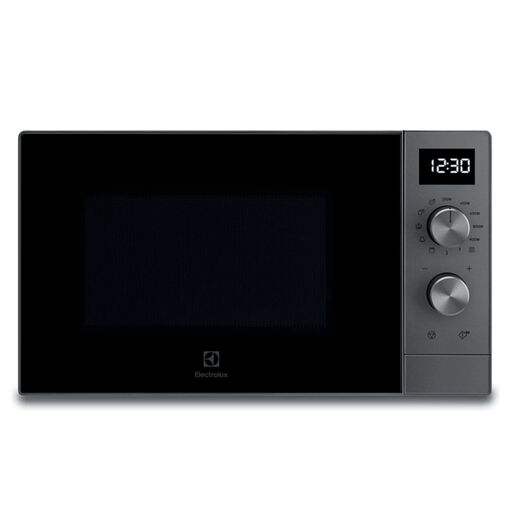 Image unavailable
The grill is useful if you want to brown dishes as well as reheat food. This freestanding model is listed with a 25 L capacity. Measure the space you have and check separately for convection if you want to cook oven-style dishes.
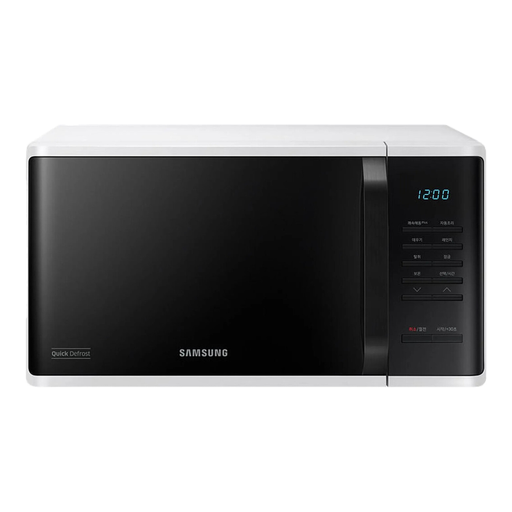 Image unavailable
One to consider for reheating and defrosting if you don’t need a grill. Check the dimensions and ventilation clearances in the manual for this exact model before choosing where to put it.
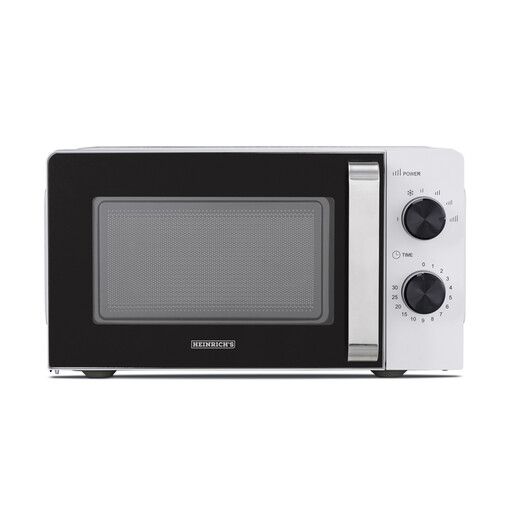 Image unavailable
For reheating and defrosting, with a stated 30-minute timer and six power levels. Before installation, check the clearances specified in the manual and the electrical requirements.
A freestanding solo model is suitable for these tasks if you don’t need to brown dishes or cook them as you would in an oven. Then check that your plates fit inside and that the space you’ve chosen meets the instructions in the manual.
A grill is useful if you also want to brown or grill certain dishes. It doesn’t replace convection on its own, so check the cooking modes on the model you’re considering.
It can handle some oven-style cooking if its modes and temperatures suit your recipes. Before making it your main cooking appliance, also check its dimensions and weight, the stability of the surface it’ll stand on and the ventilation clearances.
Follow the clearance instructions in the manual for the model you’ve bought. Samsung gives 10 cm at the back and sides and 20 cm above as a general guide, but notes that requirements vary between appliances.
Compare its model number and serial number with the appliances listed in the RappelConso notice, then follow the instructions given for those products. A recall covering specific models doesn’t automatically apply to every model from that brand.