Everyday reheating in a studio flat
You reheat and defrost food, and prepare a few simple dishes. A freestanding model also needs to fit on your worktop without getting in the way.


If you mainly want to reheat and defrost food, choose a solo microwave; opt for a grill if you’d also like to brown a few portions. A combination microwave is a better choice for a kitchen without a practical oven if you’ll genuinely use its extra cooking modes. In every case, check the space needed for the appliance and your dishes, allow for the door to open, and follow the ventilation instructions in the manual.
You reheat and defrost food, and prepare a few simple dishes. A freestanding model also needs to fit on your worktop without getting in the way.
You want to reheat meals and brown them from time to time, without expecting the appliance to offer all the functions of a traditional oven.
You plan to cook simple portions regularly. A combination microwave is worth considering if its modes, cavity and position suit the dishes you want to make.
UFC-Que Choisir distinguishes between three uses: a solo microwave for basic functions, a grill for browning and a combination microwave for cooking more like an oven. First decide which modes you’ll use, then check the exact model’s measurements against your kitchen and the dishes you use.
Choose this if: you mainly want to reheat and defrost food.
Limitation: it doesn’t offer a grilled finish or oven-style cooking mode.
Choose this if: you’d also like to brown or grill food occasionally.
Limitation: having a grill doesn’t mean the appliance offers oven-style cooking.
Choose this if: you’ll cook regularly without a practical traditional oven and need clearly specified extra modes.
Limitation: check the appliance’s size, cavity and any accessories needed for the recipes you have in mind.
| Criteria | What to check | Who is it for? |
|---|---|---|
| Available space | Measure the width, height and depth; allow for the door to open and for the clearances specified in the manual. | In a kitchen where every centimetre counts, I want to be able to position and ventilate the appliance without blocking the worktop; around 31 % of consumers would make size their priority. |
| Reheating and defrosting | Check the stated modes and the turntable size against the containers you usually use. | If I mainly eat leftovers or defrost portions, basic functions are enough for me; reheating would be the main need for around 31 % of consumers. |
| Occasional browning | Look for a clearly stated grill mode and check which accessories are included. | I want to brown a few portions without making oven cooking a regular part of my routine; around 23 % of consumers would prioritise this finish. |
| Cooking without an oven | Compare the cooking modes of the exact model and the usable dimensions of its cavity with your recipes. | Without a practical oven, I plan to cook dishes that involve more than simply reheating; this would be the main need for around 15 % of consumers. |
Capacity tells you neither the appliance’s external size nor the turntable dimensions. A dish may not fit in a cavity that appears large enough on paper.
Measure the space available and your largest usual container, then compare these with the exact model’s dimensions, including the space needed to open the door.
A grill lets you brown or grill food, but its presence doesn’t guarantee an oven-style cooking mode.
If you want to cook regularly without a traditional oven, check the product details for the modes you need for your recipes.
Whirlpool says that blocked vents can cause overheating. The required clearances depend on the model.
Read the manual before choosing where to put the appliance, and don’t treat a freestanding model as a built-in one unless the manufacturer says you can.
In France, the statutory legal guarantee of conformity applies to eligible purchases from a professional seller; a commercial extended warranty is separate.
Before taking out an extended warranty, compare what it covers, its exclusions and what it adds to your statutory protection.
Its range of freestanding microwaves includes solo, grill and combination models to compare.
Samsung offers solo, grill and combination models, so you can compare the features you want.
The EMZ725MMK is an example of a freestanding appliance that combines microwave and grill functions.
The NN-DS59N shows the range of functions a combination microwave designed for different cooking needs can offer.
These models cover solo reheating, grilling and combination cooking. Choose according to the modes you need, then check the measurements and installation instructions for your chosen model.
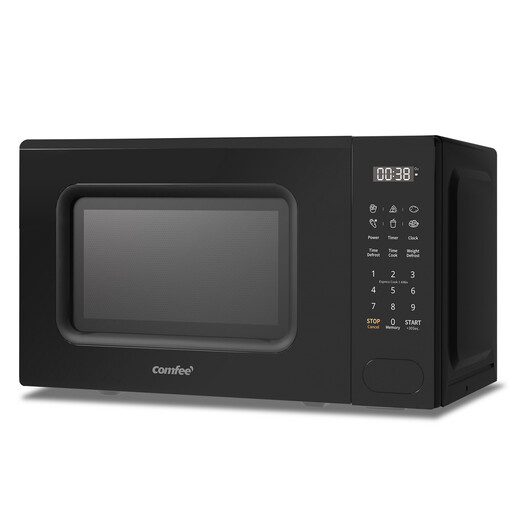 Image unavailable
Worth considering if you mainly reheat and defrost food and don’t need a grill function.
The product name states 700 W and six pre-set menus. Check that your dishes fit on the turntable and allow for the clearances specified in the manual.
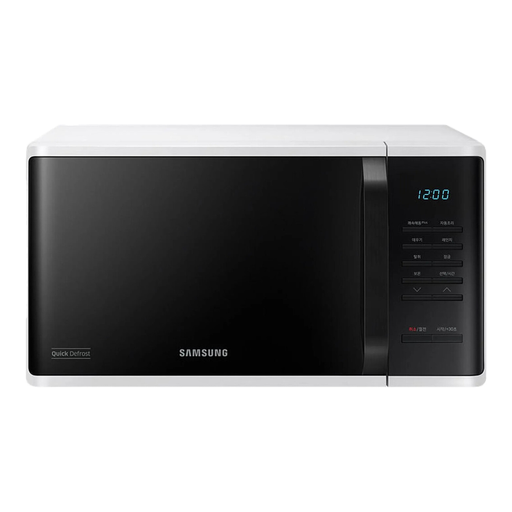 Image unavailable
This solo model is designed for everyday reheating and defrosting.
Its name mentions Quick Defrost and a 1150 W rating, without specifying here what that rating refers to. Check the dimensions of the MS23K3513 and its clearance requirements in the model’s own documentation.
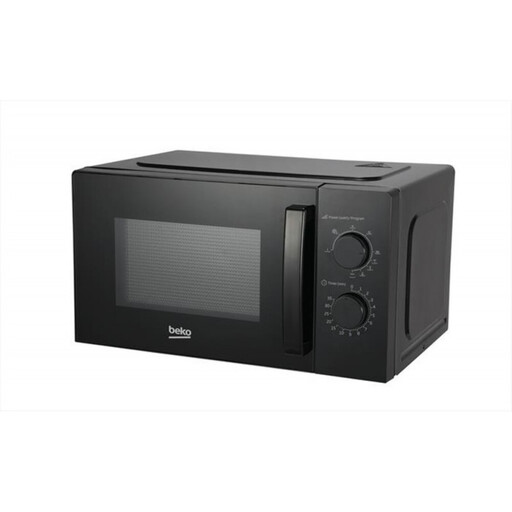 Image unavailable
The grill is useful if you’d occasionally like to brown portions as well as reheat them; on its own, it doesn’t replace an oven mode.
The product name states 700 W. When planning where to put it, allow for the specified clearance of at least 10 cm at the sides and rear.
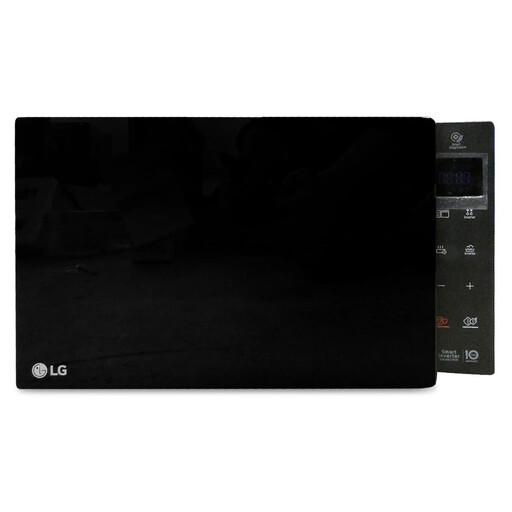 Image unavailable
Worth considering for reheating meals and using the grill occasionally, rather than as an immediate replacement for an oven.
Before comparing its grill power with another appliance, check the figure that applies to the MH6535GIS. Also consult its manual for placement and connection requirements.
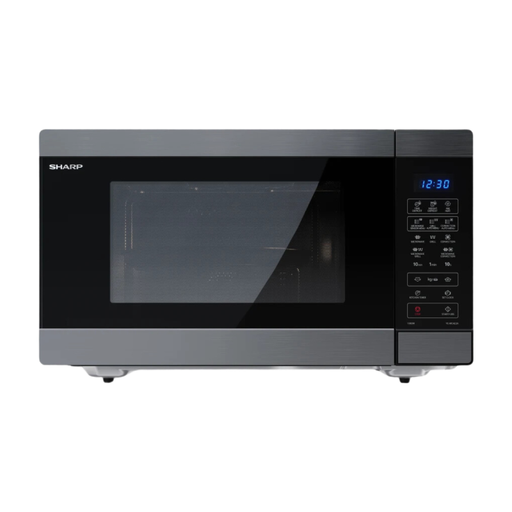 Image unavailable
A combination microwave is worth considering if you plan to cook regularly without a practical traditional oven, provided its modes suit your recipes.
A 42 L model needs careful space planning: compare its stated depth of 505 mm with your worktop, then check that the door can open and follow the ventilation instructions.
It can handle some oven-style cooking if the model offers the modes your recipes need and its cavity is large enough for your dishes. If you mainly reheat and defrost food, a solo model is a more direct fit; for occasional browning, consider a grill. UFC-Que Choisir distinguishes these three categories by their functions.
Measure the available width, height and depth, then compare them with the model’s external dimensions, the space needed to open its door and the clearances specified in the manual. Also check the cavity and turntable against your containers: capacity in litres alone won’t tell you whether a dish will fit.
Only if the installation follows the manufacturer’s instructions for the chosen model, particularly those for ventilation. Whirlpool warns that blocked vents can cause overheating, so don’t treat a freestanding model as a built-in appliance unless the instructions explicitly say you can.
Use containers labelled as suitable for microwave mode. Don’t use metal utensils in this mode, and check the labelling on plastic containers, as not all of them are suitable.
No. France’s Directorate General for Competition, Consumer Affairs and Fraud Control states that the statutory legal guarantee of conformity applies to eligible goods—new, second-hand or refurbished—sold by a professional to a private individual. A commercial extended warranty is separate, so check what extra cover it provides before taking one out.