People who reheat meals in a studio flat
If you mainly reheat leftovers, soup or a ready meal, straightforward controls and enough room for your plate matter more than extra cooking modes.


For reheating and defrosting meals in a small home, start by comparing solo microwaves with the space you have and the size of your crockery. A grill is useful if you occasionally want to brown a dish; a combination microwave is worth considering if you also plan to cook regularly without a conventional oven. Whatever you choose, check the installation instructions for the exact model before you buy.
If you mainly reheat leftovers, soup or a ready meal, straightforward controls and enough room for your plate matter more than extra cooking modes.
You mainly use your microwave, but would occasionally like to brown a dish without adding a separate appliance to your kitchen.
A combination microwave may be worth considering if you plan to cook regularly using a grill or convection function, as well as reheat meals. UFC-Que Choisir distinguishes these functions from those of a standard microwave.
Choose this if: you mainly reheat and defrost meals, with no plans to brown dishes or cook using convection.
Bear in mind: this type of appliance does not offer these additional cooking modes.
Choose this if: you also want to brown dishes occasionally, while still mainly using the microwave.
Bear in mind: having a grill does not mean the appliance can cook using convection.
Choose this if: you plan to use an oven-style cooking function regularly, particularly if you do not have a conventional oven.
Bear in mind: these modes and their accessories mean you’ll need to check the available space and usage instructions more carefully.
| Factor | What to check | Who is it for? |
|---|---|---|
| Space and crockery | Measure the space, then compare it with the appliance’s external dimensions and turntable diameter, using your largest dish as a guide. Check the manual for installation instructions. | In a kitchenette, I want to be able to fit the appliance in the available space and get my usual plate inside. About 42% of consumers rank this as their top priority. |
| Reheating and defrosting | Check the controls, power settings and defrost mode to make sure they suit the meals you prepare. | If I reheat meals almost every day, I prioritise ease of use over cooking modes I won’t use. This is a priority for about 33% of consumers. |
| Additional cooking | Know the difference between a grill and convection; check which accessories and containers are suitable for each mode. | Without a conventional oven, I’d also like to brown dishes or cook certain meals: about 25% of consumers prioritise these functions. |
Capacity doesn’t guarantee your dish will fit. For example, Whirlpool’s product specifications list a 28 cm turntable for the 13 L MAX34/BL. Check your crockery and the cavity, not just the stated capacity.
Measure your largest dish and compare it with the turntable and the internal dimensions of the model you’re considering.
Extra modes are only useful if you genuinely plan to cook or brown dishes. They also mean more settings and accessories to consider.
Think about the meals you usually prepare. Compare solo models first if reheating and defrosting cover most of your needs.
Anses says that overheating food can increase the migration of substances from its packaging into the food.
Follow the power and timing instructions for the food. If the packaging is not microwave-safe, transfer the meal to a suitable container.
Samsung explains that a rack designed for a specific appliance can be used as instructed, but that does not make other metal objects suitable for microwave use.
Only use the supplied rack in the modes permitted by the manual, and do not use ordinary metal utensils in microwave mode.
Its freestanding range includes models with different sizes and functions, so it’s worth comparing them individually.
Its models illustrate the choice between a solo microwave and a combination model with additional cooking modes.
The distinction between freestanding and built-in models is particularly important when space is limited.
These models let you compare solo and grill options for reheating and defrosting meals. Before choosing one for a small kitchen, check that it will fit your space and crockery, and consult its installation instructions.
 Image unavailable
Worth considering if you mainly reheat meals but would also like a grill. The model name indicates a 20 L capacity and 700 W microwave power. Compare the turntable size with your dishes and follow the instructions for installation and grill use.
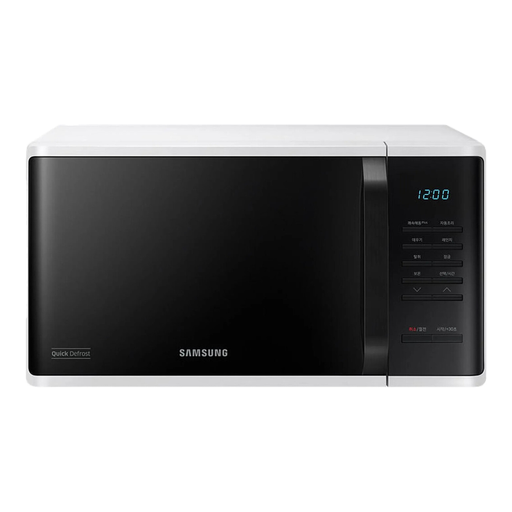 Image unavailable
An option to consider if reheating and defrosting matter more to you than browning dishes. The model name mentions quick defrost and a 23 L capacity. Check how much space you need to open the door and allow ventilation.
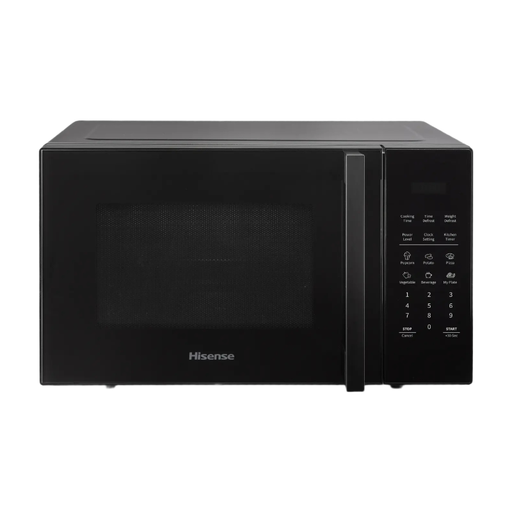 Image unavailable
This 25 L, 900 W model is worth comparing with the space you have if you’re also looking for an additional cooking function. Its name describes it as a solo model, while its product information mentions a grill. Check the modes available on the exact model before relying on this feature.
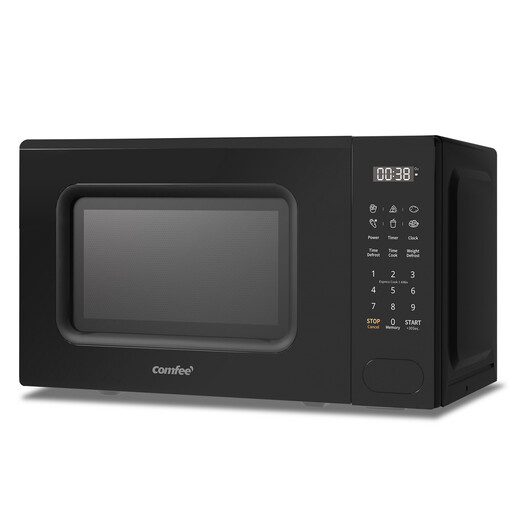 Image unavailable
Worth considering for reheating and defrosting if you don’t need a grill function. The product name indicates 700 W, six pre-set menus and eleven power levels. Measure your usual dish and check the space needed for installation.
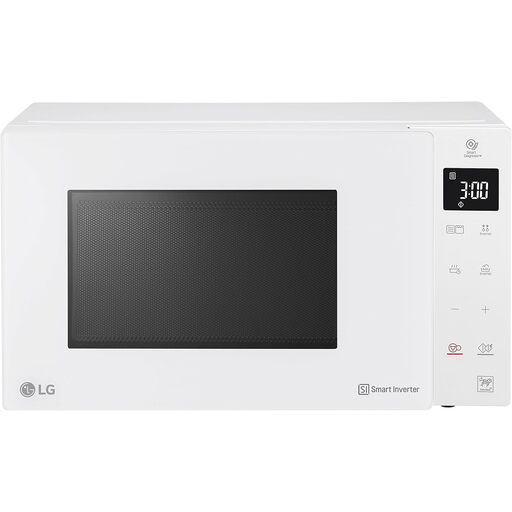 Image unavailable
Worth considering if you’d like to add a grill to your everyday reheating and have enough space for a 25 L model. Check the turntable diameter, ventilation instructions and electrical compatibility of this version. If grill power is important to you, confirm its rating.
Only if its instructions say it is suitable for microwave use. Also follow the recommended power and cooking time: Anses warns that overheating can increase the migration of substances from the packaging into the food.
Having a grill does not mean ordinary metal objects are safe to use in microwave mode. Samsung says that a rack supplied with an appliance should only be used in accordance with the modes and instructions in its manual.
No: compare the turntable diameter and internal dimensions with your crockery. For example, Panasonic and Whirlpool list a 255 mm turntable for the 20 L NN-E20JW and a 28 cm turntable for the 13 L MAX34/BL, respectively.
It can handle some oven-style cooking if it has a suitable convection function, but the right choice depends on the dishes you plan to prepare and the space available. Check the modes, accessories and dimensions of the model you’re considering rather than assuming what it can do from the word ‘combination’ alone.