Student who mainly reheats individual portions
If you already have a hob or access to an oven, a solo model is ideal for reheating and defrosting. Measure the available space before choosing its capacity.


If you already have access to an oven, a solo microwave is all you need for reheating and defrosting. Choose a grill model if you also want to brown dishes. A combination microwave is worth considering if you need fan-assisted cooking without a conventional oven. In all cases, measure the space and check the manual for the ventilation clearances required for that particular model.
If you already have a hob or access to an oven, a solo model is ideal for reheating and defrosting. Measure the available space before choosing its capacity.
If you also want to grill and cook using fan assistance, consider a combination model. UFC-Que Choisir distinguishes these functions from those of a standard microwave, so check that the appliance and its required clearances will fit in your kitchenette.
A microwave with a grill lets you add a golden finish without necessarily opting for a combination model. However, the grill alone does not provide fan-assisted cooking.
For a student kitchenette or a second home, start with the meals you prepare and the equipment you already have access to. Then compare the space each appliance takes up, the dishes that will fit inside and the installation requirements.
Choose this if: reheating and defrosting are your main priorities and you have another appliance for cooking.
Downside: it cannot grill or cook using fan assistance.
Choose this if: you want to brown or grill dishes from time to time, while keeping all the usual microwave functions.
Downside: the grill alone is no substitute for a fan oven.
Choose this if: you don’t have a conventional oven and will make regular use of the grill and fan-assisted cooking.
Downside: pay particular attention to its dimensions and the size of dishes that will fit inside.
Compare this if: your meals mainly need oven-style cooking rather than quick reheating.
Downside: it won’t meet your defrosting and reheating needs in the same way as a microwave.
| Priority | What to check | Who it suits |
|---|---|---|
| Reheat and defrost without taking up too much space | External dimensions, door clearance and turntable diameter compared with your dishes. | I mainly want to reheat and defrost everyday portions while keeping worktop space free; around 36% of consumers would put this need first. |
| Cook without a conventional oven | Whether it has microwave, grill and fan-assisted cooking modes; the space needed around the model, as specified in its manual. | Without a conventional oven, I also need to be able to cook using fan assistance in my kitchenette, even if the appliance takes up more room; this would be the priority for around 29% of consumers. |
| Brown dishes occasionally | Whether it has a grill and includes accessories designed for this cooking mode. | I want to brown some dishes, but don’t need fan-assisted cooking for my usual meals; around 21% of consumers would favour this compromise. |
| Prioritise oven-style cooking | The types of dishes you regularly prepare and whether you have space for a small oven instead of a microwave. | I mainly cook dishes that need oven cooking, and quick reheating is less important to me; around 14% of consumers would have this priority. |
A capacity that suits your portions doesn’t guarantee that the appliance, its open door and the ventilation clearances will fit in the space you have in mind.
Measure the available width, depth and height, then check the installation instructions in the manual for the model you’re considering.
Its grill and fan-assisted cooking functions won’t add anything if another appliance already covers the cooking you need to do.
Think about the meals you usually prepare. If reheating and defrosting are the only jobs you need your microwave to do, compare solo models first.
A dish that’s suitable for the grill may not be suitable for microwave mode. UFC-Que Choisir specifically warns against using metal in this mode.
Check that your container is suitable for the mode you’ve selected and follow the appliance manual.
Panasonic’s claimed results for the NN-CD87KS are based on its own tests, comparing four dishes with three built-in ovens of 65 to 71 L in the UK. They don’t represent every meal prepared in a kitchenette.
First choose the cooking modes you need, then look at any energy comparison alongside details of the appliances and test conditions used.
The solo range includes models designed for reheating and defrosting.
Whirlpool’s freestanding range includes microwaves with grills as well as combination models.
Panasonic offers solo, grill and combination models to suit different cooking needs.
These models suit the reheating and defrosting needs covered here; one also has a grill for browning dishes. If fan-assisted cooking is essential, check that the model you’re considering includes this function before you choose.
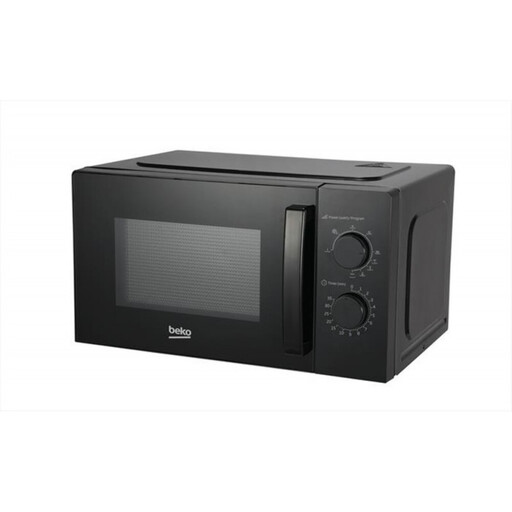 Image unavailable
Worth considering if you want to reheat and defrost, with the option to brown some dishes too.
The product name indicates a power rating of 700 W. Check the manual for all the clearances required around the appliance, particularly above it.
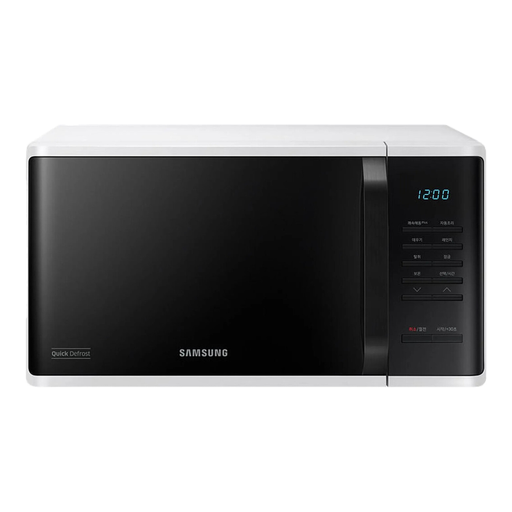 Image unavailable
This solo model is a good fit if you mainly want to reheat and defrost, rather than use a grill.
Its stated capacity is 23 L. Allow space for the door to open and check the manual for ventilation clearances.
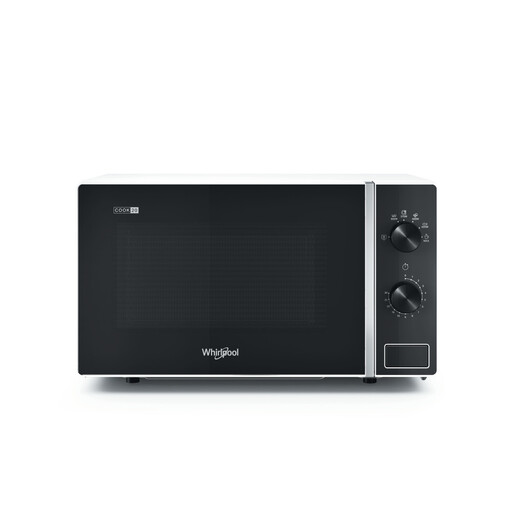 Image unavailable
This solo microwave is suited to reheating and defrosting in a kitchenette.
The product name indicates 700 W. Before placing it on your worktop, check the full ventilation instructions in the manual.
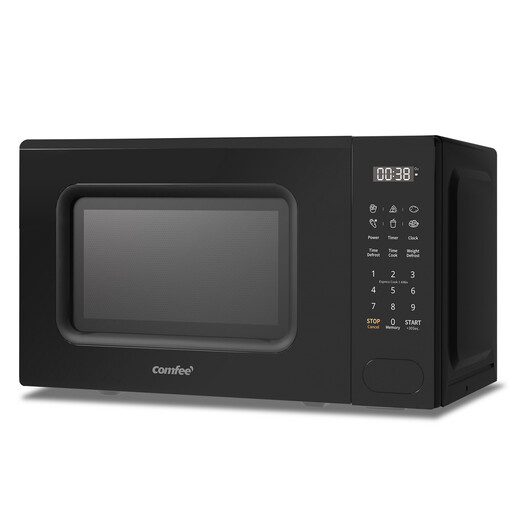 Image unavailable
This digital model is worth considering for reheating and defrosting, with preset settings to choose from.
Its name indicates 700 W, six menus and eleven power levels. Check that the turntable is large enough for your dishes, and check the manual for the required clearances.
Choose based on your portions and the dishes you use, rather than capacity in litres alone. To give you an idea of the sizes available, Panasonic France lists the 20 L NN-E20JW solo model and the 34 L NN-CD87KS combination model. Also check the turntable diameter, external dimensions and space needed to open the door.
A grill can brown or grill dishes, but it doesn’t provide fan-assisted cooking on its own. If you need this function and don’t have a conventional oven, consider a combination model, as distinguished by UFC-Que Choisir.
Not to predict energy use in your kitchenette: the appliances, their capacities and how long they’re used for need to be comparable. ADEME gives figures of 40 kWh per year for a microwave and 130 kWh per year for a 63 L electric oven in its average energy consumption table. These figures don’t relate to the same cooking task carried out under the same conditions.