Studio flat dwellers who cook regularly
You want to reheat and defrost food, but also make gratins or cook certain dishes that would normally go in the oven, all with one worktop appliance.


If you mainly reheat and defrost meals, a solo microwave may be all you need. Add a grill for the occasional golden topping, or choose a combination microwave with a fan oven for some oven-style cooking. If fitting larger dishes or cooking several things at once matters more than microwave reheating, compare mini ovens instead. Whichever you choose, check that your dishes will fit inside and that the appliance has a well-ventilated space.
You want to reheat and defrost food, but also make gratins or cook certain dishes that would normally go in the oven, all with one worktop appliance.
You mainly need to reheat and defrost food, with more elaborate cooking only now and then. In that case, it’s worth comparing a basic appliance with models that offer extra functions.
You need to fit in a large dish or cook several dishes at once. The shape and usable dimensions of the cavity matter just as much as its stated capacity.
Que Choisir distinguishes solo microwaves from combination models that can grill and cook with convection. Start with the meals you actually make: the cooking method you need determines which appliances to compare, then the size of your dishes helps you choose between different formats.
Consider this if: reheating and defrosting cover most of your needs.
Limit: it has no grill or fan oven for recipes that need these cooking methods.
Consider this if: you’d also like to brown or grill the top of a dish from time to time.
Limit: a grill alone can’t replace a fan oven for recipes that need one.
Consider this if: you want one appliance for microwave cooking and some oven-style cooking.
Limit: the dish sizes it can accommodate and the available cooking modes vary by model.
Consider this if: cooking larger dishes or several things at once matters more than quick reheating.
Limit: it doesn’t offer microwave reheating or defrosting.
| What matters | What to check | Who it matters to |
|---|---|---|
| Versatile cooking | Whether it has a fan oven, the temperatures available and the cooking modes permitted for your recipes. | If you often make quiches, roast vegetables or bakes without a full-size oven, you need a suitable oven-style cooking mode, not just a grill. Around 42% of consumers would prioritise this. |
| Usable capacity | The dimensions of your largest dish compared with the turntable, cavity and appliance’s external dimensions. | If your tin is wide or you cook several dishes, you need to know what will actually fit inside before choosing a capacity. This would be a priority for around 25% of consumers. |
| Reheating and defrosting | Defrost function, controls and space for the containers you use every day. | If you mainly eat ready-prepared meals, you want to reheat or defrost them without paying for oven functions you’d rarely use. Around 17% of consumers would put this need first. |
| Occasional browning | Whether it has a grill, which accessories are permitted and whether your recipes also need a fan oven. | If you want to brown the top of a dish from time to time, you’re mainly looking for a grill while keeping a microwave for everyday use. A grill would be the main priority for around 16% of consumers. |
A 25 L combination microwave and a 30 L model may have different-sized turntables; the litre capacity alone won’t tell you whether your dish will fit.
Measure your largest dish, then compare its dimensions with those given for the turntable and cavity of the model you’re considering.
A grill is for browning, while bakes and roast dishes may need an oven-style cooking mode.
Make a note of the recipes you’ll cook regularly and check that a fan oven is explicitly listed among the appliance’s functions.
Blocked vents can cause the appliance to overheat.
Choose a stable surface, keep the vents clear and follow the installation clearances in the model’s instruction manual.
Anses says that reheating at too high a power level can increase the transfer of substances from packaging into food.
Follow the packaging instructions for microwave use, power and cooking time. If in doubt, transfer the food to a suitable container; don’t use metal in microwave mode.
The range includes freestanding microwaves with different functions, depending on the model.
Some models combine microwave, grill and convection cooking.
Its mini ovens offer an alternative when conventional oven cooking is the priority.
These worktop microwaves cover two options to compare: a combination model to consider for oven-style cooking, and models with a grill for reheating, defrosting and occasional browning. If conventional oven cooking is your priority, compare the usable dimensions and functions of a mini oven too.
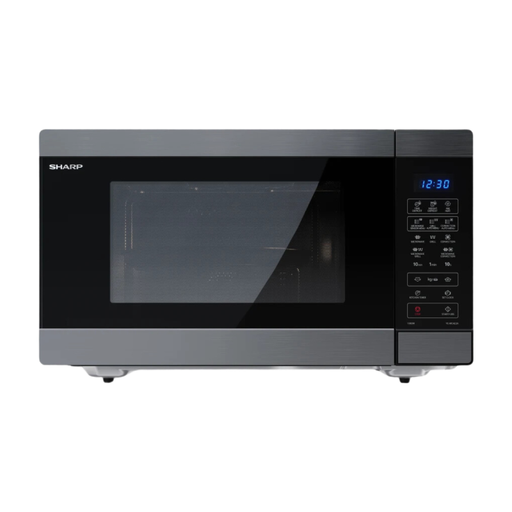 Image unavailable
Worth considering if you want microwave, grill and convection cooking in one worktop appliance. The stated capacity is 42 L; check the usable dimensions for your dishes and which accessories are permitted in each mode.
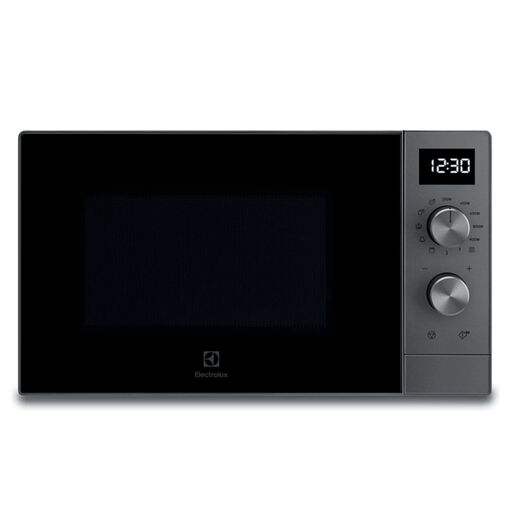 Image unavailable
For reheating, with the option to brown food from time to time. The product title states 25 L and 900 W; if you also plan to cook oven-style dishes regularly, check separately whether it has a fan oven and which cooking modes are available.
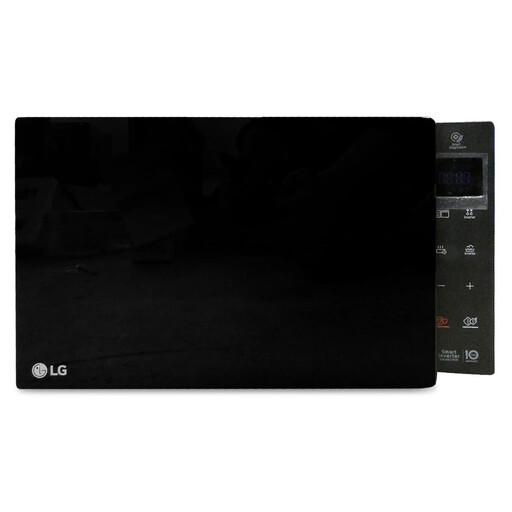 Image unavailable
Worth comparing for reheating and occasional browning. The product title states 25 L and 1000 W; before making it your main appliance for oven-style cooking, check whether it has a fan oven and whether your dishes will fit.
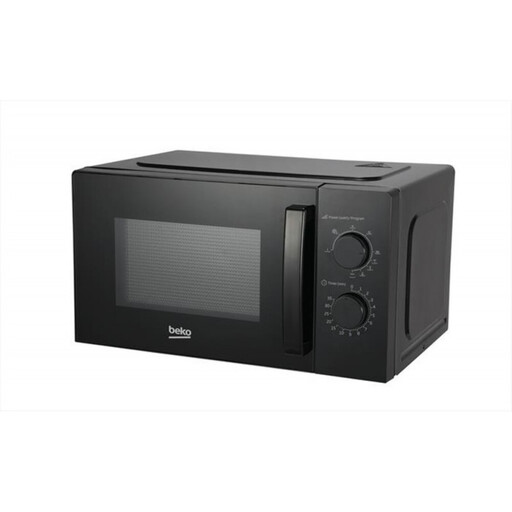 Image unavailable
For everyday microwave use, with a grill for occasional use. The product title states 20 L and 700 W; measure your plates and dishes before choosing this size, and check for a fan oven if your recipes need one.
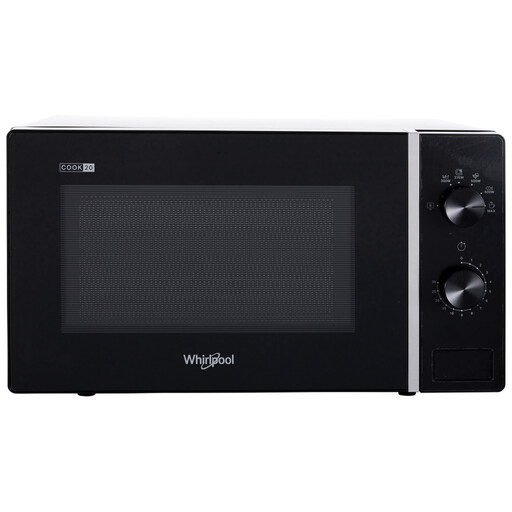 Image unavailable
Worth comparing if you mainly reheat meals and would sometimes like to brown the top. The product title states 20 L and 700 W; check the external dimensions and turntable size before deciding where to put it on your worktop.
It can handle some oven-style cooking if the model has a fan oven and can accommodate the dishes and accessories you need. Check these functions, the available temperatures and the usable dimensions rather than relying on the word ‘combination’ alone.
Measure the tin and compare it with the turntable, if there is one, as well as the cavity’s dimensions and shape. Rectangular dishes need particular attention: the capacity in litres and the external dimensions aren’t enough to confirm that the dish will fit.
Use containers and packaging labelled as microwave-safe, and follow the instructions for power and cooking time. Don’t use metal in this mode; if you’re unsure about food packaging, transfer the food to a suitable container.
Yes, its vents must be kept clear. Place the appliance on a stable surface and check the instruction manual for the clearances required for that model before choosing its permanent position.