What should you prioritise?
Start by thinking about how often you use your oven each week, then check that the appliance you’ll use for prepared meals suits your portions and your available space.
Standard microwave
Consider this if: your regular tasks are defrosting and reheating portions, and you don’t often need oven-style cooking.
Bear in mind: it won’t replace a conventional oven’s cooking functions. UFC-Que Choisir assesses microwave heating evenness and speed separately.
Combination microwave oven
Consider this if: you’ll genuinely use both the microwave and oven-style cooking functions in one appliance.
Bear in mind: having a combination mode doesn’t guarantee lower energy use. In tests by the Institut national de la consommation and ADEME, four built-in combination ovens didn’t consistently deliver significant savings compared with the convection ovens tested.
Separate oven and microwave
Consider this if: you cook with an oven regularly and want to keep another cavity free for your portions.
Bear in mind: two appliances take up more space and each needs maintaining.
| What to consider |
What to check |
Who this matters to |
| Reheating and defrosting |
Check the power settings and defrost programmes. To compare results, look for tests that assess how evenly food heats, not just maximum power. |
If my portions often go straight from the fridge or freezer to the plate, I want to avoid cold spots without having to keep handling them. Around 42% of consumers would prioritise this need. |
| Versatility in a small space |
Check which cooking modes you’ll use, then measure the space and make sure your dishes will fit inside the cavity. |
In a small kitchen, I want one appliance to cover several needs rather than making room for each one. This would be the main need for around 33% of consumers. |
| A separate oven available |
Measure the space needed for both appliances, including the clearances specified, and check the functions of the additional microwave. |
When I still use the oven for cooking, I’d rather be able to reheat a portion in a separate cavity. Around 25% of consumers would prioritise keeping these uses separate. |
Built-in oven brands to consider
These examples are here to help you distinguish between appliance types, not to rank brands. The study by the Institut national de la consommation and ADEME covered built-in models bought in 2024.
Samsung
The built-in NQ5B6753CAK combination oven was one of the four combination models in the study.
- A model to look at if you’re considering this type of appliance.
- Its inclusion in the sample doesn’t rank this model or other Samsung ranges.
De Dietrich
The built-in DKC7340X combination oven was included in the study sample.
- This model gives you an example to consider in the built-in combination oven category.
- The study doesn’t provide grounds for recommending it over another model.
Sauter
The study included the built-in SKC6302LW combination oven and the SOP2434X convection oven.
- These two models illustrate the appliance types you can compare based on how you plan to use them.
- Check the functions, dimensions and accessories for each model. Their inclusion doesn’t show that one is better than the other.
Siemens
The built-in iQ700 CM776G1B1/020420 combination oven was included in the sample.
- It’s an example of a built-in combination oven worth considering.
- The study’s findings don’t apply to all Siemens appliances or to freestanding models.
Microwaves available on Joybuy
These freestanding models are designed for reheating and defrosting portions. Some also have a grill: consider your oven-cooking needs separately before choosing an appliance.
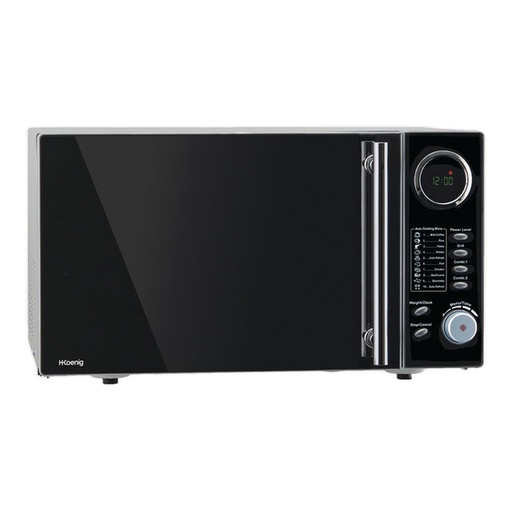 Image unavailable
Hkoenig VIO9, 25 L freestanding microwave
Worth a look if you want a freestanding appliance for reheating portions. The title states a capacity of 25 L and a power rating of 1000 W. Also check that your dishes will fit inside the cavity and that the defrost settings suit your portions.
View on Joybuy
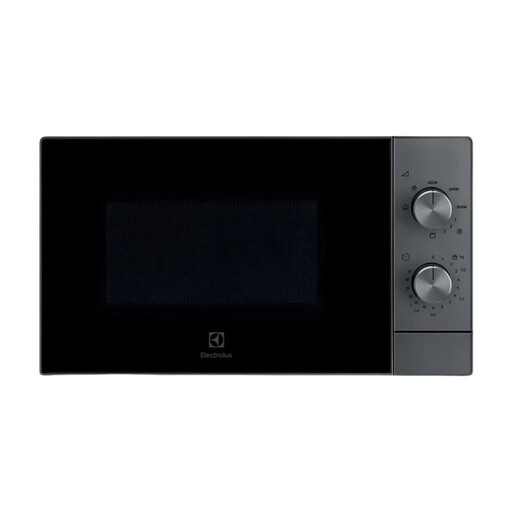 Image unavailable
Electrolux EMZ421MMTI, 21 L freestanding microwave
Consider this if a freestanding microwave suits the way you prepare meals. The title states a capacity of 21 L and a power rating of 800 W. Before placing it in your kitchen, check its dimensions and the clearances specified in the instructions.
View on Joybuy
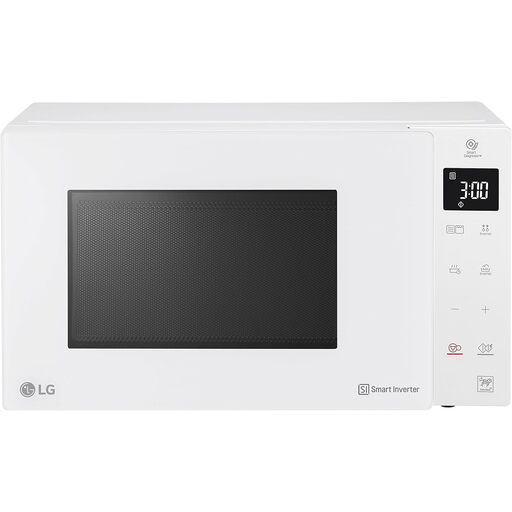 Image unavailable
LG Electronics MH 6535 gih, 25 L microwave with grill
Worth considering if you’d like a grill as well as reheating. The title states a capacity of 25 L. To compare power ratings, check the model documentation to see which figure applies to the microwave and which to the grill.
View on Joybuy
 Image unavailable
Beko MGC20100B1, 20 L microwave with grill
Consider this if you’d like a grill as well as a microwave for your portions. The title states a capacity of 20 L and a power rating of 700 W. Having a grill doesn’t mean the appliance can replace a fan oven.
View on Joybuy
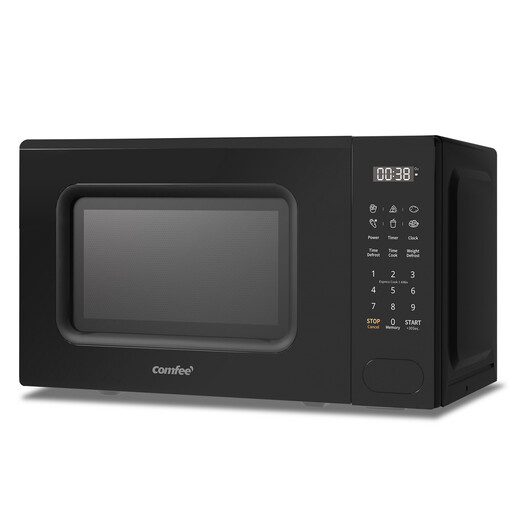 Image unavailable
COMFEE CM-E202CC(BK), 20 L digital microwave
Worth a look for reheating portions in a 20 L microwave. The title states a power rating of 700 W, six pre-set menus and eleven power levels. Check how much space you’ll need to install it, along with the settings suited to defrosting your portions.
View on Joybuy
Frequently asked questions
What should I check first when reheating and defrosting prepared meals?
Check that your dishes fit inside the cavity, then look at the power settings and defrost programmes. If you’re choosing between two models, tests of heating evenness are more useful than maximum power alone: UFC-Que Choisir measures temperatures at the centre and surface of food, among other things.
Does a combination oven always use less energy than a conventional oven?
No. Having a combination mode doesn’t guarantee this. In a study by the Institut national de la consommation and ADEME covering four built-in combination ovens and ten convection ovens, using microwave and convection modes together didn’t consistently deliver significant energy savings for the dishes tested.
Can you reheat a meal in its tray?
Yes, but only if the tray is suitable for microwave use and you follow the instructions. Anses recommends sticking to the power and heating time stated on microwave-safe packaging; otherwise, transfer the meal to a suitable container.
How do you care for a microwave you use every day?
Unplug the appliance before cleaning the cavity and follow its instructions. UFC-Que Choisir recommends using a sponge lightly dampened with washing-up liquid, then rinsing and drying the cavity. Avoid abrasive cleaners and leave any technical repairs to a professional.


