People living in a studio flat or with a small kitchen
If you mainly reheat meals and defrost food, start with a solo model. Measure your worktop and compare the external dimensions, not just the advertised capacity in litres.


For everyday reheating and defrosting, a solo microwave does the job without adding cooking modes you’re unlikely to use. Choose a grill model if you’d also like to brown dishes occasionally, or a combination microwave if you genuinely plan to cook using convection. A built-in model is a different choice, involving installation: check the housing and the instructions for the exact model before deciding.
If you mainly reheat meals and defrost food, start with a solo model. Measure your worktop and compare the external dimensions, not just the advertised capacity in litres.
For quick meals and frozen food, prioritise the features you’ll use there and controls that are easy to navigate. A grill is only useful if you also want to brown dishes.
A combination microwave is worth considering if you genuinely plan to grill or cook using convection. For a built-in installation, check the housing, ventilation and instructions for the exact model, as well as the cooking features.
Start with the dishes you actually prepare, then check that the features and dimensions suit your kitchen. UFC-Que Choisir distinguishes between solo microwaves, grill models for browning and combination microwaves with additional cooking modes.
| Priority | What to check | What I need |
|---|---|---|
| Reheating and defrosting | Check the power settings, defrost function and how easy the controls are to use. UFC-Que Choisir assesses defrosting and evenness of heating separately: having a programme doesn’t guarantee a particular result. | I often reheat a portion or defrost food, so easy-to-use settings matter more to me than a long list of modes. |
| Occasional browning | Check for a grill, any accessories you’ll need and how easy the cavity is to clean. According to UFC-Que Choisir, this feature lets you brown dishes; it doesn’t mean the appliance has convection. | Pizza or a gratin is sometimes on the menu, but I don’t necessarily need to oven-cook with this appliance. |
| More varied cooking | With a combination model, identify the grill and convection modes you’ll use. Also compare the size of your dishes with the cavity and turntable; you can’t judge how different modes will perform by the number of programmes. | I’d like to cook some dishes as well as reheat food in my compact kitchen, provided the appliance fits the dishes I usually use. |
| Space and installation | Compare the external width, height and depth with the space available. Keep the vents clear on a freestanding model; for a built-in appliance, follow the housing dimensions and instructions in the manual, as Whirlpool France advises. | I have limited worktop space, or a dedicated housing: I want to make sure the model can be installed there before choosing its capacity. |
| Cleaning and containers | Check access to the turntable, accessories and cavity walls. For packaging suitable for microwave use, follow the power and timing instructions: Anses warns that excessive heating can increase the migration of substances from some packaging into food. | I sometimes reheat a meal in its packaging and want to be able to clean up splashes easily afterwards. |
A combination microwave brings together several modes, but they don’t serve the same purpose as straightforward reheating. UFC-Que Choisir distinguishes between a grill, which browns food, and a combination model, which also lets you cook in other ways.
Think about the dishes you’ve made recently: if you don’t plan to use convection, compare a solo model with a grill model first.
The cavity volume doesn’t tell you the external dimensions or the clearance needed for installation. A housing that fits one appliance won’t necessarily fit another.
Measure the space in all three dimensions, then check the manual for your chosen model for ventilation requirements and, if it’s built in, installation requirements.
Anses says that excessive heating can increase the migration of substances from some packaging into food.
Use a container marked as suitable for microwave use and follow the power and timing instructions. If the packaging doesn’t say it’s suitable, transfer the food to an appropriate container.
These examples show different configurations; the features of one model don’t apply to every product in its brand’s range.
The NN-E20JW is an example of a solo microwave, while the NN-CT57RM combines microwave, grill and convection functions, according to Panasonic France.
The MG23K3515AK/EF is an example of a 23 L grill microwave featured by Samsung France.
Bosch Electroménager France features two different built-in formats: the 25 L BEL454MB0 grill microwave and the 45 L CMG7241B1 compact oven with microwave function.
Whirlpool France features the MBNA990B, a 22 L built-in microwave, and the WMD6O4TXF, a 31 L built-in model with a grill.
These models cover reheating and defrosting, with solo, grill and combination options. Compare their size with your available space and check which modes suit the dishes you make before choosing.
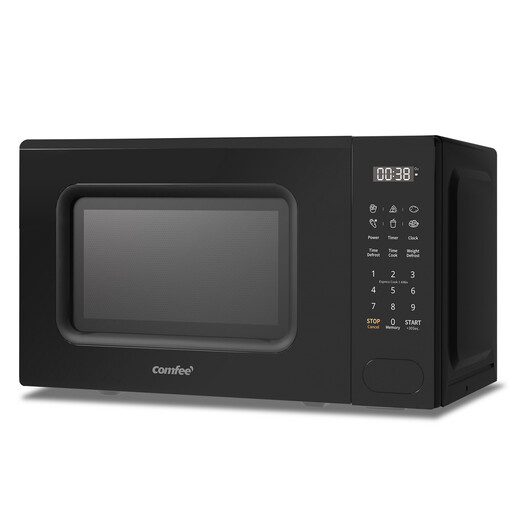 Image unavailable
For reheating and defrosting in a small kitchen, this solo model offers a defrost function and quick-cook setting. Its product description lists 700 W, 11 power levels and six pre-set menus. Measure the space and check the ventilation clearances in the manual.
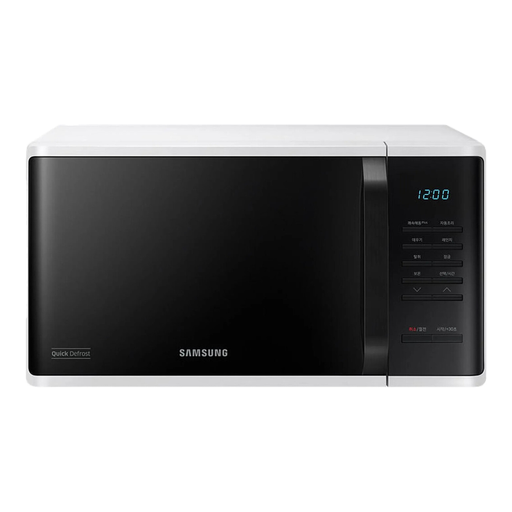 Image unavailable
This solo model is worth considering if reheating and quick defrosting are your main needs. Its product description lists 23 L and 1150 W, but doesn’t specify whether that figure refers to microwave cooking power: check this if you’re comparing power ratings. Also make sure it will fit and check the clearances specified in the manual.
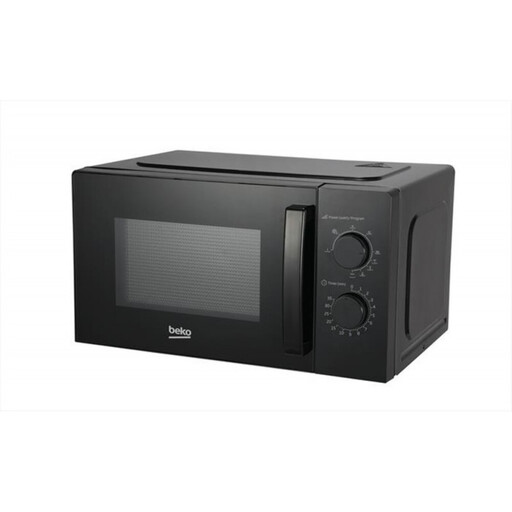 Image unavailable
Worth considering if you’d like to brown dishes occasionally as well as reheat meals. The product description lists 700 W and a 20 L capacity; a grill function shouldn’t be confused with convection cooking. Check the available space and ventilation instructions.
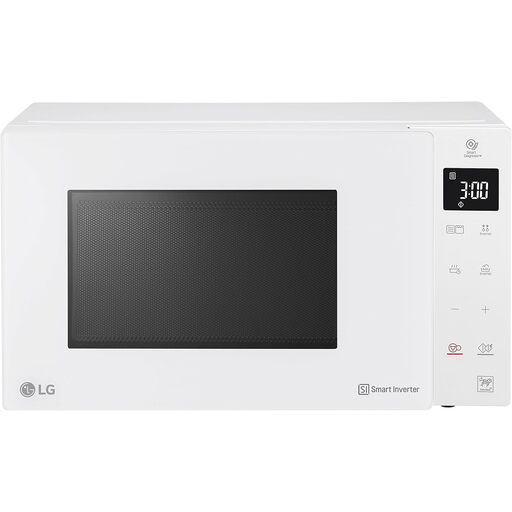 Image unavailable
The grill is useful for occasional browning as well as reheating. The product description lists 25 L and 1000 W; check what this power rating refers to if you’re comparing it with another appliance. Also check the defrost functions and clearances in the manual.
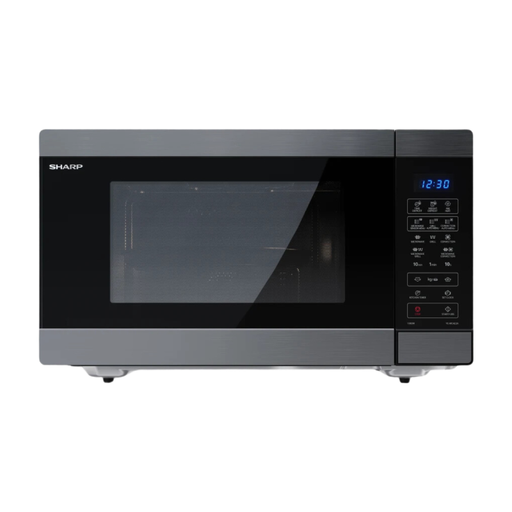 Image unavailable
This combination model is worth considering if you plan to use several cooking modes in one appliance. Its stated capacity of 42 L means you’ll need to compare its dimensions with the space available. If defrosting is essential, check the function and settings in the manual before choosing this model.
No. Use a container marked as suitable for microwave use and follow its power and timing instructions. Anses warns that excessive heating can increase the migration of substances from some packaging into food. If there’s no indication that the packaging is suitable for microwave use, transfer the food to an appropriate container.
No. Installation of a built-in model depends on the housing and the instructions for the exact model. Whirlpool France recommends reading the installation manual; on a freestanding appliance, the ventilation openings must be kept clear. Check the installation type before ordering.
Check how easy it is to access the cavity, turntable and accessories, especially if you’ll use the grill regularly. Compare the cleaning instructions for your chosen model: a cleaning-assist feature doesn’t mean you can ignore the manual.