For everyday reheating and defrosting
You mainly reheat portions and defrost food, without looking for browning or cooking results comparable to an oven. A solo microwave suits these needs, as highlighted by UFC-Que Choisir in its buying guide.


If you don’t have an oven in your studio flat, choose a solo microwave if you mainly reheat and defrost food, a grill model for the occasional browned topping, or a combination microwave with fan-assisted cooking if you also plan to cook oven-style dishes regularly. If oven-style cooking is your priority and microwave functions are less important, it’s also worth comparing a compact convection oven. According to ADEME and the National Consumer Institute, results vary depending on the dishes and models. In every case, check the space needed for the appliance, how far its door opens and the clearances specified in the manual.
You mainly reheat portions and defrost food, without looking for browning or cooking results comparable to an oven. A solo microwave suits these needs, as highlighted by UFC-Que Choisir in its buying guide.
You make simple meals but would sometimes like to brown a gratin or a reheated dish without adding another appliance. A microwave with a grill gives you this option; just bear in mind that a grill is not the same as fan-assisted cooking.
You’re planning recipes that need oven-style cooking. A combination microwave with fan-assisted cooking or a compact convection oven is then worth comparing, based on the dishes you have in mind, the space available and the clearances specified in each manual.
Start with the cooking you’ll actually do, then match the useful functions to the size of your dishes and the space available. A stated capacity in litres alone won’t tell you whether an appliance will fit on your worktop.
| Priority | What to check before buying | Who is it for? |
|---|---|---|
| Reheating and defrosting | Compare the interior space or turntable diameter with your dishes, then check the model’s defrost functions. | If I mainly reheat portions and only defrost occasionally, I’d rather not choose cooking modes I’m unlikely to use. Around 36% of consumers prioritise this need. |
| Occasional browning | Check that it has a grill mode and find out which accessories are approved for each mode. | If I sometimes want to brown a reheated dish without adding another appliance, a grill matters more than regular oven-style cooking. Around 19% of consumers put this need first. |
| Oven-style cooking | Check that the combination microwave has a fan-assisted cooking mode and that it has enough usable space for your dishes. Also compare test results for the types of food you plan to cook. | Without a conventional oven, I want to make recipes regularly that involve more than reheating or simply browning a dish. Around 27% of consumers rank this type of cooking as their top priority. |
| Worktop space | Measure the width, height and depth, and remember to allow for the open door and the clearances specified in the manual. | When space is very limited, I prioritise the appliance’s footprint, even if that restricts the size of dishes or the functions I can choose. This is the top priority for around 18% of consumers. |
Two 25 L appliances can have different depths: Whirlpool lists the solo MCP341WH at 39 cm and the combination MCP349WH at 49.4 cm, with the door closed. You’ll also need room for the open door and ventilation.
Measure the space in all three dimensions, allow for the door to open and follow the clearance requirements in the manual for your chosen model.
In their comparative study, ADEME and the National Consumer Institute found that results vary according to the dishes, models and brands. The product category alone therefore doesn’t tell you which appliance will work best for every recipe.
Make a note of the dishes you plan to cook regularly, then compare a combination microwave with a compact convection oven using relevant test results and their respective dimensions.
Anses says that more intensive reheating, at a higher temperature or for longer, increases the risk of substances migrating from the packaging into food.
Only use packaging or a container designed for microwave use, and follow the manufacturer’s instructions, particularly for power and cooking time.
A grill browns the surface of a dish; having one doesn’t mean the appliance also offers fan-assisted cooking.
For occasional browning, look for a grill mode. For regular oven-style recipes, check that the appliance has a suitable cooking mode and enough room for your dishes.
Whirlpool offers freestanding solo, grill and combination microwaves, making it easier to compare the functions you need in a small kitchen.
The Panasonic NN-GD35 is an example of a grill microwave to consider if you want to brown dishes occasionally as well as reheat food.
Samsung’s buying advice distinguishes between solo, grill and combination microwaves, depending on the type of cooking you’re looking for.
These models are suited to reheating and defrosting, with options worth exploring if you’d also like to brown dishes occasionally. For regular oven-style cooking, compare appliances with the cooking mode you need separately: a grill alone doesn’t confirm that a model has fan-assisted cooking.
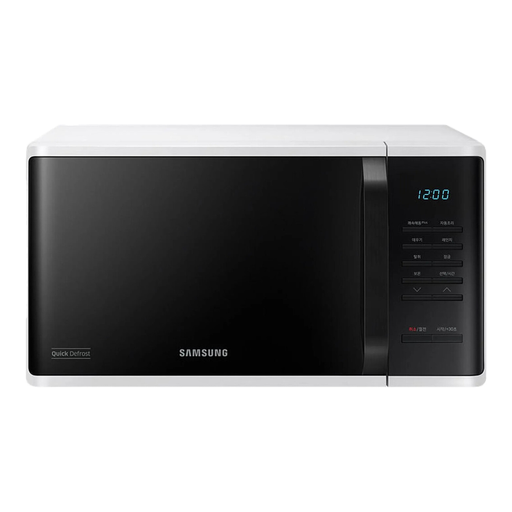 Image unavailable
Worth considering if you mainly reheat and defrost food, without needing to brown dishes. It has a stated capacity of 23 L; also check that your dishes will fit inside and check the clearances in the manual.
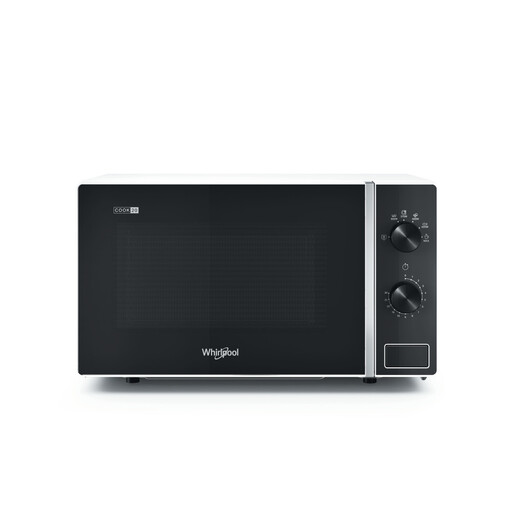 Image unavailable
Suited to reheating and defrosting rather than browning dishes. The model is listed as 20 L and 700 W; check the space available with the door open before deciding where to put it.
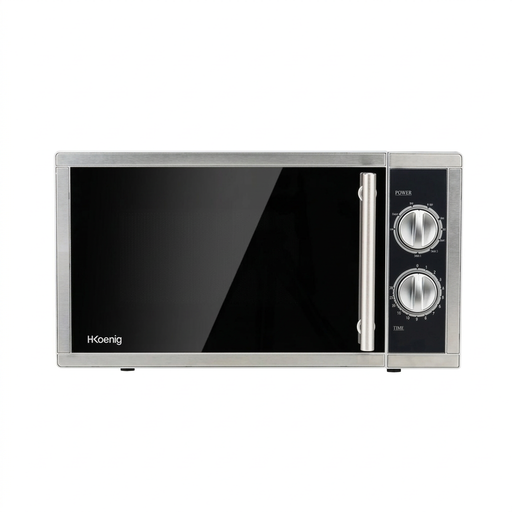 Image unavailable
Worth a look if you want to reheat and defrost food, and may occasionally brown dishes too. The model is listed as 23 L and 900 W; before buying, check which modes are available, which accessories they require and the clearances specified in the manual.
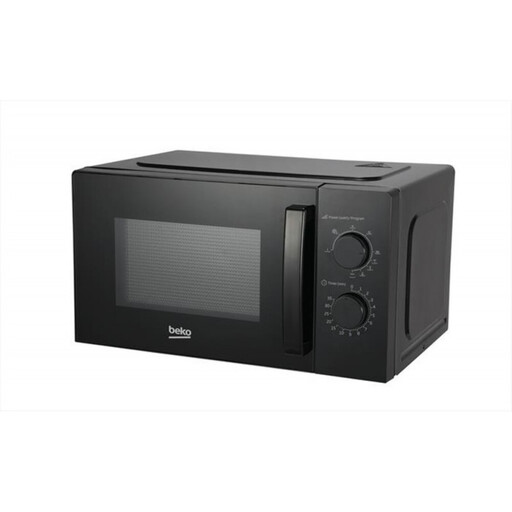 Image unavailable
For reheating and defrosting, with the option of browning dishes occasionally. This grill microwave is listed as 20 L and 700 W; check which accessories are approved for each mode and allow enough room to open the door.
No, not for every dish. In their comparative study, ADEME and the National Consumer Institute found that results vary according to the dishes, models and brands. So compare relevant test results for the recipes you plan to make.
Allow for the model’s dimensions, the space needed to open its door and the clearances specified in its manual. Measure the space before buying rather than allowing the same ventilation gap for every appliance.
Yes, but only if the tray is designed for microwave use and you follow the manufacturer’s instructions. Anses recommends following the stated power setting and heating time in particular, as overheating increases the risk of substances migrating from the packaging into food.
Only if the manufacturer approves that rack for the selected mode. For example, Panasonic says a metal rack is supplied with the NN-GD35; that doesn’t mean other metal utensils are suitable for microwave use. Follow the instructions for your appliance.