For everyday reheating and defrosting
If your meals mainly consist of portions, leftovers or frozen food, start by comparing solo microwaves. Grill and convection functions are only worth paying for if you plan to use them in your recipes.


If you mainly reheat and defrost food, start by comparing solo microwaves. Choose a grill model if you also want to brown dishes, or a combi if you need convection cooking in the same space. A mini oven is better suited to oven-style cooking, but it doesn’t replace a microwave. Whatever you choose, external dimensions and installation instructions matter just as much as the advertised features.
If your meals mainly consist of portions, leftovers or frozen food, start by comparing solo microwaves. Grill and convection functions are only worth paying for if you plan to use them in your recipes.
If one space needs to cover both reheating and some cooking, a grill microwave lets you brown dishes, while a combi adds convection cooking. UFC-Que Choisir distinguishes between these functions in its buying guide, so check which ones genuinely suit the dishes you usually make.
If baking, grilling or roasting matters more to you than microwave defrosting, consider a mini oven. You’ll need another way to reheat food and a space that meets the appliance’s installation instructions.
In a small kitchen where there’s no room for a separate oven and microwave, first choose the cooking modes you’ll use. Then check that the appliance and your dishes will fit in the space available.
Choose this if: you reheat and defrost far more often than you cook in an oven.
Bear in mind: it won’t brown dishes or cook using convection.
Choose this if: you want to reheat food in the microwave and brown a dish now and then.
Bear in mind: a grill alone isn’t the same as convection cooking.
Choose this if: you need one space to cover reheating, grilling and some convection cooking.
Bear in mind: cooking results depend on the dish and the model; don’t assume it will work exactly like a conventional oven.
Choose this if: oven-style cooking on a worktop is your priority.
Bear in mind: it won’t defrost or reheat food using microwave mode.
| Criteria | What to check | Who this matters to |
|---|---|---|
| Reheating and defrosting | Check the controls and defrost functions suit the portions you usually prepare. | If I mainly reheat leftovers and defrost food regularly, I want to do so without having to choose oven functions I’ll rarely use. Around 29% of consumers would prioritise this need. |
| Grilling and oven-style cooking | Know the difference between grilling and convection cooking, and check the available modes against the recipes you make. | For bakes or cakes, I want to know whether my only appliance can handle the cooking I need. Around 29% of consumers would put this first. |
| Overall size and usable capacity | Compare the external dimensions, door opening and space available for your plates or dishes, and remember to allow for the required clearances. | If my worktop is narrow, the appliance needs to fit in its space and still accommodate my dishes. Around 24% of consumers would make this their priority. |
| Installation and everyday use | Check the instructions for ventilation, connection and care. If noise matters, look for information specific to the model. | In a studio flat, I want to avoid an unsuitable location, a hot surface or an irritating fan making every use more difficult. Around 18% of consumers would prioritise these considerations. |
Ventilation requirements vary by model. For example, the instructions for a freestanding Siemens microwave specify the clearances required when installing it in a cabinet. Electrolux also notes that the cooling fan on some microwaves may remain audible after use. So neither the capacity in litres nor the appliance’s dimensions means you can skip checking the instructions.
Having several cooking modes doesn’t guarantee better results for every dish. A study published by ADEME and INC doesn’t demonstrate that combi ovens consistently outperform the convection ovens it examines.
Start with the recipes you make most often, then look at the modes and results available for the model you’re considering.
An appliance may appear to fit in an alcove without leaving enough room for the door, ventilation or access to the socket.
Measure the whole space and compare it with the external dimensions and installation instructions for the exact model.
In microwave mode, metal utensils and unsuitable plastics may pose a risk or damage the appliance.
Check that your containers are suitable for the selected mode, and follow the instructions for any accessories.
In France, the DGCCRF distinguishes statutory guarantees for conformity and hidden defects from any commercial warranty, which is subject to the terms set by the seller or manufacturer.
Before buying, check who the seller is, read the after-sales service details and the terms of any commercial warranty, and keep your proof of purchase.
These appliances let you compare solo microwaves with models designed for grilling. If convection cooking or mini oven-style cooking is your priority, check that they offer these functions before choosing one.
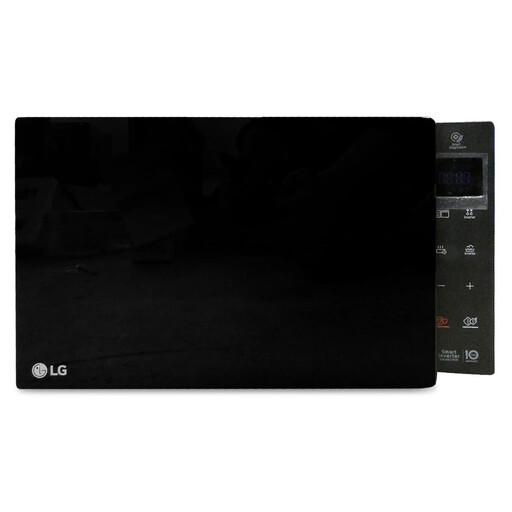 Image unavailable
Worth considering if you want to reheat and brown some dishes with a worktop appliance.
Listed capacity: 25 L; advertised power: 1000 W. Check which mode this power rating applies to, which cooking modes are available and what clearances the instructions require.
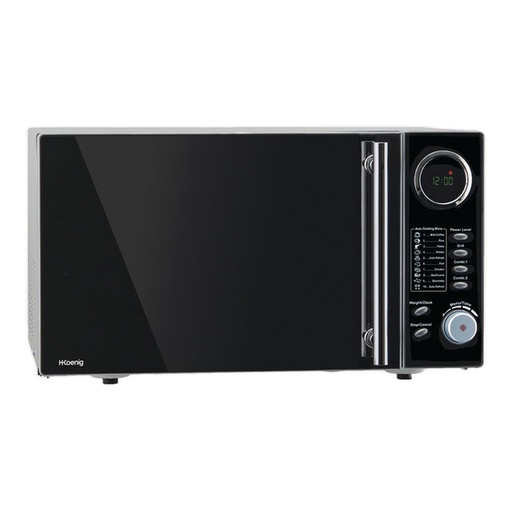 Image unavailable
Compare this model if you want one freestanding appliance for reheating and browning food.
Listed capacity: 25 L; advertised power: 1000 W. Check which mode this figure applies to, the cooking functions and how much space to leave around the appliance.
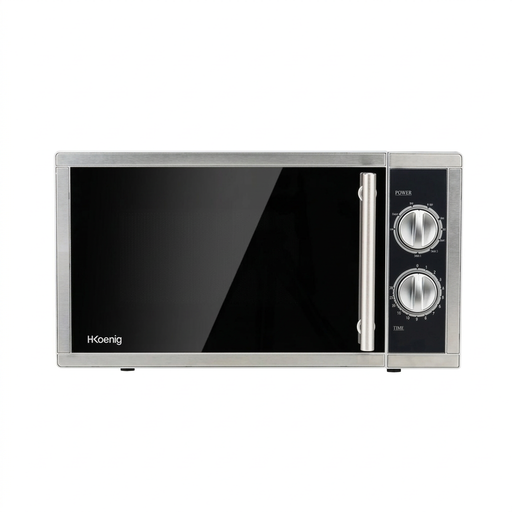 Image unavailable
Worth considering if you want to reheat food and use a grill occasionally, without installing two appliances.
Listed capacity: 23 L; advertised power: 900 W. Check the model’s modes, the size of your dishes and the required clearances before deciding where to put it.
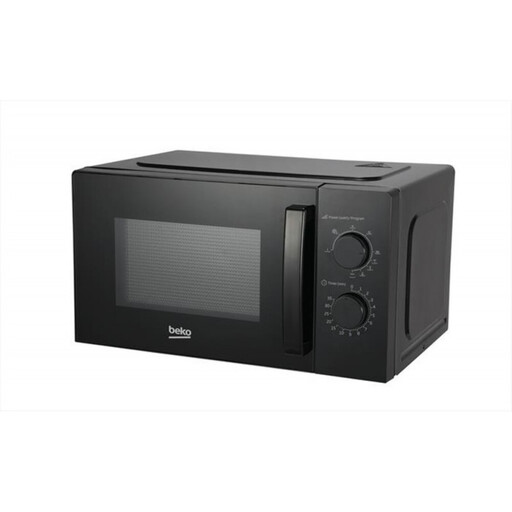 Image unavailable
Consider this if you reheat meals and would also like to brown dishes from time to time.
Listed capacity: 20 L; advertised power: 700 W. Make sure your dishes fit inside and check the instructions for all required clearances, especially above the appliance.
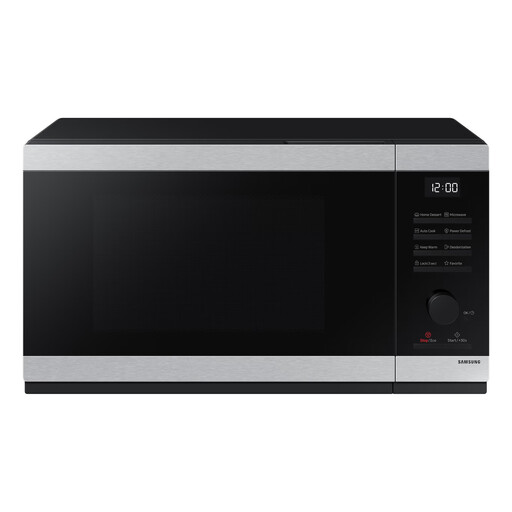 Image unavailable
Compare this model if reheating and defrosting matter more to you than browning dishes.
Listed capacity: 32 L; advertised power: 1000 W. Measure the space available and check the ventilation clearances in the instructions before choosing this capacity.
A solo microwave covers these needs without making you pay for extra cooking modes. According to UFC-Que Choisir’s guide, a grill or combi model makes sense if you also plan to brown dishes or cook using convection.
Only if the model’s instructions allow it and you can meet its ventilation and socket-access requirements. Check the door clearance too: fitting the appliance into the alcove isn’t enough.
Check the instructions for the mini oven you choose before planning to use an extension lead. For example, the Continental Edison CEMF35B instructions prohibit using one and require a stable surface. Don’t assume the same applies to every model without checking.
Avoid metal containers and utensils in microwave mode. For plastic containers and accessories supplied with a multi-mode appliance, check that they’re suitable for the mode you’re using.
No. The DGCCRF distinguishes the statutory guarantee of conformity and the guarantee against hidden defects from any commercial warranty. Read the terms of the latter to see what extra cover it provides, and keep your proof of purchase.