For reheating meals
If you mainly reheat leftovers and individual portions, or defrost food, compare the cavity and controls with the dishes you usually use. UFC-Que Choisir’s buying guide lists reheating and defrosting among the uses to consider.


If you mainly want to reheat and defrost, start by comparing basic models with a cavity large enough for your dishes. UFC-Que Choisir’s buying guide distinguishes between a grill, which is useful for browning food, and the convection function on a combination microwave designed for oven-style cooking. Before choosing, also check the appliance’s dimensions, power supply, required clearances and which accessories are suitable for each mode.
Your choice mainly depends on what you plan to cook and how much space you have. An extra cooking mode is no substitute for checking the dimensions and installation instructions.
If you mainly reheat leftovers and individual portions, or defrost food, compare the cavity and controls with the dishes you usually use. UFC-Que Choisir’s buying guide lists reheating and defrosting among the uses to consider.
When worktop space is limited, consider the external dimensions, door opening and required ventilation clearances, as well as the usable space inside the cavity.
If you plan to make gratins or cook dishes that would usually go in an oven, distinguish between a grill and a convection or fan oven function. UFC-Que Choisir’s buying guide describes these as different functions for different uses.
Start with the type of cooking you do most often, then check that the appliance, your dishes and its installation requirements are suitable for your space.
Choose this if: you reheat and defrost food, and cook simple dishes without needing to brown or crisp them.
Bear in mind: this option doesn’t include a grill or fan oven function.
Choose this if: you’d also like to brown or crisp some dishes.
Bear in mind: a grill doesn’t mean the appliance has a fan oven function.
Choose this if: you regularly plan to cook oven-style dishes in the same appliance.
Bear in mind: check the appliance’s dimensions and the electrical power required for the model and mode you’ll use.
Consider this if: you already have an appliance for oven cooking, or want to keep this separate from reheating.
Bear in mind: you’ll need enough space to install both appliances in line with their respective instructions.
| What matters | What to check | Who is it for? |
|---|---|---|
| Reheating and defrosting | Power and defrost settings; tests on the exact model to assess how evenly it heats. | If I mainly reheat portions and defrost food, I’d prioritise a cavity that suits my dishes over an oven function. Around 36% of consumers prioritise reheating and defrosting. |
| Space and installation | External dimensions, door and usable space; clearances and power supply specified in the instructions. | With limited worktop space, I also need to allow room for the door to open and for ventilation. Around 29% of consumers put space constraints first. |
| Oven-style cooking | Explicit mention of convection or a fan oven function; power consumption in the intended mode. | If I want to cook dishes as I would in an oven, without a separate appliance, I’ll check that the model has a convection function and is suitable for my installation. Around 21% of consumers prioritise cooking in a single appliance. |
| Browning and crisping | Whether the exact model has a grill; which accessories are suitable for each mode. | If I want to brown my dishes without making convection cooking a priority, I’ll distinguish between a grill and oven functions. Around 14% of consumers prioritise browning and crisping. |
UFC-Que Choisir’s buying guide distinguishes between reheating, grilling and fan oven functions. Its testing procedure explains that evenness of heating is assessed by measuring the temperature at several points. The stated power alone isn’t enough to determine how evenly the food will heat.
Microwave, grill and convection functions are different modes. A general description doesn’t tell you whether the appliance is suitable for the cooking you have in mind.
Check that the listing for the exact model explicitly mentions convection or a fan oven function.
Capacity alone won’t tell you the turntable’s diameter, how much room there is for your dish or the appliance’s external dimensions. Ventilation also requires clear space around the appliance.
Measure your dishes and the space where the microwave will go, then check the door opening and the clearances specified in the instructions.
These figures describe different things. The LG MH6535GDR specifications distinguish between a microwave output power of 1 000 W and microwave power consumption of 1 150 W.
To check your electrical installation, look at the power consumption stated for the model and mode you plan to use.
A container designed for microwave use isn’t automatically suitable for the grill or convection mode. Anses recommends following the power and cooking time instructions on packaging intended for microwave use.
Check the container instructions and the appliance manual for the mode you want to use.
These models illustrate different types of appliance and the features of specific products; they aren’t a comparison of performance.
The MS23K3513AS/EF is an example of a standard model designed for reheating and defrosting.
The models mentioned meet different needs: one has a grill, while the other is a combination microwave with oven functions.
The MWSC833W is an example of a freestanding model with forced-air cooking, worth considering if you plan to cook oven-style dishes.
This selection includes microwaves for reheating and defrosting, as well as models with a grill for browning or crisping food.
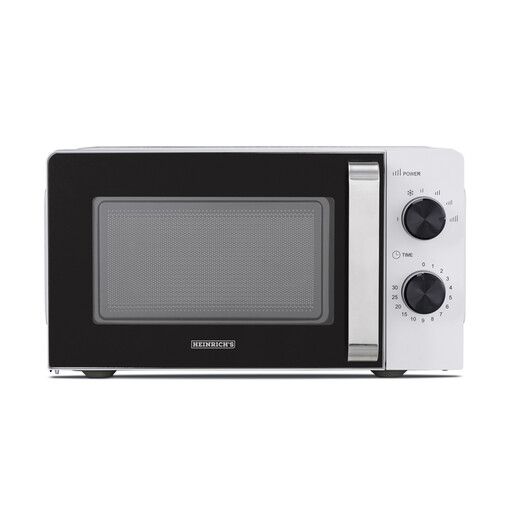 Image unavailable
For reheating and defrosting in a studio flat, provided the cavity and dimensions suit your dishes and available space.
Capacity: 20 L; stated power: 700 W; six power levels; 9,6-inch turntable; 30 min timer; stated external dimensions: 44,6 × 36,3 × 24,3 cm.
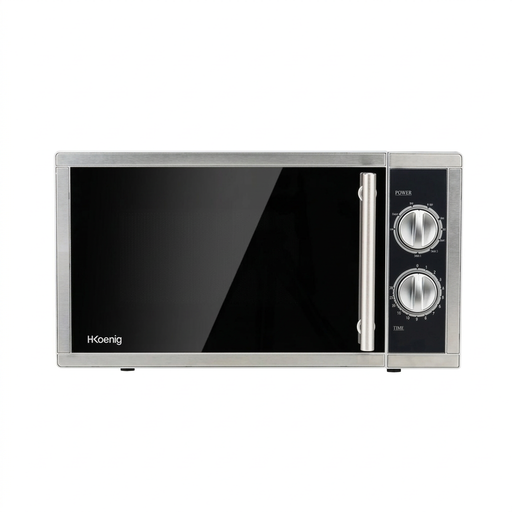 Image unavailable
Worth considering if you want to reheat and defrost food, with a grill for browning or crisping dishes too.
Stated power: 900 W; 27 cm turntable; stated dimensions: 48,2 × 28 × 32,1 cm. The product listing specifies containers suitable for microwave and grill modes.
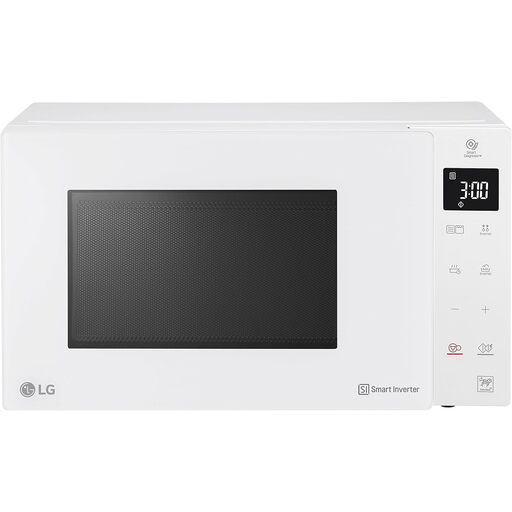 Image unavailable
This model with a grill may suit you if you also want to brown or crisp dishes. Check the appliance dimensions in the manual against the space you have available.
Microwave power stated in the product name: 1 000 W; the product listing specifies touch controls and a digital display.
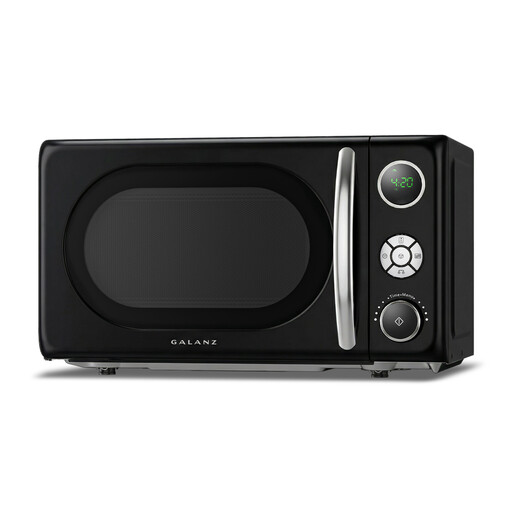 Image unavailable
An option for reheating and defrosting, with power settings to compare against your usual needs.
Six power levels and a defrost function are listed in the product name; the product listing also mentions a digital display and fermentation function.
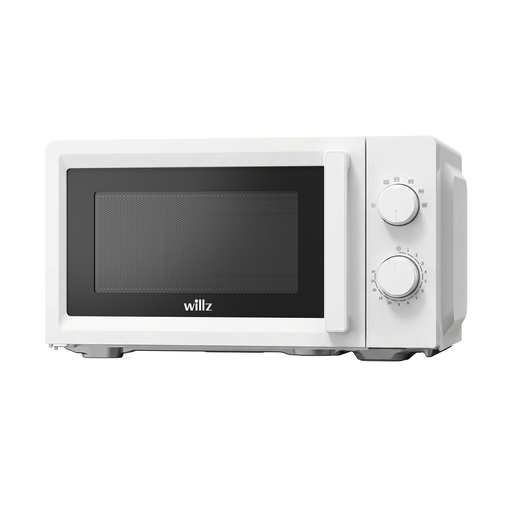 Image unavailable
For reheating meals and drinks in a small home, provided the capacity and dimensions suit your needs.
Capacity: 20 L; the product listing specifies dial controls.
Only if the model’s instructions allow it and the required clearances and ventilation openings are maintained. Whirlpool warns that blocked ventilation can cause overheating.
No. The stated power alone isn’t enough to establish how evenly food will heat. This needs to be assessed through tests on the exact model, measuring the temperature at several points in the dish. UFC-Que Choisir’s testing procedure describes this method.
Don’t assume so. Check the container manufacturer’s instructions and the appliance manual for the mode you want to use. Anses recommends following the power and cooking time instructions on packaging intended for microwave use.
The legal guarantee of conformity is compulsory for new, second-hand and refurbished goods sold by a business to an individual. It is separate from any optional commercial warranty extension.
According to the DGCCRF, the CE marking indicates the manufacturer’s commitment to meeting the applicable European requirements. It isn’t a certification mark or proof of reheating performance.