Everyday reheating in a kitchenette
You live alone or only stay in the property occasionally. You mainly want to reheat and defrost food, without regularly cooking meals in an oven.


For reheating and defrosting in student accommodation or a second home, choose a solo microwave. A grill model is a good option if you’d also like to brown or grill food from time to time. Consider a combi microwave if you genuinely need oven-style cooking, after checking its functions, the space available and the size of your dishes. If oven cooking matters more to you than quick reheating, look at a mini oven instead and check the precautions for where to place it.
In student accommodation or a second home, your choice depends largely on how much cooking you do beyond reheating.
You live alone or only stay in the property occasionally. You mainly want to reheat and defrost food, without regularly cooking meals in an oven.
Reheating is still your main use, but you’d also like to brown or grill a dish from time to time, without having to install an oven.
You plan to cook some dishes in the same appliance you use for reheating. The space on your worktop and the appliance’s internal dimensions then become key considerations.
When choosing an appliance for student accommodation or a second home, start with the cooking you’ll actually do. Then check that the appliance and your dishes will fit in the available space.
Choose this if: you mainly reheat and defrost portions and don’t need food to brown.
Limitation: a solo model doesn’t offer a grill or fan-assisted cooking.
Choose this if: you’d like to brown or grill food occasionally, while still using your microwave for quick meals.
Limitation: the grill alone doesn’t provide fan-assisted cooking.
Choose this if: you want one appliance that combines microwave functions with oven-style cooking.
Limitation: cooking modes and results vary by model; check how much space it takes up, too.
Consider this if: oven cooking matters more to you than quick reheating and defrosting.
Limitation: it doesn’t offer microwave functions, and you’ll need to place it in a spot that meets the precautions in the instruction manual.
| Criteria | What to check | Who this matters to |
|---|---|---|
| Reheating and defrosting | Check the defrost functions and make sure there’s enough room for the plates you usually use. | If I mainly want to reheat a portion and defrost food, without paying for cooking functions I’m unlikely to use, simplicity comes first. Around 36% of consumers would put this need at the top of their list. |
| Oven-style cooking | For a combi microwave, check that it has fan-assisted or convection cooking, and look at the usable dimensions of the cavity. | Without a usable oven at home, I want to cook some dishes rather than just reheat them. This would be the priority for around 29% of consumers. |
| Browning and grilling | Check that the model has a grill and see which accessories are included. | I mainly prepare quick meals, but I’d like to brown or grill a dish now and then. Around 21% of consumers would prioritise this occasional need. |
| Available space | Compare the appliance’s external dimensions and door clearance with the space available, then check the cavity against the size of your dishes. | If my worktop is narrow, I first need to make sure the appliance and my dishes will fit. Around 14% of consumers would put this restriction ahead of the appliance’s functions. |
Having several cooking modes doesn’t guarantee the same results for every type of cooking. In its test protocol, UFC-Que Choisir assesses combination cooking, fan-assisted cooking and temperature accuracy separately.
If you plan to use a combi microwave as a secondary oven, check that the specific model has convection or fan-assisted cooking. Then look at its usable dimensions and any test results relevant to the way you’ll use it.
The stated capacity doesn’t tell you whether a dish will fit in the cavity or whether the door will open easily on your worktop.
Measure the space and your usual dishes. Compare them with the model’s external and internal dimensions, or the turntable diameter, as specified by the manufacturer.
A 2010 article by UFC-Que Choisir reported that many of the mini ovens tested at the time had very hot surfaces. It doesn’t tell you how every model on sale today performs, but it does highlight how important placement is in a small kitchen.
Check the warnings and clearance requirements in the instruction manual for the model you choose. If you can’t place and use the appliance in line with these instructions, choose a different spot or another appliance.
These ranges show some of the features worth comparing. A feature offered by one model isn’t necessarily available across the whole brand range.
Samsung’s French freestanding microwave range includes solo, grill and combi models.
Whirlpool’s French range includes freestanding and built-in combi microwaves. If your home doesn’t have a suitable built-in space, focus on the freestanding models.
Electrolux France’s product information lets you compare a built-in microwave with grill and a built-in combi oven.
These freestanding models suit two of the needs covered here: solo microwaves for reheating and defrosting, and grill models for occasional browning. If you plan to cook regularly as you would in an oven, check the functions of a combi microwave or consider a mini oven instead.
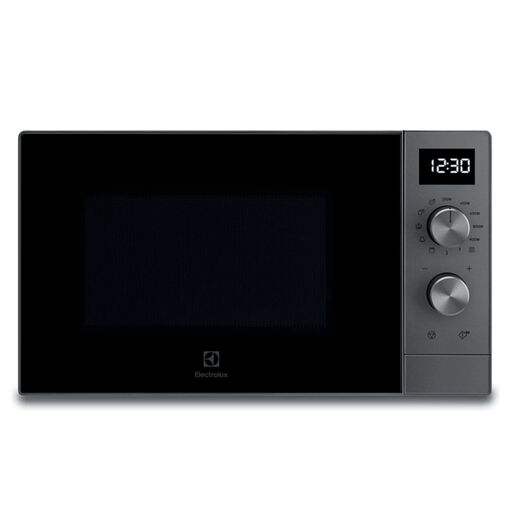 Image unavailable
Worth considering if you regularly reheat and defrost food, with the occasional need to brown or grill a dish. The model name indicates a 25 L capacity and 900 W power. Also check the usable dimensions against your dishes and allow for the ventilation space required for installation.
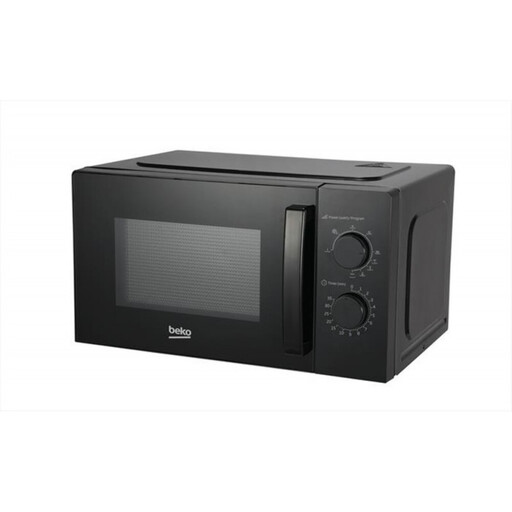 Image unavailable
A good option for reheating or defrosting meals if you’d also like to brown or grill food now and then. The model name indicates a 20 L capacity and 700 W power. Check that your dishes fit in the cavity and that the space allows for the required clearances.
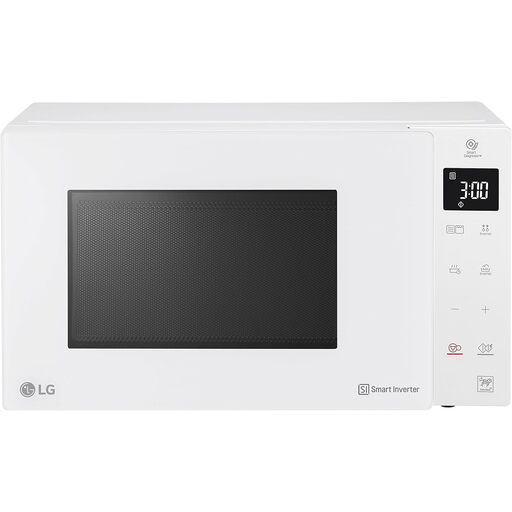 Image unavailable
Suitable if you mainly want to reheat and defrost food, with the option to brown a dish, too. The model name indicates a 25 L capacity. Before choosing, confirm the grill power for the model on sale and check the usable dimensions against your dishes.
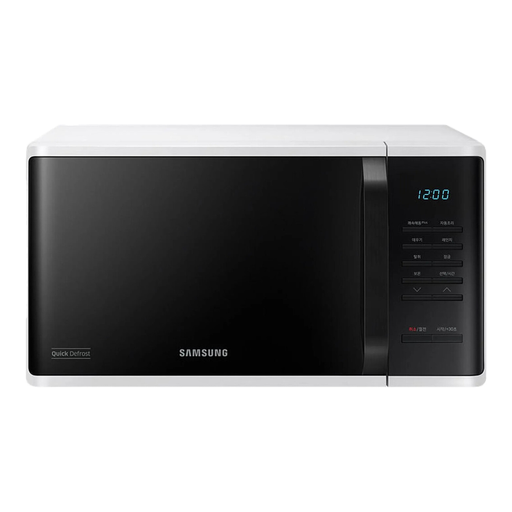 Image unavailable
Worth considering if you mainly want to reheat and defrost food, and don’t need a grill. The model name indicates a 23 L capacity and a quick defrost function. Check that your dishes fit in the cavity and that the door can open where you plan to place it.
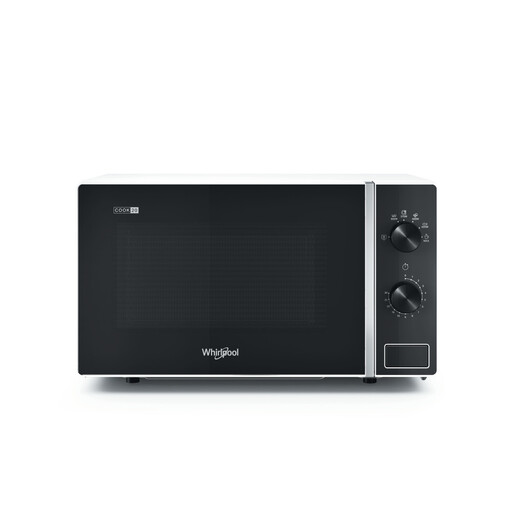 Image unavailable
For reheating and defrosting if you don’t plan to use grill functions. The model name indicates a 20 L capacity and 700 W power. Check the internal dimensions against your dishes and follow the ventilation clearances specified for the appliance.
It can work as a secondary oven if the model has fan-assisted or convection cooking suited to the dishes you want to make. Check the cavity size, cooking modes and stated temperatures. UFC-Que Choisir assesses these features separately in its tests, so you don’t have to assume that every combi microwave cooks in the same way.
Measure the width, height and depth of the space, and allow for the door to open and the clearances specified in the instruction manual. Then compare your dishes with the model’s internal dimensions or turntable diameter. Capacity in litres alone won’t confirm that they’ll fit.
In France, the statutory guarantee of conformity applies when a professional sells goods to a private individual, including when a product doesn’t match its description or meet the use normally expected of it. As the French Ministry of the Economy explains, this is separate from any additional commercial guarantee the seller may offer.
When buying a similar appliance, ask the seller whether they’ll take back your old microwave. The French Ministry for the Ecological Transition describes this as a “one-for-one” take-back service. Other drop-off options depend, among other things, on the collection point. Check the arrangements before you set off.
First, follow the instruction manual for your model. It will explain how to remove any protective packaging, clean the relevant parts and, if required, run the oven empty for its first use. UFC-Que Choisir also gives this general advice for mini ovens, but the instructions for your appliance take precedence.