Everyday reheating without replacing your oven
You mainly prepare quick meals and want to reheat or defrost food without making room for cooking functions you’re unlikely to use.


In a small kitchen, a solo microwave is enough if you mainly reheat and defrost food. Choose a grill model for the occasional browned topping, or a combination microwave if you also plan to cook without access to an oven. A compact built-in oven, on the other hand, needs a space designed for that type of installation. Before choosing, compare the appliance dimensions and the clearances specified in its manual with the space you have available.
You mainly prepare quick meals and want to reheat or defrost food without making room for cooking functions you’re unlikely to use.
You’d like to brown an individual portion or a small gratin from time to time, without expecting your microwave to handle every type of oven cooking.
You want to reheat, grill and cook with one appliance. Versatility matters, as long as its size and installation requirements are suitable for your home.
Choose this: if you mainly need to reheat or defrost food.
Limitation: it won’t meet your needs if you want to brown dishes or cook using fan heat.
Choose this: if you’d like to brown dishes occasionally as well as reheat them.
Limitation: having a grill doesn’t mean the appliance also offers fan-assisted cooking.
Choose this: if you don’t have a usable oven and genuinely plan to cook, grill and reheat with one appliance.
Limitation: according to Que Choisir, combination models generally cost more. You’ll also need to check that there’s enough worktop space for the specific model.
Consider this: if your home can accommodate a planned built-in installation and you often cook in the oven.
Limitation: it can’t be installed like a freestanding appliance. The cabinet niche and installation conditions must match the instructions in its manual.
| Feature | What to check before buying | Who is it for? |
|---|---|---|
| Reheating and defrosting | Check the model’s reheating and defrosting settings, and make sure its controls suit your everyday needs. | If I mainly reheat leftovers and defrost food, I want simple controls rather than oven functions I won’t use; around 40% of consumers would prioritise this need. |
| Occasional browning | Confirm that it has a grill and check which accessories are approved for use with this setting. | For browning a small dish now and then, I’m looking for a grill without needing fan-assisted cooking; this would be the priority for around 20% of consumers. |
| Cooking without an oven | Check that fan-assisted or convection cooking is explicitly listed, then find out how much space you’ll need to install the appliance. | Without a usable oven, I also plan to cook dishes in this appliance, so I need to allow enough space for it; around 30% of consumers would put this need first. |
| Built-in installation | Compare the installation type, cabinet niche dimensions and installation instructions with your home. | If I’m planning to fit an appliance into a cabinet niche, its compatibility with the space comes before choosing a freestanding model; this would be the priority for around 10% of consumers. |
A cavity that fits your dishes doesn’t guarantee the appliance will fit on your worktop with the door open and the required clearances.
Measure the space available, then check the manual for the exact model to find out how much room is needed to open the door and allow ventilation.
The grill and fan-assisted cooking are only useful if your meals genuinely call for these cooking modes.
Think about the dishes you usually prepare: reheating only, occasional browning, or cooking without access to an oven.
A built-in model needs a specific cabinet niche and installation conditions. Its interior capacity won’t tell you whether it’s suitable for your space.
Before choosing one, check the installation instructions against the niche, ventilation and electrical requirements in your home.
A range that includes freestanding, grill and combination microwaves, so you can compare models by the features you need.
Solo, grill and combination ranges let you compare different cooking needs.
Worth considering if you’re planning a built-in installation rather than placing an appliance straight onto a worktop.
Combination appliances to consider when you need several cooking modes, rather than just reheating.
These models let you compare reheating with a solo microwave, browning with a grill model and extra cooking options with a combination microwave. For each one, check that the space you have available meets the model’s installation requirements.
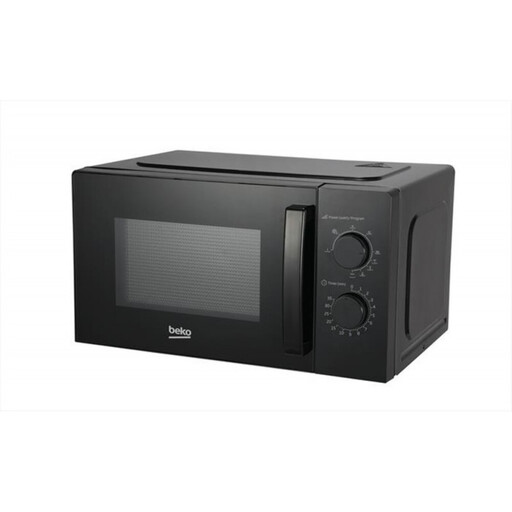 Image unavailable
For reheating and the occasional browned topping. The model title lists a 20 L capacity and 700 W; check the manual to find out how much installation space it needs.
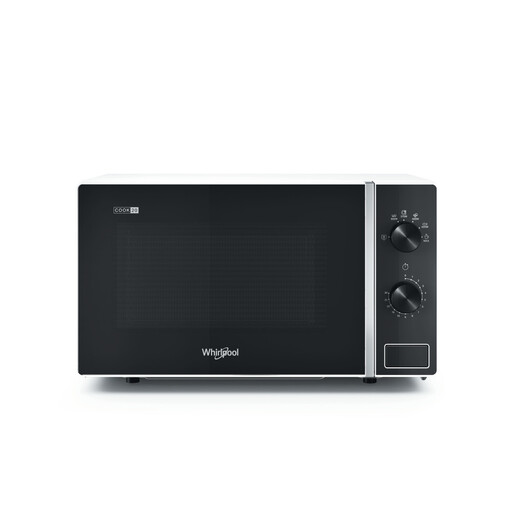 Image unavailable
For everyday use focused on reheating, rather than grilling or fan-assisted cooking. The title lists a 20 L capacity and 700 W; check the manual before deciding where to put it.
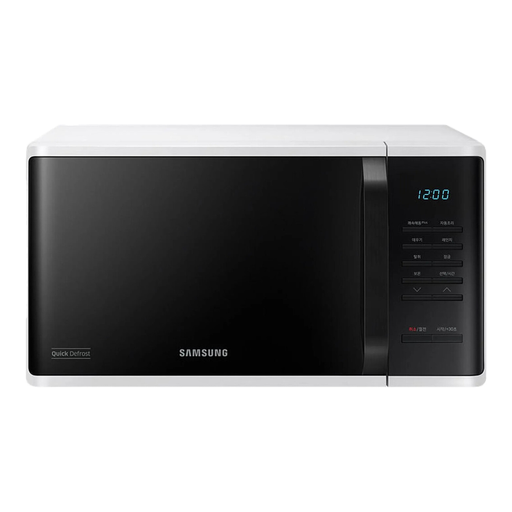 Image unavailable
For reheating and defrosting, without opting for a grill model. The title lists a 23 L capacity and LED display; check the required clearances before installation.
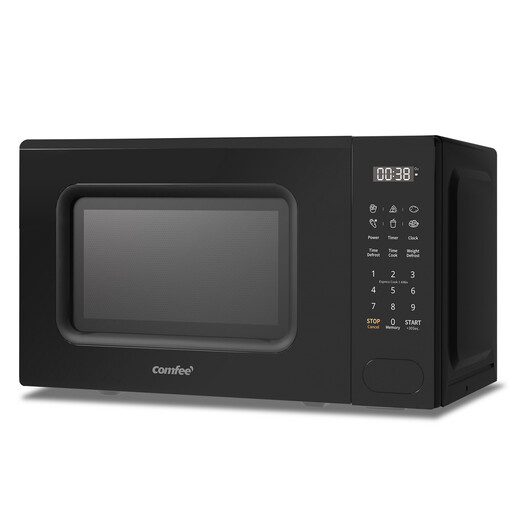 Image unavailable
For reheating and defrosting with digital controls. The title lists 700 W, six preset menus and eleven power levels; check the installation and ventilation instructions before buying.
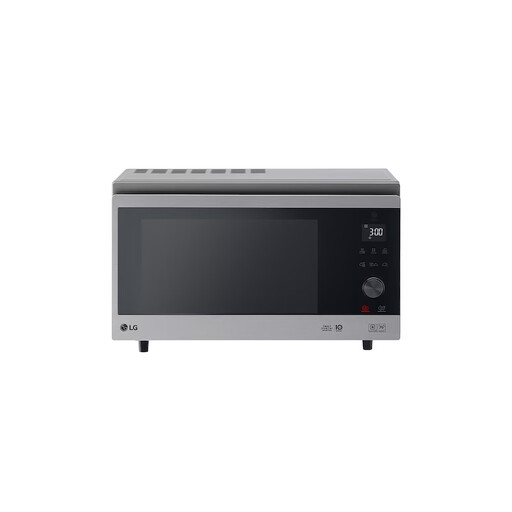 Image unavailable
Worth considering if you need several cooking modes because you don’t have a usable oven. It has a stated capacity of 39 L, so measure the space carefully and check the manual for the required modes, accessories and clearances.
It can handle some oven-style cooking if you make real use of its grill and fan-assisted settings. According to Que Choisir, these features set combination models apart from solo and grill microwaves. Also compare the settings available on the specific model and the space needed to install it.
Don’t plan to install it this way without checking the model’s manual. Freestanding and built-in appliances have different installation requirements. Check the clearances, ventilation and any other manufacturer instructions before choosing where to put it.
Follow the preparation instructions on the packaging and check that the container is suitable for this use and undamaged. Anses warns that using a microwave oven incorrectly can pose risks.
No. If you buy from a professional seller in France, any commercial warranty offered is separate from the statutory guarantee of conformity, as explained by the Ministry of the Economy. Check the terms and exclusions of any commercial warranty before choosing it.