Students with a kitchenette
When worktop space is limited, start by thinking about the meals you plan to reheat or defrost. Then measure the space needed around the appliance: a suitable cavity capacity is no good if the vents are blocked.


If you mainly want to reheat and defrost food in a kitchenette, choose a solo microwave. A grill model is useful for browning or crisping dishes from time to time. If you also need the appliance to cook food in the style of an oven, look for a combination model with convection, provided its dimensions and the clearances specified in the manual suit the space available.
When worktop space is limited, start by thinking about the meals you plan to reheat or defrost. Then measure the space needed around the appliance: a suitable cavity capacity is no good if the vents are blocked.
For occasional stays, reheating may be all you need. If you also plan to cook without an oven, choose a grill or convection function based on the dishes you’ll actually make.
For dishes that need oven-style cooking, look for a combination model with convection rather than assuming a grill will do the same job. Also check that your cookware will fit inside the cavity.
Que Choisir distinguishes between solo, grill and combination microwaves according to how they cook. Start with the meals you usually make, then check that the model you’re considering fits the available space and follow the instructions in its manual.
Choose this if: you mainly reheat and defrost food and don’t need to brown dishes.
The trade-off: according to the uses outlined by Que Choisir and Samsung France, it doesn’t provide a grill or convection function for dishes that need those cooking modes.
Choose this if: you’d also like to brown or crisp certain dishes from time to time.
The trade-off: as Que Choisir’s descriptions of the functions explain, a grill alone can’t replace convection for oven-style cooking.
Choose this if: you don’t have an oven and plan to cook regularly using convection.
Things to check: check the external dimensions, required clearances and the size of your cookware before setting aside space for it in your kitchenette.
| Priority | What to check | My needs |
|---|---|---|
| Cooking needs | List the functions available on the model: microwave, grill or convection. Check that the dishes you plan to cook will fit inside the cavity. | Will I mainly reheat portions, or do I need to crisp dishes and cook some meals without an oven? |
| Space and ventilation | Compare the external dimensions and the clearances specified in the manual with the space available. Keep the vents clear; Whirlpool France advises against placing anything on top of the appliance. | The microwave needs to fit on my worktop while leaving enough space around it. |
| Cookware and containers | Check which utensils are suitable for each cooking mode. For food packaged for microwave use, follow the stated heating time and power level: Anses warns that overheating increases the risk of substances migrating from the packaging. | I sometimes use ready meals, so I want to know whether the packaging or my own container is suitable for the mode I choose. |
| Reheating and defrosting | When comparing specific models, look at their results for both uses rather than focusing on just one advertised function. Que Choisir’s test method assesses, among other things, how evenly food is reheated and how well it defrosts. | When I reheat a meal or defrost food, these results matter more to me than programmes I’ll rarely use. |
An appliance may fit under a shelf but still lack the clearances it needs for ventilation. Its external depth may also be greater than the depth of your worktop.
Measure the space in all three dimensions and follow the clearances specified in the model’s manual. Don’t cover the vents.
A grill is for browning; convection is designed for other types of oven-style cooking. An appliance with more functions is only useful if you plan to use them.
Start with the meals you usually make: reheating and defrosting, the occasional crisped dish, or regular cooking that needs convection.
Accessories that are suitable for grill or convection mode may not be suitable for microwave mode. Anses also warns that excessive heating power or time can encourage substances to migrate from food packaging.
Follow the packaging and manual instructions for the mode you’re using. Don’t put metal in the microwave unless the model’s instructions expressly allow it.
A defrost or grill function alone doesn’t tell you how evenly a particular model will defrost food or how well it will brown it. Que Choisir’s test method assesses these uses separately.
If one of these modes is a key reason for your choice, look for comparable tests covering the model and function in question.
These examples show different configurations; their specifications don’t apply to every appliance from each brand.
Whirlpool France’s freestanding range includes grill and combination models, showing two ways to add cooking functions.
Samsung France distinguishes between solo models for reheating and defrosting, grill models for browning and convection models for other types of cooking.
Panasonic France presents the NN-CD88 as a 34 L combination model with microwave, grill, convection and Airfryer functions.
These models are suited to reheating in a small kitchen, with a grill option listed for the Whirlpool. If you need the microwave for oven-style cooking, check separately whether the model you’re considering has convection.
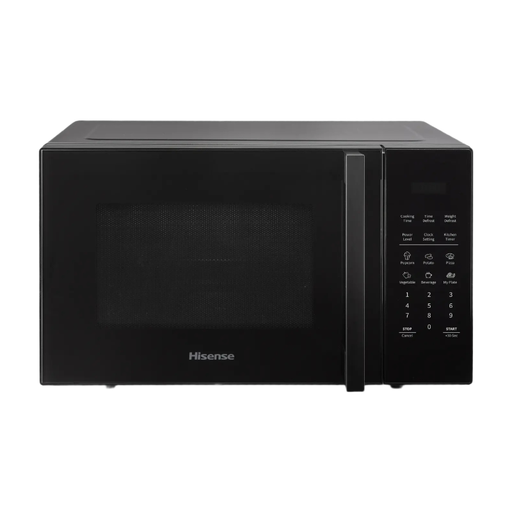 Image unavailable
An option for reheating meals in a kitchenette, with a stated capacity of 25 L. The title says “Solo”, while the description mentions a grill: check which functions are included with this variant before choosing it for browning or crisping dishes.
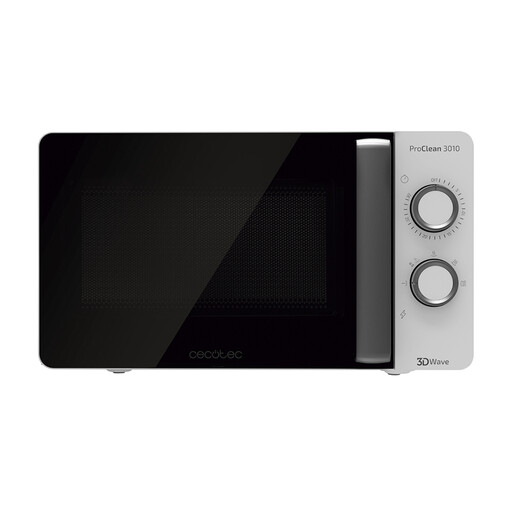 Image unavailable
If you want to prioritise microwave functions in a small home, this model has six power levels. Measure the space and check the manual for the external dimensions and required clearances.
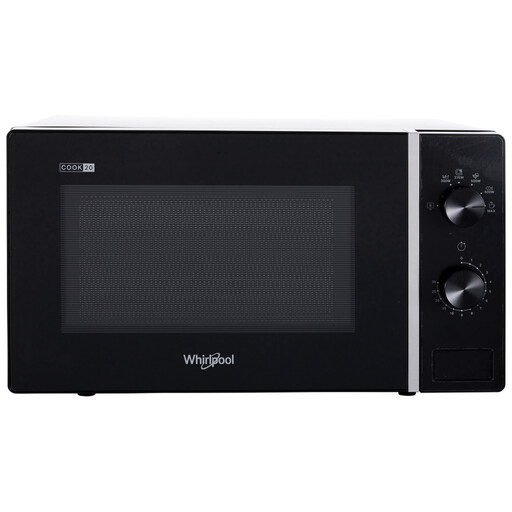 Image unavailable
The listed grill function is useful for browning or crisping dishes from time to time, alongside standard microwave use. Check the model’s external dimensions and clearances in the manual before making space for it.
A solo model covers both uses, according to the distinctions made by Que Choisir and Samsung France. Consider a grill for browning or a combination model with convection only if your meals genuinely need those functions.
A grill is mainly for browning and crisping; it can’t replace convection on its own. For oven-style cooking, look for a combination model with this function, then check that your cookware will fit. If it matters to you, also look for test results covering its convection cooking.
Follow the clearances listed in the model’s manual. Samsung France gives 10 cm behind and to the sides, and 20 cm above, as a general guide, but notes that these distances vary by appliance. Make sure the vents are unobstructed.
No. Check the packaging instructions and make sure the container is suitable for the mode you’ve chosen. For food packaged for microwave use, Anses recommends following the stated power level and heating time. Check the manual before using an accessory in grill or convection mode too.