What should you check before choosing?
Start with the tasks you do most often, then match the features you need to the space available and the installation requirements.
Separate microwave
Consider this if: reheating and defrosting are your main priorities, and you can use another appliance for oven cooking.
The trade-off: a standard microwave on its own won’t replace an oven for cooking and browning food.
Combination microwave
Consider this if: you want one appliance for both reheating and cooking, with features suited to the dishes you usually make.
The trade-off: cooking performance depends on the model and the dish. The French National Consumer Institute and ADEME study of built-in ovens found no general energy advantage over the convection ovens tested.
Separate oven and microwave
Consider this if: you cook in the oven regularly and also want to reheat or defrost food without using it.
The trade-off: this setup needs two spaces, and you’ll need to check the installation requirements for each appliance.
| Priority | What to check | Your needs |
|---|
| Reheating and defrosting |
Compare the defrost programmes, how evenly food reheats and how easy the appliance is to use. UFC-Que Choisir, for example, measures the temperature at different points in a dish during its microwave tests. |
I often reheat portions or defrost food, so these tasks matter more to me than occasional cooking modes. |
| Oven cooking |
Check which modes are actually available and whether the capacity suits your dishes. For a combination model, look for grill and fan-assisted cooking test results where available. The presence of a cooking mode alone doesn’t tell you how well it performs. |
I want to be able to make the dishes I usually cook, even though I reheat food more often than I use the oven. |
| Space and installation |
Measure the recess or worktop space. Compare the appliance dimensions with the required built-in dimensions, then check the manual for ventilation and connection requirements. |
The appliance needs to fit in the space available in my kitchen, with enough room for the required clearances. |
| Energy use for different tasks |
Consider reheating, defrosting and cooking separately. ADEME highlights the usefulness of a combination microwave’s microwave functions for reheating and defrosting. The French National Consumer Institute and ADEME study found that cooking results varied between the dishes and models tested. |
I want to use the right function for each task, without assuming a combination model will use less energy for all my cooking. |
A guide to the brands
There’s no brand information to display in this section.
Microwave options on Joybuy
These models are options if you’re looking for a microwave for reheating and defrosting. Consider a combination model if you’d also like to cook in the same appliance. The models featured here aren’t a substitute for comparing a conventional oven if you want to make your usual oven-cooked dishes.
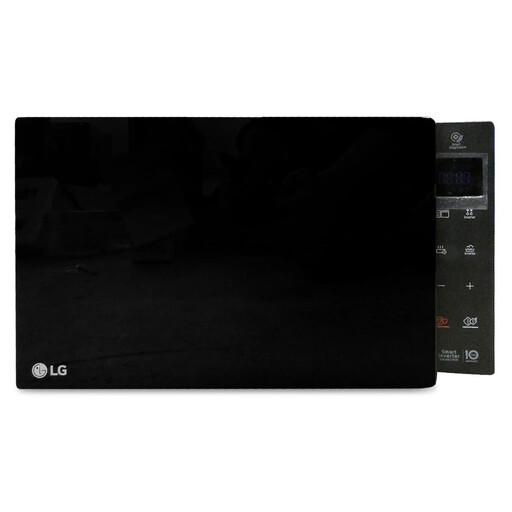 Image unavailable
LG MH6535GIS, 25 L combination microwave
Worth considering for reheating and defrosting if you’d also like an additional cooking function. Check the power rating for microwave mode, the functions available and the ventilation clearances specified in the manual.
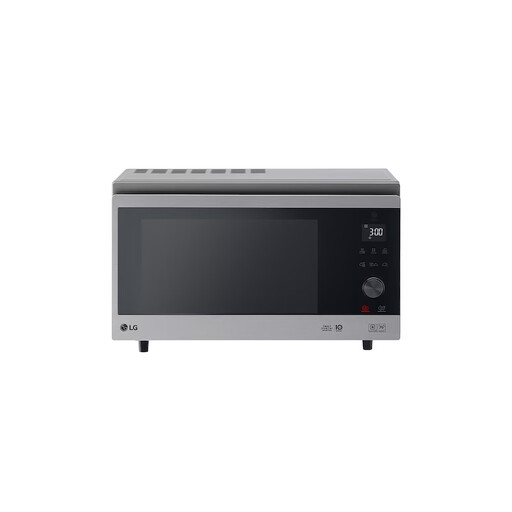 Image unavailable
LG MJ3965ACS, 39 L combination microwave
Its stated 39 L capacity is worth comparing with the size of your dishes if you want one appliance for both reheating and cooking. Before planning to install it in a cabinet, confirm the installation type and clearances required in the manual.
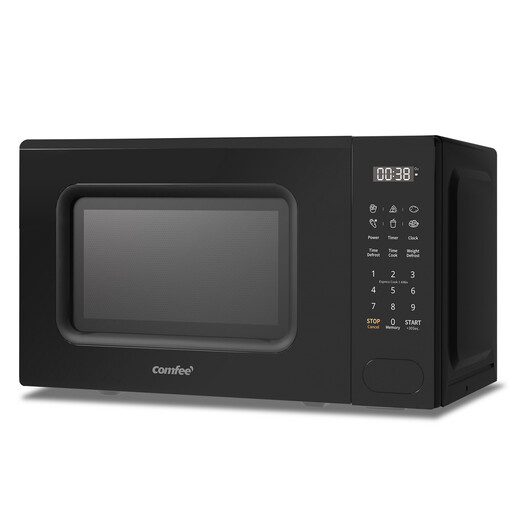 Image unavailable
COMFEE CM-E202CC(BK), 20 L microwave, 700 W
This 20 L model is listed with 700 W, six menus and 11 power levels; its name also mentions defrosting. If you cook in the oven regularly, consider that need separately and check the ventilation space before installation.
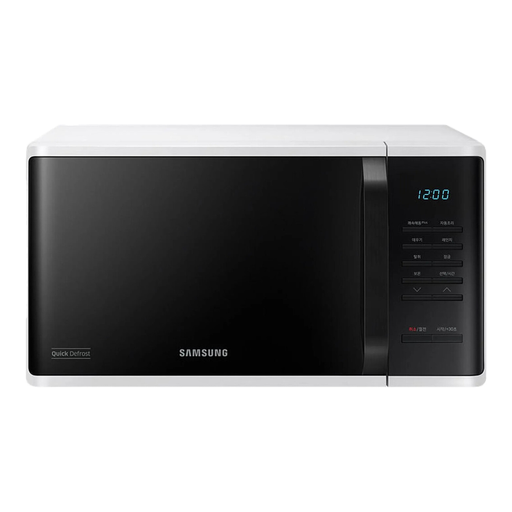 Image unavailable
Samsung MS23K3513, 23 L microwave
Quick defrosting is mentioned in the name of this 23 L model. If you’re placing it on a worktop, compare its dimensions and the clearances specified in the manual with the space available. Don’t confuse the power rating in the title with the power for microwave mode.
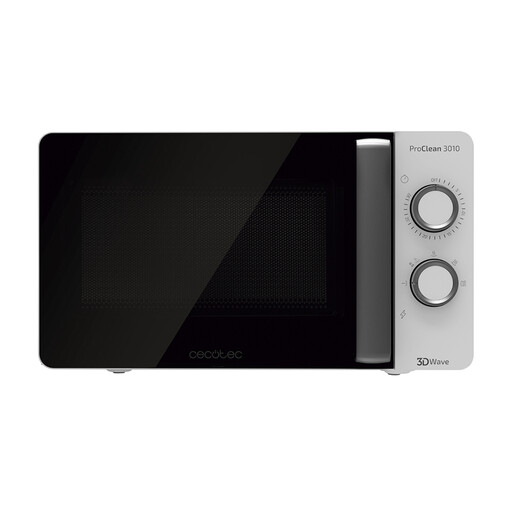 Image unavailable
Cecotec, 20 L freestanding microwave, 700 W
This freestanding model is listed with a 20 L capacity, 700 W and six power levels, for microwave-focused use. Measure the space available and follow the ventilation clearances in the manual.
Frequently asked questions
Does a combination microwave always use less energy than a conventional oven?
No, not for every task. ADEME highlights the benefits of microwave functions for reheating and defrosting. However, a study by the French National Consumer Institute and ADEME comparing four combination models with ten built-in convection ovens does not support the conclusion that combination models have a general energy advantage for the cooking tests carried out.
Is the width of the front enough to choose a built-in appliance?
No. Compare the recess dimensions with those of the appliance, and check the ventilation requirements for the specific model. For example, Electrolux gives a recess size of 450 × 560 × 550 mm for its EVM6E46X2, while the 382 × 594 × 388 mm published by Bosch for the BFL550MB0 are the appliance dimensions, not dimensions for a matching recess.
How can you check the connection requirements for a built-in oven in France?
Check the model’s manual against the existing electrical installation rather than relying solely on whether there’s a socket nearby. For an oven circuit installed in accordance with NF C 15-100, Legrand specifies a dedicated circuit, a maximum 20 A circuit breaker and conductors of at least 2.5 mm². This information isn’t enough to assess an existing kitchen remotely, so ask a qualified professional to inspect its setup.


