Which features matter most?
Solo microwave
Choose this if you mainly reheat or defrost portions.
Bear in mind a solo model doesn’t necessarily include a grill or convection cooking.
Small air fryer
Choose this if you mainly cook small portions that you want to brown.
Bear in mind the basket or cavity may limit the size of your dishes, so you might need to cook in batches.
Conventional oven
Choose this if you need to cook large dishes or use multiple shelves.
Bear in mind check the installation dimensions and features of the model you’re considering.
Combi oven
Choose this if you want one appliance for both microwave reheating and oven cooking.
Bear in mind the available settings, capacity and installation requirements vary by model.
To choose between these types, think about the dishes you prepare and the space you actually have available. UFC-Que Choisir distinguishes between solo, grill and convection functions; the INC and ADEME study compares built-in ovens, not every appliance type for cooking the same meal.
| What you need |
What to check |
Who it matters most to |
| Reheating and defrosting |
Internal dimensions, space for your dishes, reheating and defrosting controls. |
If I mainly reheat portions, I want simple controls and a cavity that fits my containers. Around 33% of consumers prioritise reheating or defrosting. |
| Browning small portions |
Basket or cavity dimensions, ventilation space and parts to clean. |
When I prepare small portions, I check they’ll fit in the basket and that it’ll be easy enough to clean. Around 25% of consumers prioritise this type of cooking. |
| Large dishes or multiple shelves |
Usable dimensions, shelves you can use and the sizes of your dishes. |
If I cook large dishes or several things at once, I check the usable space rather than relying on the stated capacity alone. Around 25% of consumers prioritise this capacity. |
| Multiple settings, limited space |
Usable settings, dimensions, specified clearances and stated total electrical power. |
When I want one appliance for several uses without exceeding the space available, I check the features and installation requirements of the specific model. Around 17% of consumers prioritise this versatility. |
Appliances available on Joybuy
This selection covers reheating and defrosting, built-in oven cooking, microwaves with a grill, and small batches of hot-air cooking on the worktop.
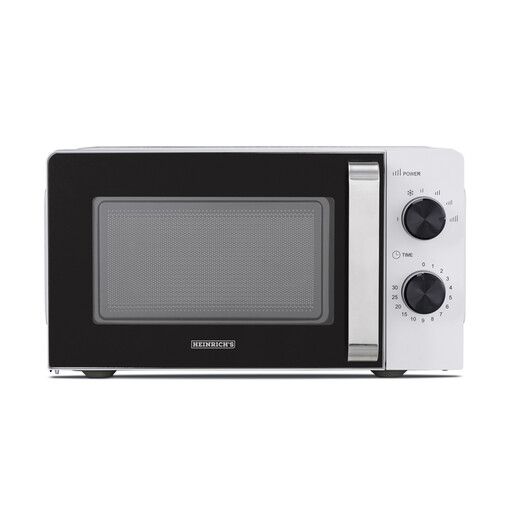 Image unavailable
Heinrich's, 20 L solo microwave
For reheating or defrosting portions, this solo model includes a defrost function.
Stated capacity: 20 L; power: 700 W; six power levels; 30 min timer; stated dimensions: 44,6 × 36,3 × 24,3 cm.
Use microwave-safe containers and leave enough space for ventilation.
View product
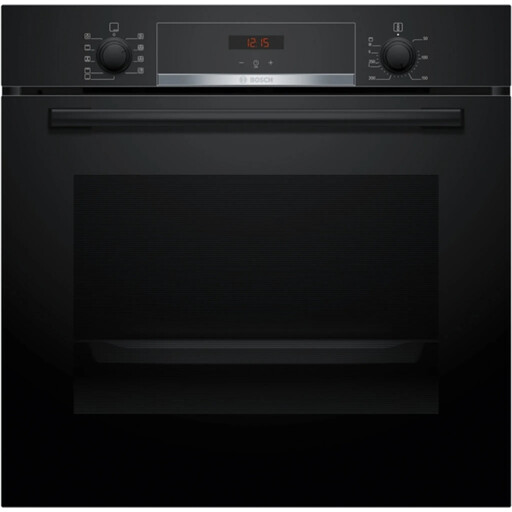 Image unavailable
Bosch HBA514BB3, built-in oven
For oven cooking, this model is described as a built-in fan oven.
Stated capacity: 71 L; seven cooking settings and five shelf positions listed.
Check that the dimensions of the housing unit match those required for installation.
View product
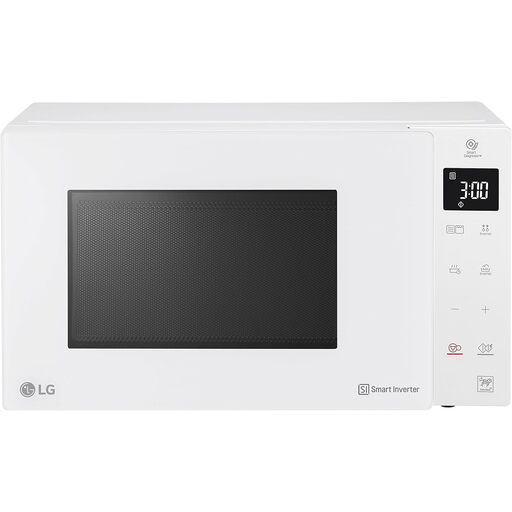 Image unavailable
LG Electronics MH 6535 gih, microwave with grill
For reheating or defrosting, as well as using the grill, this model combines several cooking functions.
Stated capacity: 25 L; power stated in the title: 1,000 W; digital display; white finish.
View product
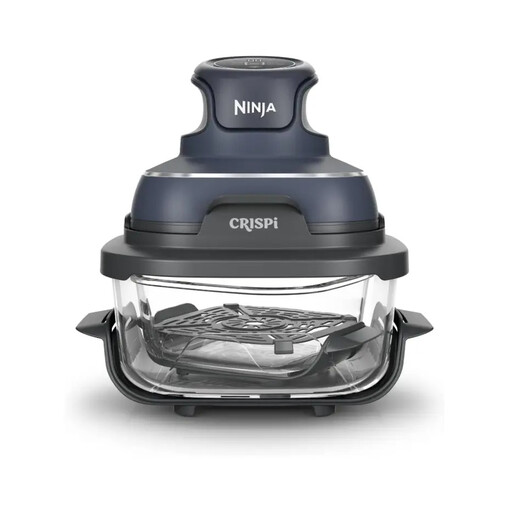 Image unavailable
Ninja FN101EUGY Crispi
For cooking or reheating small portions with hot air, this model is described as offering several cooking functions and a keep-warm setting.
Two glass containers included: 1,4 L and 3,8 L; the containers are stated to be dishwasher-safe.
The containers and trays may be hot after use, so use suitable protection when handling them.
View product
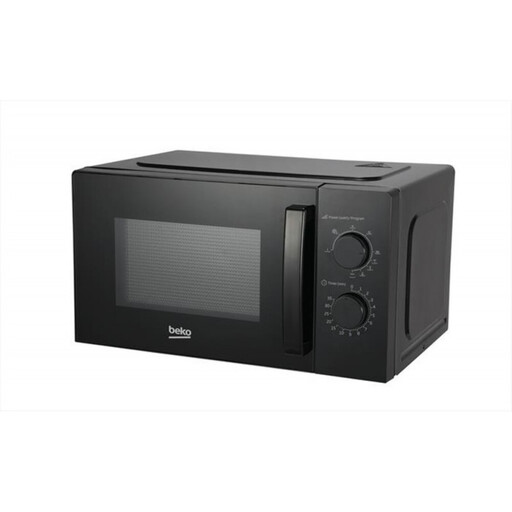 Image unavailable
Beko MGC20100B1, microwave with grill
For reheating or defrosting, as well as using the grill, this freestanding model combines several functions.
Stated capacity: 20 L; power stated in the title: 700 W; nine power levels; 245 mm turntable.
The description specifies a clearance of at least 10 cm at the sides and rear. Use microwave-safe containers.
View product
Frequently asked questions
How much space should you leave around a countertop appliance?
Follow the instructions for the model you’ve chosen, as clearance requirements vary. For its NN-DF385M combi model, Panasonic specifies 15 cm above, 10 cm behind, 5 cm on one side and an opening of more than 40 cm on the other. Leave this space in addition to the room taken up by the appliance itself.
Is the microwave power in watts enough to check the electrical connection?
No. Distinguish between the power of an individual function and the model’s total electrical power. Electrolux lists total power of 3,000 W for the KVLBE08X. Before buying, check the rating plate and instructions for the exact model, as well as the specifications of the space where you plan to install it.
How can you reduce the cleaning needed after cooking a small portion?
Check which parts are removable and whether they’re dishwasher-safe. Moulinex states that the EZ130810 basket is dishwasher-safe; follow the instructions for the other parts, and remember that ease of cleaning is separate from cooking performance.
What statutory guarantee applies in France to an appliance bought from a professional seller?
The statutory guarantee of conformity applies under the conditions set out by law. According to the DGCCRF, the claim must be made within two years of delivery, whether the goods are new or second-hand. A commercial guarantee is optional and supplements statutory guarantees: check who the seller is and how their after-sales service works.
Does CE marking or an energy label guarantee fast cooking?
No. According to the DGCCRF, CE marking shows that the manufacturer undertakes to meet the applicable European requirements; it isn’t a certification of cooking quality. Energy labelling applies, among other things, to domestic ovens covered by the relevant regulations, but it can’t on its own predict the time or energy needed to cook a particular meal.


