Student or studio flat dweller without an oven
If you mainly prepare individual portions, start by thinking about reheating and defrosting. Measure your worktop and dishes before deciding whether a grill or oven function would be useful.


If you mainly reheat and defrost meals, a standard microwave should do the job. Choose one with a grill if you’d also like to brown food from time to time. If you occasionally want to cook oven-style dishes, consider a combination microwave with convection, checking that you have enough space and that your dishes will fit. If oven cooking is your main priority and quick reheating comes second, a mini oven may be a better choice.
If you mainly prepare individual portions, start by thinking about reheating and defrosting. Measure your worktop and dishes before deciding whether a grill or oven function would be useful.
If you want to switch between reheating and occasional cooking without installing a built-in oven, a combination microwave can bring several functions together. Its depth and the clearance it needs for installation are still important factors.
If pizzas, quiches or cakes are regular features on your menu, compare a combination microwave with convection against a mini oven. Your choice will depend in part on how much you value oven cooking compared with quick reheating.
Start with the meals you actually make, then check that the features you need suit the space you have and the size of your dishes.
| Criterion | What to check | What I need |
|---|---|---|
| Reheating and defrosting | Look for power settings, reheating controls and a defrost mode. Check that your usual plate fits inside the cavity. | I mainly reheat portions or ready meals and want to defrost food without needing an oven function. |
| Browning and grilling | Look for a grill function if you want to brown the top of a dish. According to UFC-Que Choisir, grilling and convection cooking are separate functions. | I’d like to brown the top of a dish now and then, but baking cakes or cooking pizzas isn’t my main priority. |
| Oven-style cooking | For a combination microwave, check for convection, the temperature settings, accessories and usable space for your dishes. Compare it with a mini oven if oven cooking will be your main use. | Without a traditional oven, I’d like to cook a quiche or cake occasionally, or make oven-style dishes regularly. |
| Space and capacity | Measure the width, height and depth of the space. Check the turntable diameter or usable cooking area against your dishes, and allow for the installation clearances specified. | My worktop space is limited: the stated capacity alone doesn’t tell me whether the appliance and my dishes will fit. |
| Ease of use and cleaning | Check that the controls are easy to read and that the cavity is easy to access. For packaging labelled as microwave-safe, follow its power and timing instructions, as recommended by Anses. | I want settings I can understand and an appliance that’s easy to clean after spills. |
A grill can brown or crisp food, but on its own it doesn’t provide the convection heat needed for some oven-style cooking.
If you plan to cook pizzas or bake, check specifically for convection, its temperature range and suitable accessories.
A combination microwave can be too deep for your worktop, even if its capacity seems right for the meals you make.
Compare its external dimensions with the clearances in the manual and the space you have for your plates or dishes.
Anses says that heating food for longer or at a higher setting than recommended can increase the migration of substances from some food packaging into the food.
Use packaging or a container designed for microwave use, and follow the power and timing instructions.
A product specification sheet can help you assess an appliance’s features, but it doesn’t confirm that a particular version is currently available.
Before ordering, check the exact model number, availability and dimensions on the product page.
These models illustrate differences in features and size; their inclusion here doesn’t guarantee that they’re available.
The brand’s freestanding models let you compare a microwave designed for reheating with a combination model that offers other cooking options.
A useful point of comparison for combination microwaves with a grill and convection function.
The MS23K3515AK is an example of a solo microwave for when reheating and defrosting are your priorities.
The brand offers an example of a mini oven to consider when oven cooking matters more to you than microwave reheating.
The MW 7770 is a useful reference when considering the size of a 20 L solo microwave.
These options are designed for reheating and defrosting, with a grill function explicitly listed on some models. If you want to cook oven-style dishes regularly, check separately for a convection function.
 Image unavailable
Worth considering if you want to reheat meals and brown food from time to time. The model name lists a 20 L capacity and 700 W microwave power; check how much space you’ll need for installation.
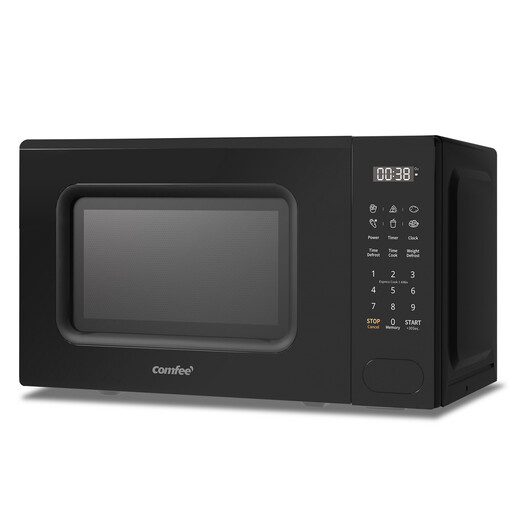 Image unavailable
An option for reheating and defrosting, with digital controls. The product name lists 700 W, 11 power levels and 6 pre-set menus; check the installation instructions and plug compatibility before buying.
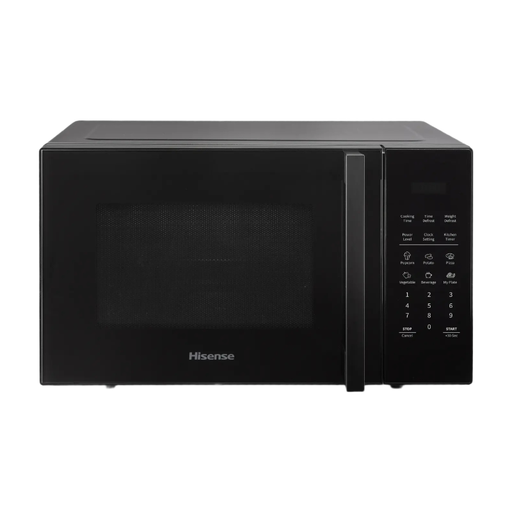 Image unavailable
Worth a look if you’re after a 25 L cavity for everyday dishes. The name lists 900 W, but describes this as a “solo” model, while other product information mentions a grill. Confirm its exact functions and installation clearances before choosing.
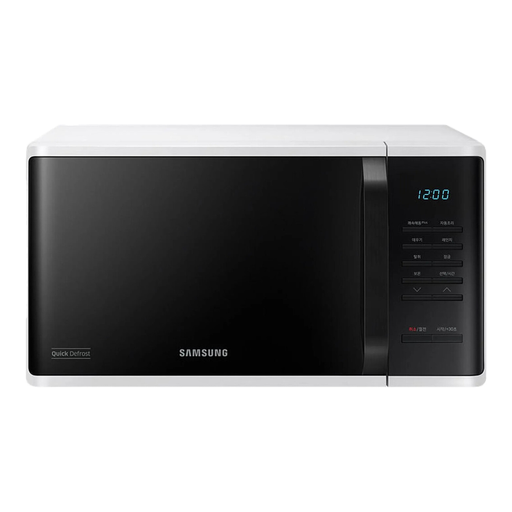 Image unavailable
A model to consider for reheating and defrosting if you don’t need an oven function. Its name mentions Quick Defrost and a 23 L capacity; check the size of your dishes and the ventilation instructions.
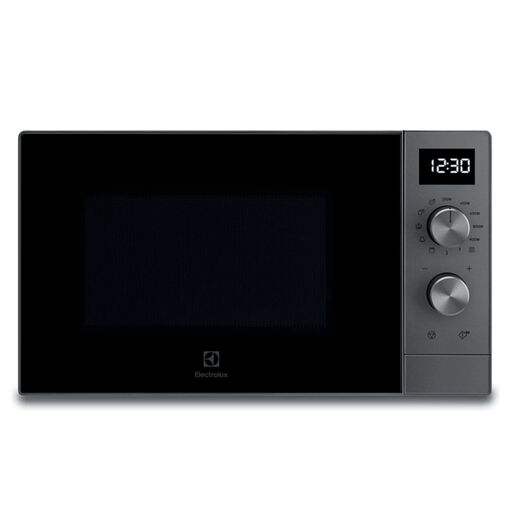 Image unavailable
If you want to reheat food and brown it occasionally, this model’s name lists both microwave and grill functions. It also lists a 25 L capacity and 900 W; measure your space and check the appliance’s electrical compatibility before buying.
It can handle some oven-style cooking if its convection function, capacity and accessories suit the dishes you plan to make, although it won’t guarantee the same results for every recipe. UFC-Que Choisir assesses several microwave cooking functions separately in its testing protocol, so check for the ones that matter for your meals.
Start by measuring the space and your dishes, then compare the appliance’s external dimensions and turntable rather than relying on the litre capacity alone. Also allow for the clearances specified in the appliance manual.
Yes. In particular, follow the recommended power setting and heating time. Anses says that heating food for longer or at a higher setting than recommended can increase the migration of substances from some food packaging into the food.
Consider a mini oven if you mainly cook oven-style dishes and rarely use a microwave to reheat food. If reheating and defrosting are part of your daily routine, a combination microwave lets you consider those needs alongside convection cooking in one appliance, provided it fits your space.
Old microwaves should be taken to a collection point for electrical and electronic equipment. France’s Ministry for Ecological Transition lists collection points and waste recycling centres among the disposal options available in France.