Students in a studio flat with limited equipment
If you mainly reheat portions and defrost food, start by looking at the standard functions and how much worktop space the appliance will take up.


If you mainly need to reheat and defrost food, a basic microwave will do; a grill model adds the option to brown food occasionally. If you plan to make quiches, pizzas or pastries regularly without another oven, look for a combination microwave with a genuine oven mode, or choose a mini oven. Check the modes available on the specific model, the space it needs and whether your dishes will fit.
Que Choisir lists student accommodation and second homes among the settings where people use a microwave. The right type of appliance depends on the meals you plan to make.
If you mainly reheat portions and defrost food, start by looking at the standard functions and how much worktop space the appliance will take up.
For occasional stays, choose according to what you’ll prepare there: simple reheating or cooking dishes that need an oven mode.
For quiches, pizzas and pastries, check whether a combination microwave has an oven or fan-assisted setting, or consider a mini oven.
Start with the types of cooking you’ll actually do, then make sure the appliance and your dishes will fit in your kitchen.
Choose this: if you’ll mainly be reheating and defrosting food.
Limitation: according to Que Choisir, a basic model doesn’t offer the grill or oven functions needed for other types of cooking.
Choose this: if you’d also like to brown or grill food occasionally.
Limitation: having a grill doesn’t mean the appliance also has an oven or fan-assisted setting.
Choose this: if you want one appliance for reheating, defrosting and some oven-style cooking.
Limitation: check that the specific model has an oven mode, and look at its depth and suitable accessories. Whirlpool and Panasonic describe different functions across their models.
Choose this: if oven-style cooking is your priority, particularly for quiches and pastries.
Limitation: it doesn’t have a microwave function for reheating. You’ll also need to allow space for the door to open and for the clearances specified in the manual.
| Priority | What to check | What I need |
|---|---|---|
| Meals you plan to make | Separate reheating, defrosting and browning from other cooking needs. If you want to cook regularly as you would in an oven, look for an explicitly stated oven, fan-assisted or convection mode; a grill alone doesn’t provide this. | Will I mainly reheat portions, or do I also want to cook quiches and pastries? |
| Available space | Compare the external width, height and depth, door opening and clearances specified in the manual. Check the usable dimensions of the cavity too: the capacity in litres isn’t enough to go by. | I need to keep my worktop usable and make sure my usual dishes will fit in the appliance. |
| Controls and cleaning | Check the defrost settings, the programmes you’ll use and the model’s cleaning instructions. An automatic programme won’t guarantee the right result for every dish. | For everyday use, I’d prefer settings I can understand easily and a cavity that’s easy to clean. |
| Containers | When using a microwave, follow the power and timing instructions on packaging designed for microwave use, and don’t use metal containers. In its study of polypropylene trays, Anses notes that overheating food can increase the migration of substances. | I want to be able to reheat meals by following the container’s instructions, or transfer them to a suitable dish. |
| Long-lasting equipment | Choose functions based on how often you’ll use them, and check what information is available about parts and repairs for the model you’re considering. The stated power rating alone doesn’t tell you how much energy the appliance will use in practice. | If the appliance will stay in a second home for a long time, being able to maintain it matters as much as having extra programmes. |
A grill can brown the surface of a dish without offering the oven-style cooking you need. This distinction matters when choosing an appliance for making pastries or roasting regularly.
Check the modes listed for the specific model, its temperature range if one is provided, and the accessories included.
The cavity capacity tells you neither the appliance’s external dimensions nor the maximum size of dish it can hold. For example, Whirlpool lists its 25 L MCP349WH combination microwave as having a depth of 49.4 cm.
Measure the space, allow room for the door to open and check the manual for the required clearances.
In its study of polypropylene trays, Anses notes that overheating food can increase the migration of substances from the packaging into the food.
Follow the power and timing instructions on the packaging. If needed, transfer the meal to a microwave-safe container.
The results Panasonic highlights for certain dishes and settings don’t let you predict the energy use of every combination microwave in every home.
First compare the modes you need and how often you expect to use them.
These examples illustrate different types of appliance. The functions mentioned apply to the named models, not every product from each brand.
A useful option to consider if you’re looking for a solo microwave mainly for reheating and defrosting.
The range lets you compare a compact model with a grill against a combination microwave with an additional cooking function.
The NN-DF38PBEPG is an example of an appliance that combines microwave, grill and oven modes.
Worth considering if oven-style cooking matters more to you than microwave reheating.
These models suit reheating and defrosting in a small home; some also have a grill for occasional browning. If you want to cook oven-style meals regularly, check separately for an oven mode.
 Image unavailable
For reheating meals and browning or grilling food occasionally: the stated capacity is 20 L and the microwave power is 700 W. The grill doesn’t confirm that there’s an oven mode. Before setting it up, check that your dishes will fit and allow for the specified clearances.
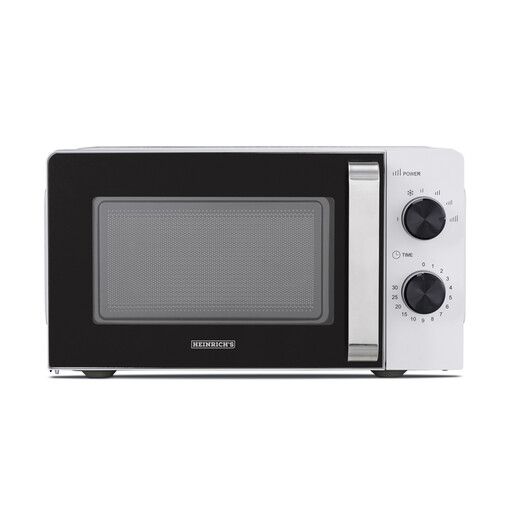 Image unavailable
For straightforward reheating and defrosting: the title lists six power levels, a defrost function and a 30-minute timer. If you plan to brown or oven-cook dishes, check that it has the modes you need. See the manual for ventilation clearances.
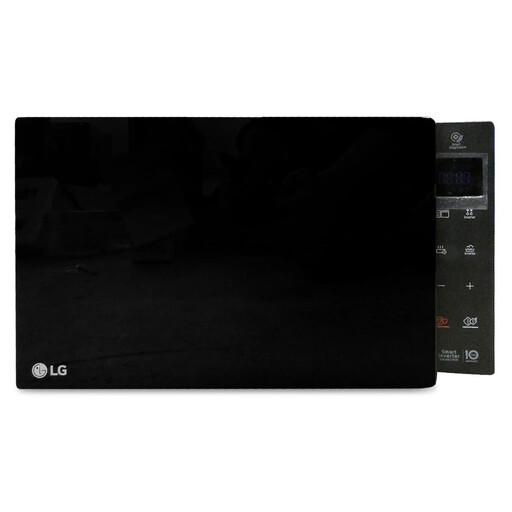 Image unavailable
For reheating with the option to brown food occasionally, check that its grill programmes are suitable for your dishes. The title lists a 25 L capacity and 1,000 W; the word “Combo” doesn’t guarantee an oven or fan-assisted mode. Measure the space and check the manual for ventilation requirements.
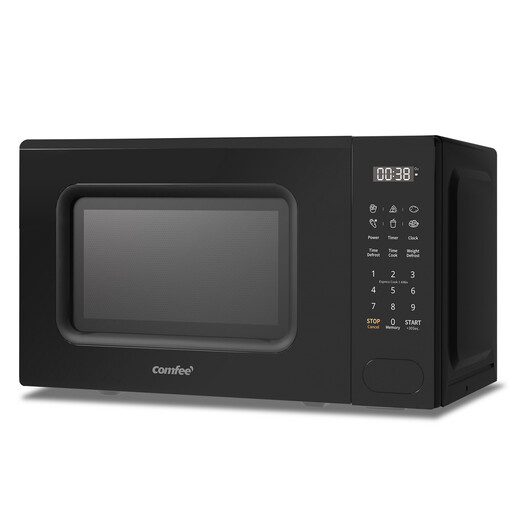 Image unavailable
For reheating and defrosting with digital controls: the title lists 700 W, 11 power levels and six preset menus. These menus aren’t a substitute for an oven mode, so check that it has the functions you need and follow the manual’s clearance instructions.
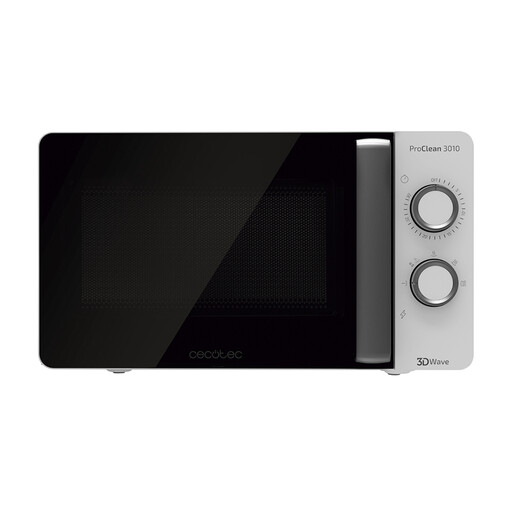 Image unavailable
For reheating and defrosting in a small kitchen: the title lists 700 W and six power levels. Before choosing a spot for it, check its external dimensions and ventilation clearances. If you want to cook oven-style meals, check which modes it offers.
Not for every meal. It’s mainly suited to reheating and defrosting, and can cook some foods using microwave power, but it doesn’t have a grill or oven mode by default. If you regularly make quiches, pizzas or pastries, check for an oven mode on a combination microwave or consider a mini oven.
The grill is for browning or grilling food, but it doesn’t guarantee oven-style cooking. If you need fan-assisted or convection cooking, check that the chosen model’s specifications explicitly list that mode.
Use a microwave-safe container with no metal, and follow the power and timing instructions on packaging designed for microwave use. In its study of polypropylene trays, Anses notes that overheating food can increase the migration of substances. ADEME recommends choosing glass rather than reheating food in a plastic container.
Measure the available width and depth, then compare them with the appliance’s external dimensions, allowing for the door to open and the clearances specified in the manual. Also check the cavity’s usable dimensions against your dishes: a capacity in litres doesn’t guarantee that a tin or pizza will fit.