You mainly reheat meals and leftovers
In student accommodation or a holiday home, you want to reheat and defrost food without needing to brown dishes or cook oven-style meals. A solo model suits these needs.


If you mainly reheat and defrost food, a solo microwave will do the job. Choose a grill model for the occasional browned or crispy topping, or a combination microwave with convection if you also plan to cook some oven-style dishes. In a kitchenette, check the external dimensions, the clearance required in the manual and any accessories you’ll need before choosing a model.
UFC-Que Choisir distinguishes between solo, grill and combination microwaves according to the type of cooking you need. Not having an oven doesn’t mean you need convection if you mainly reheat and defrost food.
In student accommodation or a holiday home, you want to reheat and defrost food without needing to brown dishes or cook oven-style meals. A solo model suits these needs.
You make simple meals, but would also like to brown a gratin or quiche occasionally. A grill model adds this function, but doesn’t offer convection cooking.
You want to cook some dishes, not just reheat or brown food. A combination microwave with convection is worth considering, provided its size and features suit your kitchenette.
First decide whether you need to reheat, brown food or cook using convection. Then compare the size and installation requirements of models that offer the feature you need.
Consider it: for reheating meals and defrosting food before cooking on the hob.
Limitation: this option won’t meet your needs if you want to brown food or use convection.
Consider it: if you mainly want to add occasional browning to your reheating.
Limitation: according to UFC-Que Choisir, a grill doesn’t replace convection cooking.
Consider it: if you genuinely plan to cook some oven-style dishes in a home without an oven.
Limitation: having several functions in one appliance doesn’t guarantee it will fit on your worktop or suit every recipe.
| Need | What to check | Who it suits |
|---|---|---|
| Reheating and defrosting | Check the defrost settings and make sure your containers are suitable for microwave mode. | If I mainly eat leftovers or meals that need reheating, I don’t need to choose a browning function I’ll rarely use. Around 50% of consumers would prioritise reheating and defrosting. |
| Occasional browning | Check that it has a grill and read the instructions for dishes and accessories used in this mode. | If I want to brown a gratin or quiche occasionally, I’m looking for a grill, not convection cooking. Browning would be the priority for around 30% of consumers. |
| Cooking without an oven | Look for a stated convection function, its temperature range and external dimensions that fit the available space. | Without an oven, I want to regularly cook some dishes rather than simply reheat food; the space taken up by the appliance matters too. Nearly 20% of consumers would put oven-style cooking first. |
A grill lets you brown or crisp food. To cook some oven-style dishes, you’ll need a clearly stated convection function, as UFC-Que Choisir points out.
If you plan to cook quiches or other oven-style dishes, check the stated function, temperature range and compatible accessories rather than relying on the word “grill” alone.
The cavity capacity doesn’t tell you whether the appliance will fit on a narrow worktop. For example, Panasonic lists its NN-C69KSM combination microwave as 520 mm wide and 520 mm deep.
Measure the space, then compare the width, height and depth with the clearances specified in the manual. Also check that your dishes will fit inside the cavity.
A container that’s suitable for food isn’t automatically safe to use in microwave, grill and convection modes. UFC-Que Choisir notes that plastic suitable for microwave mode shouldn’t be assumed to be safe under the grill or with convection.
Follow the instructions for the container and appliance in the mode you’re using. If you’re reheating food in a tray, also follow the power and timing instructions: Anses warns that heating food at too high a power or for too long can increase the migration of substances from some packaging.
A combination microwave brings together several cooking modes, but that alone doesn’t tell you how it will compare with a convection oven. A study by ADEME and the National Institute of Consumer Affairs found differences depending on the dishes, models and brands.
Choose these functions if they suit the dishes you plan to make, then check the programmes, accessories and capacity of the model you’re considering.
These examples of product ranges and models can help you identify features to compare; they’re no substitute for checking the specifications of the model you plan to install.
Whirlpool’s freestanding microwave range includes grill and combination models.
The NN-C69KSM is an example of the features to look for if you want convection in a freestanding appliance.
Samsung offers combination models with several cooking modes, which are different from its solo microwaves.
These Joybuy models are suited to reheating and defrosting, with or without a grill for occasional browning. If you also plan to cook using convection, look specifically for this feature: a grill alone won’t do the job.
 Image unavailable
Worth considering if you want to reheat and defrost food, with the option to brown dishes occasionally. The product name lists a microwave power of 700 W and a capacity of 20 L. The grill doesn’t replace convection; check that the space allows for the required clearances around the appliance.
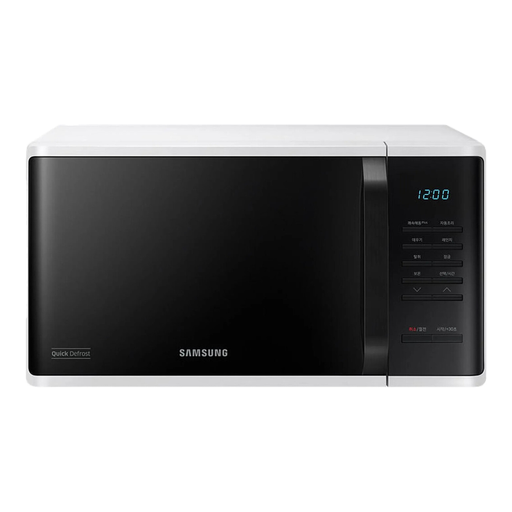 Image unavailable
Consider this if you mainly need to reheat food and defrost it quickly. This 23 L solo model doesn’t offer a grill or convection. Before installing it, check the manual for the required clearances.
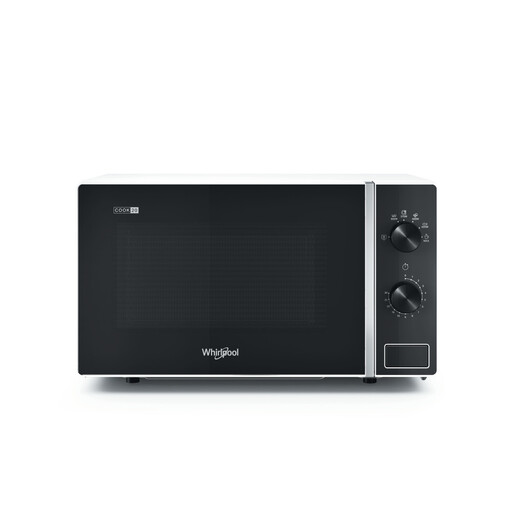 Image unavailable
This model suits everyday reheating and defrosting, with mechanical controls. Its name lists a capacity of 20 L and microwave power of 700 W. If you want to brown food or cook using convection, choose an appliance that states it has these functions; also allow for the required clearances around this model.
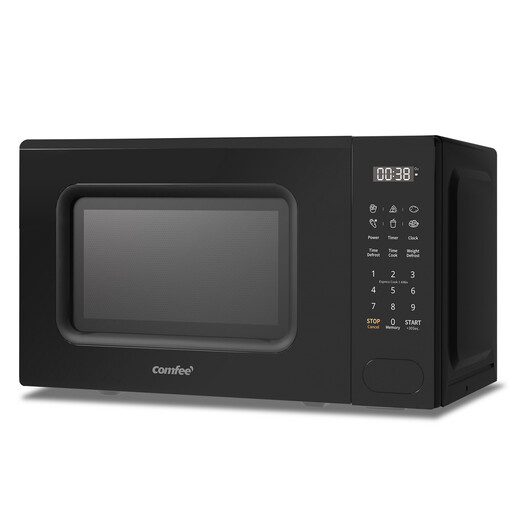 Image unavailable
If you want to reheat and defrost without needing a grill, this model lets you set the defrost function by weight or time. Its name lists 700 W, 20 L, six pre-set menus and 11 power levels. Before choosing it, check the supply voltage, the size of the dishes you plan to use and the installation clearances.
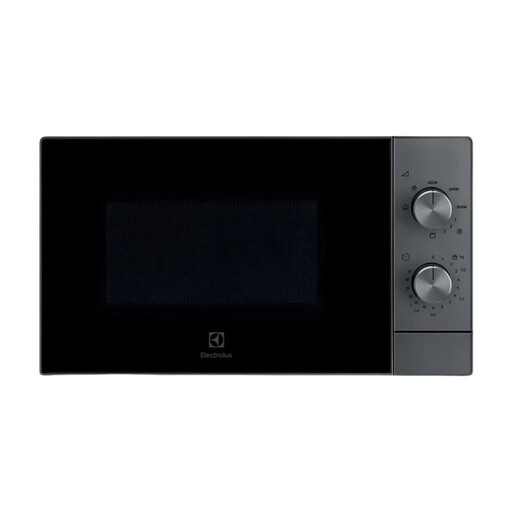 Image unavailable
Worth considering if you want a freestanding appliance for reheating, defrosting and browning food. Its name lists a capacity of 21 L and microwave power of 800 W. The grill doesn’t replace convection; measure the space and allow for the required clearances.
A combination microwave can cook some oven-style dishes if it has a clearly stated convection function. Check its temperature range, the size of dishes it can accommodate and any accessories you’ll need. A study by ADEME and the National Institute of Consumer Affairs found no overall advantage for combination microwaves over convection ovens across all dishes and models.
Don’t assume that a container suitable for microwave mode is also suitable for the grill or convection. UFC-Que Choisir distinguishes between these modes and warns that heat from the grill or convection can melt plastic. Follow the instructions for both the container and the appliance.
Measure the width, height and depth of the space, then compare these with the appliance’s external dimensions and the clearances required in the manual. Also check that your dishes and any necessary accessories will fit inside: the capacity in litres alone doesn’t tell you how much space the appliance takes up.
Yes, follow the power and timing instructions given for the tray. Anses warns that heating food at too high a power or for too long can increase the migration of substances from some packaging into food. Also check the instructions for using and reusing the container.