Student or studio-dweller without an oven
You need a compact appliance for reheating, defrosting and preparing a few meals, while taking into account the space available and your other cooking equipment.


Choose a solo microwave if you mainly reheat and defrost meals, and a grill model if you also want to brown or crisp dishes occasionally. A combination microwave is worth considering when it genuinely replaces a missing oven for fan-assisted cooking. Bear in mind that it will need more space, and check your home's electrical requirements.
You need a compact appliance for reheating, defrosting and preparing a few meals, while taking into account the space available and your other cooking equipment.
You want to keep the number of appliances to a minimum while still being able to cook occasionally. A combination microwave is mainly worth considering if it genuinely replaces an oven or separate appliance.
You often reheat meals but sometimes want to brown them or prepare fan-assisted recipes. The difference between a grill and a combination microwave then becomes crucial.
Start with the meals you will actually cook, then check that the appliance fits its intended location and is suitable for your home's electrical installation.
| Priority | What to check | Your needs |
|---|---|---|
| Cooking functions | Compare the modes actually available: microwave only, grill, or fan-assisted cooking on a combination model. The grill is used for browning and crisping; fan-assisted cooking is intended for oven-style recipes. | I want to avoid cluttering the worktop with functions I rarely use, without being restricted when preparing the meals I have planned. |
| Overall size and cavity | Note the width, depth, height, door opening, internal dimensions and the diameter or shape of the turntable. The litre capacity alone does not guarantee that a dish will fit and rotate. | My appliance needs to fit on the cabinet while accommodating my usual plates, dishes and containers. |
| Electrical supply | Check the microwave power, but also the total power or maximum consumption, as well as the voltage, plug and amperage where stated. These figures can differ considerably on a combination model. | I want to use the appliance without overloading the home's electrical installation or confusing microwave wattage with total consumption. |
| Ventilation and care | Identify the vents and follow the clearances specified in the instructions for the exact model. Also ensure there is reasonable access to the cavity for cleaning. | In a small kitchen, I need to install the appliance without blocking airflow or making it difficult to clean after meals. |
| Containers and packaging | Check that the container is compatible with the selected mode. According to UFC-Que Choisir, plastic should only be used in microwave mode, not with the grill or convection. | I want to reheat packaged meals or use my containers without applying solo-microwave rules to grill and fan-assisted cooking modes. |
A combination microwave adds a grill and fan-assisted cooking, but UFC-Que Choisir also states that it is more expensive. In a studio, the extra space it takes up is mainly justified if it genuinely avoids buying or installing another appliance.
List the meals you would prepare in a typical week. If you do not regularly use oven-style or fan-assisted cooking, compare a solo model and a grill model first.
A combination microwave may also require more worktop space.
Capacity does not tell you about the usable shape of the cavity, and microwave power does not necessarily match the total electrical power required in combination mode.
For the exact model, compare the external and internal dimensions, turntable, microwave power, total power or maximum consumption, as well as the voltage and amperage where published.
Electrolux explains that moisture escapes through ventilation ducts, including around the door. However, the required clearances vary depending on the appliance.
Locate the vents before buying, measure the space using the clearances specified by the manufacturer and follow the instructions for the model you choose.
Material requirements change depending on the mode. According to UFC-Que Choisir, plastic is not suitable for grill and convection functions; Anses points out that overheating food packaging can increase the migration of substances into food.
Check the container's compatibility with the mode being used separately, and follow the power and cooking-time instructions shown on the prepared meal's packaging.
Worth considering for a compact solo microwave mainly intended for reheating and defrosting, as well as for certain combination models depending on the specification.
Worth considering for a freestanding microwave with a grill when you want to brown dishes without necessarily choosing a fan-assisted appliance.
Worth considering for freestanding combination models with several cooking functions when the aim is to reduce the number of appliances in a small kitchen or second home.
Worth considering for a combination model with convection, programmes and medium or large capacity if the appliance needs to do more than simply reheat food.
This selection brings together solo, grill and combination microwaves so you can compare the functions that are useful in a studio or second home.
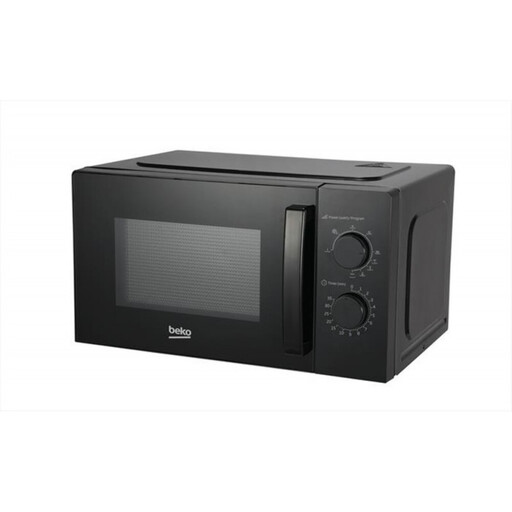 Image unavailable
For reheating, defrosting and occasionally browning or crisping food, without a stated fan-assisted cooking function.
Freestanding format measuring 45,2 × 35,3 × 26,2 cm, with a 245 mm turntable, 230 V voltage and 50 Hz frequency. Check the power input and required clearances in the instructions before installation.
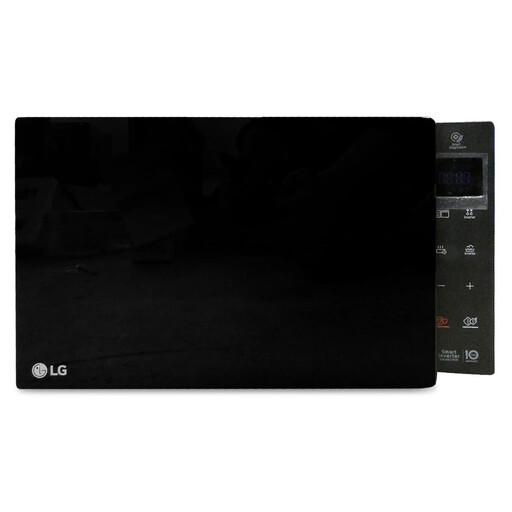 Image unavailable
For everyday meals with defrosting and browning, without confirmed replacement for an oven.
Dimensions of 47 × 26 × 37 cm and a 29,2 cm turntable. Check the model's electrical requirements and ventilation clearances in the instructions.
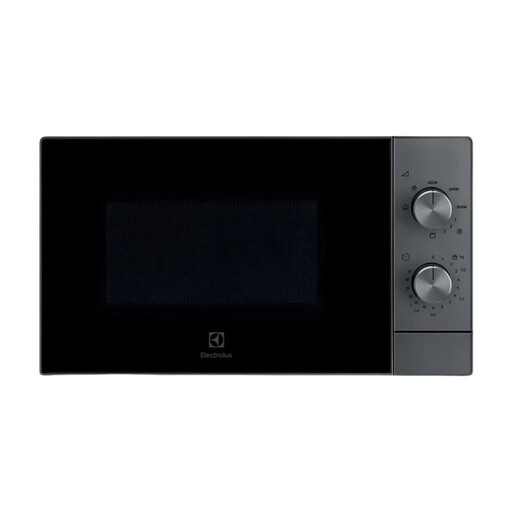 Image unavailable
For reheating, defrosting and browning food with automatic programmes when convection is not required.
Width of 55 cm, depth of 42 cm, 24,5 cm turntable, 1 000 W grill and eight automatic programmes. Measure your cabinet and check the electrical requirements in the manual.
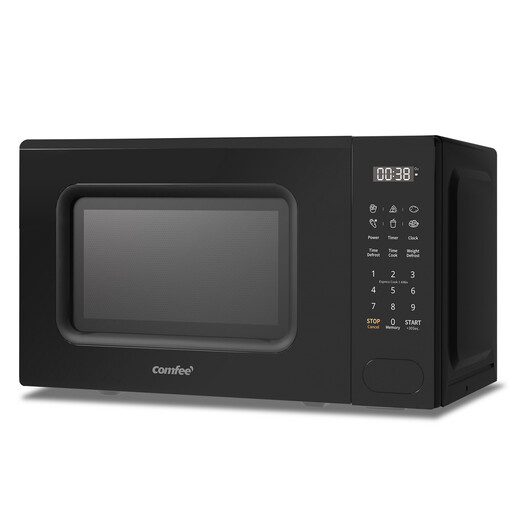 Image unavailable
A straightforward option for everyday reheating and defrosting when you already have another cooking solution.
Dimensions of 440 × 319 × 259 mm, eleven power levels, six pre-set menus and defrosting by weight or time. Check the turntable, power supply and ventilation against your dishes and available space.
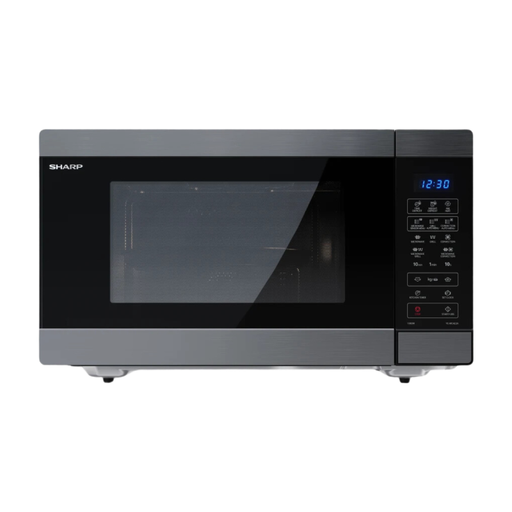 Image unavailable
Only consider this if the microwave, grill and convection functions genuinely need to replace a missing oven.
Dimensions of 55,3 × 50,5 × 32,6 cm, weight of 20 kg, 30 automatic programmes and convection from 140 to 230 °C. Its depth and weight require a stable support, as well as checks on the socket, circuit and ventilation.
A combination model makes sense if you regularly prepare dishes that require a grill and fan-assisted cooking, such as gratins, pizzas, cakes or oven-style recipes, and if it genuinely replaces a missing oven. If you mainly reheat and defrost, a solo model is generally the more sensible choice; for occasional browning, a grill may be enough.
Measure the width, depth and height of the space, then check the door opening and the clearance in front of the appliance. Also check the internal dimensions, turntable and vents, then apply the clearances specified in the exact model's manual.
Microwave power describes the reheating function, while maximum consumption can increase when the grill and fan-assisted cooking are used. For example, Samsung states 900 W microwave power and maximum consumption of up to 2 900 W for the MC28M6035CK. Always check the electrical data and instructions before installation.
No. According to UFC-Que Choisir, plastic can be used in microwave mode but not with the grill or convection. For prepared meals, Anses recommends following the power and cooking-time instructions printed on the packaging.
A microwave falls under the waste electrical and electronic equipment recycling scheme. The ministry responsible for ecology states that these appliances contain recyclable components, but sometimes also hazardous substances or components. Use a suitable collection or take-back service rather than putting it in household waste.