Student or resident in a sparsely equipped studio
If you mainly reheat and defrost meals, a freestanding solo microwave will do the job. Consider a combination model if you genuinely plan to cook with convection and don’t have an oven.


For reheating and defrosting in student accommodation or a temporary home, start by comparing freestanding solo microwaves. Choose a grill model if you’d also like to brown dishes, or a combination microwave if you plan to use convection in place of an oven. Before ordering, measure the space and check the manual for the ventilation clearances required. Capacity in litres alone won’t tell you whether an appliance will fit in your home.
If you mainly reheat and defrost meals, a freestanding solo microwave will do the job. Consider a combination model if you genuinely plan to cook with convection and don’t have an oven.
A freestanding model lets you set up your microwave without built-in installation. Measure your worktop and check the ventilation requirements in the manual before choosing an appliance you may want to move.
A combination microwave is worth considering if convection cooking is part of the meals you plan to make. As well as its features, check its depth, weight and the space needed to install it.
First, separate the cooking functions you’ll use from the type of installation: a freestanding microwave can be solo, grill or combination.
Worth considering: for reheating and defrosting, especially if you already have another way to cook.
Limitation: it doesn’t have a grill for browning food or a convection function.
Worth considering: if you’d also like to brown or crisp up certain dishes from time to time.
Limitation: a grill doesn’t necessarily mean the appliance has a convection function.
Worth considering: if you don’t have an oven and plan to use the grill and convection functions as well as the microwave.
Consideration: measure the space carefully and take the weight into account if you’ll need to move the appliance.
| What to consider | What to check | What I need |
|---|---|---|
| Functions | Check which functions are actually included: microwave, grill and convection. Make sure they match the meals you plan to prepare. | I mainly reheat food, or I also need to brown dishes or cook without an oven. |
| Available space | Compare the appliance’s external width, height and depth with the space available. Also allow for the door to open and the clearances specified in the manual. | In my small kitchen, the appliance needs to fit in its intended spot and still be easy to use. |
| Dish size | Check the capacity in litres and, if included, the turntable diameter. Make sure your usual plates and dishes will fit inside. | My everyday dishes need to fit inside the appliance; the stated capacity alone won’t tell me that. |
| Installation | Check whether the model is designed to be freestanding or built in. For a freestanding microwave, follow the manual and keep its ventilation openings clear, as advised by Whirlpool France. | I want to set the appliance up without permanent alterations, but the space must meet its installation requirements. |
| Moving it | Check the weight and external dimensions if you’ll need to transport or store the appliance. | I may need to move the microwave when I leave this temporary home. |
A combination microwave adds cooking functions that take up space in your kitchen. To give an idea of the dimensions published by manufacturers, the Panasonic NN-C69K is 52 cm deep, compared with 35 cm for the solo Whirlpool MWP201SB.
Make a note of the cooking you’ll actually do. If you mainly use the microwave, compare solo models first; only opt for a grill or convection function if you expect to use it.
Internal capacity doesn’t tell you the external depth or how much room you’ll need to open the door and ventilate the appliance. Whirlpool France warns that blocking the ventilation openings on a freestanding model can cause it to overheat.
Measure the space and check the manual for the clearances required for the model you’re considering. Don’t assume they’re the same as for another model.
Freestanding describes how an appliance is installed, not the functions it offers. It doesn’t tell you whether it has a grill or convection function.
Decide which functions you need, then check that the model you choose is suitable for the type of installation you have in mind.
The models listed by Whirlpool France show the range of freestanding options available, from solo microwaves to models with a grill.
Samsung France’s range lets you compare a solo microwave with a 23 L grill model.
The NN-C69K listed by Panasonic France is an example of a combination microwave for anyone looking for a convection function.
These solo and grill models suit two different needs in a small home: reheating and defrosting, with or without a grill for browning food. Before deciding where to put one, check the dimensions and manual for the model you’re interested in.
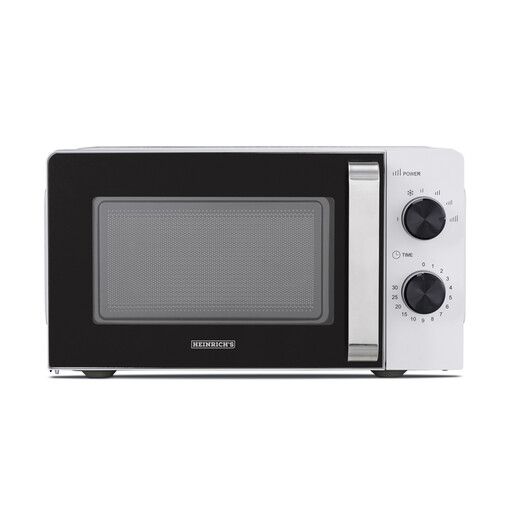 Image unavailable
For reheating and defrosting in a small home. The product title lists 700 W, six power levels and a 30-minute timer. Check the manual to find out how much space to leave for ventilation.
 Image unavailable
Worth considering if you’d like to brown food from time to time as well as use the microwave. The title lists 700 W; check the MGC20100B1 manual for all the clearances required for installation.
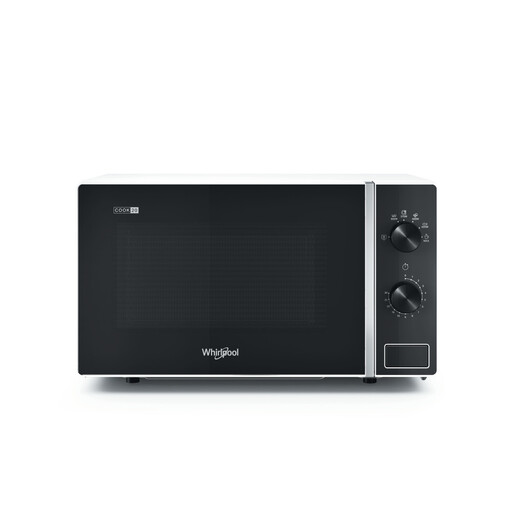 Image unavailable
A solo option for reheating and defrosting if you don’t need a grill. The title lists a 20 L capacity and 700 W power; check the ventilation requirements for this model before setting it up.
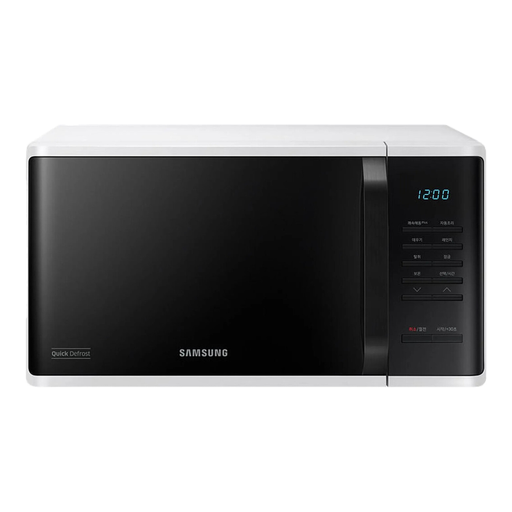 Image unavailable
For reheating and defrosting without adding a grill function. The title lists a 23 L capacity and Quick Defrost; check that your dishes will fit and confirm the clearances required for this model.
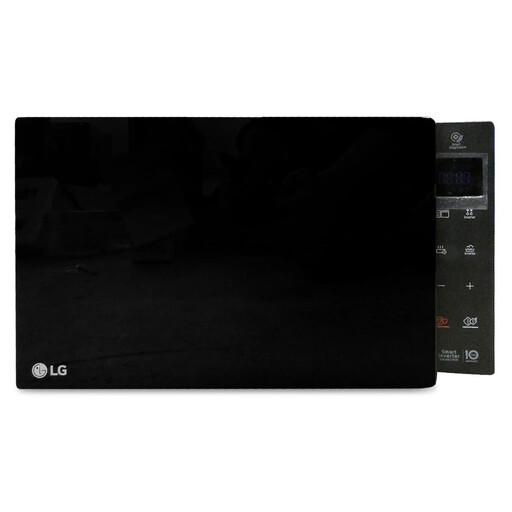 Image unavailable
Worth a look if you want to reheat and defrost, as well as use a grill. The title lists a 25 L capacity; check the manual for the electrical specifications and clearances required for your chosen spot.
Yes, as long as the appliance is designed to be freestanding and you follow the instructions in its manual. Whirlpool France recommends placing it on a flat surface and keeping the ventilation openings clear. Don’t put a freestanding model in an alcove as if it were built in, unless the manual explicitly says this is allowed.
Measure the available width, height and depth, then check that the door can open and that you can leave the clearances specified in the manual. Manufacturer dimensions show why capacity in litres isn’t enough: the 20 L solo Whirlpool MWP201SB measures 45,2 × 26,2 × 35 cm, while the 30 L Panasonic NN-C69K combination microwave measures 520 × 327 × 520 mm.
The grill function is useful for browning food, but having a grill doesn’t mean a microwave also has convection. If you plan to cook dishes that need this function, check that it’s included in the combination model you’re considering.
Take your old appliance to a collection point for waste electrical and electronic equipment rather than putting it in your general rubbish. The ministry responsible for France’s ecological transition provides information about collection and treatment. Check what drop-off or take-back options are available when you make your purchase.