Often reheating small portions
You regularly reheat or defrost small portions and don’t need to brown most of your meals.


Start by thinking about what you’ll use it for most: a solo microwave for reheating and defrosting, an air fryer for browning small portions, or a mini oven if you use ovenproof dishes. A combination appliance can bring several modes together, but check exactly which functions it offers, its external dimensions and the clearance required. Versatility doesn’t guarantee better results or lower energy use for every dish.
You regularly reheat or defrost small portions and don’t need to brown most of your meals.
You want to avoid accumulating appliances, so you need to compare the functions they combine, their external dimensions and the clearance they require.
You mainly prepare roasted portions or dishes that go in the oven. The basket size or whether your dishes will fit could make all the difference.
Choose this if: you reheat and defrost more often than you brown food.
Bear in mind: a solo model doesn’t offer the grill or convection modes found on a combination microwave.
Choose this if: you’ll genuinely use both the microwave function and the oven cooking modes included in the model.
Bear in mind: you’ll still need to check the dimensions and installation requirements. The ADEME–INC test doesn’t establish a general energy-efficiency advantage for combination models.
Choose this if: your priority is roasting or crisping small portions.
Bear in mind: the basket limits how much you can cook at once, and the appliance may take up extra space.
Choose this if: your recipes need an ovenproof dish, baking tray or tin.
Bear in mind: a mini oven won’t replace a microwave for everyday reheating and defrosting.
| Criterion | What to check before buying | Who is this important for? |
|---|---|---|
| Reheating and defrosting | Check that it has a microwave function, the dimensions of the cavity and turntable, and whether your containers are suitable. | If I reheat or defrost small portions almost every day, I prioritise a microwave function that suits my containers. Around 33% of consumers mainly need an appliance for reheating and defrosting. |
| Space and combined functions | Measure the width, height and depth, the space needed to open the appliance, and the clearance specified in the manual. Check which modes are actually available. | When worktop space is limited, I want to avoid having two appliances without overlooking the space needed around the one I keep. Around 25% of consumers prioritise available space and combined functions. |
| Small portions with a golden finish | Compare the basket’s usable space, the quantities recommended by the manufacturer and the model’s cooking modes. | If I mainly want to roast or brown small portions, basket capacity matters when I’m choosing. Around 25% of consumers mainly need to cook small, crispy portions. |
| Dishes that go in the oven | Check the internal dimensions, shelf positions and whether your dishes or tins will fit. | When I cook in a dish or tin, I check that it will actually fit in the appliance before choosing. Around 17% of consumers prioritise cooking dishes in the oven. |
It can be used for some of the same things as an oven, while an appliance left on the worktop takes up space every day.
Decide whether it will replace a cooking method you already use, then measure the space available and the room needed to open its drawer.
An extra appliance can reduce the amount of usable worktop space.
Capacity in litres, the appliance’s external dimensions and ventilation clearance are all different measurements.
Check the external dimensions, the size of the dish you use and the clearance specified for the model.
A space that’s too tight may prevent you from installing the appliance as instructed.
The ADEME–INC test published in February 2026, which covered 4 combination ovens and 10 convection ovens, reports varying results depending on the dishes and models tested, with no clear overall advantage for combination models.
Compare the functions you’ll find useful and, when it comes to energy use, look for measurements based on similar dishes and quantities.
A microwave, air fryer and mini oven may not use the same heating method.
Check the manual to see which foods and quantities are suitable for the mode on the model you’re considering.
The MS2032GASW solo microwave is worth considering for reheating and defrosting in a measured space.
The NN-CD58RS combination microwave is worth considering if you want several modes in one appliance.
The Series 2000 NA229/00 air fryer is designed for small portions cooked with hot air.
The freestanding Optimo OX444810 mini oven is worth considering for dishes that go in the oven.
Samsung’s French documentation helps distinguish between solo, grill and convection microwaves for different cooking tasks.
These Joybuy products include solo and combination microwaves, as well as air fryers, so you can compare functions and sizes suited to small portions.
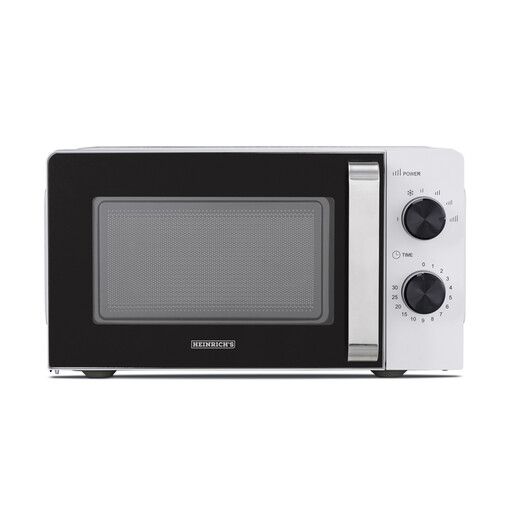 Image unavailable
For reheating or defrosting small portions in a one- or two-person household.
Listed specifications include a 20 L capacity, 700 W power, 6 power levels and a 9.6-inch turntable.
Listed dimensions: 44.6 × 36.3 × 24.3 cm. Place it on a stable surface with sufficient ventilation.
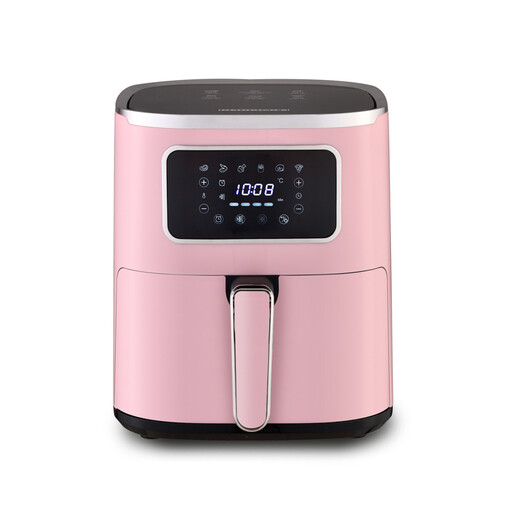 Image unavailable
Worth considering for cooking small portions with hot air, such as chips or vegetables mentioned in the product description.
Listed specifications include a 5 L capacity, 1,450 W power, 6 automatic programmes and an adjustable temperature from 80 to 200 °C.
Leave a safe clearance and don’t block the air inlets or outlets.
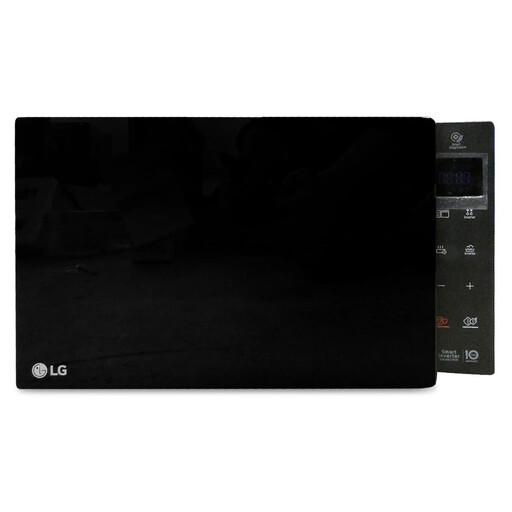 Image unavailable
For reheating or defrosting, with a grill function for dishes suited to that mode.
Listed specifications include a 25 L capacity, 1,000 W power and a 29.2 cm turntable.
Don’t put metal containers in the microwave, and follow the ventilation clearance instructions in the manual.
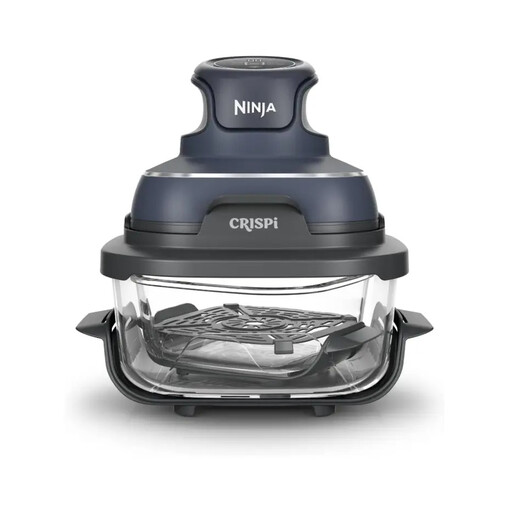 Image unavailable
Choose between two preparation sizes and use the listed hot-air cooking modes.
The glass containers are listed as having capacities of 1.4 L and 3.8 L. The functions listed are Air Fry, Roast, Keep Warm and Recrisp.
Allow enough ventilation and don’t block the airflow while the appliance is in use.
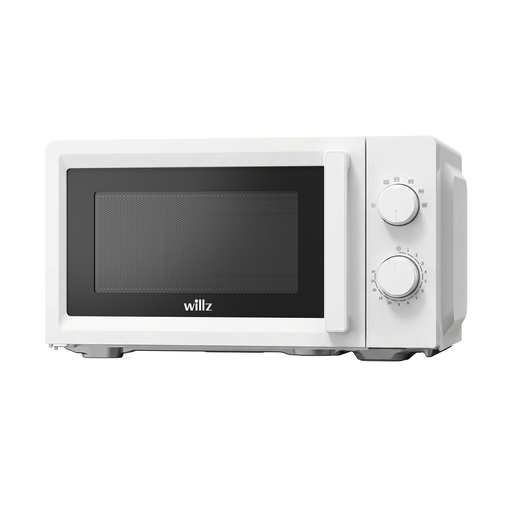 Image unavailable
Worth considering for reheating or defrosting in a small space, depending on your needs and installation dimensions.
The product is listed as having a 20 L capacity, heating and defrosting functions, and dial controls.
Place it on a stable surface, ensure sufficient ventilation and follow the usage warnings in the product description.
Measure the appliance and check the model’s manual before deciding where to put it. As a guide, Samsung recommends 10 cm at the back and sides, and 20 cm above. Requirements vary by model.
Follow the manufacturer’s guidance on power and cooking time, and check that the tray is suitable for microwave use. Anses says that heating food thoroughly increases the risk of substances migrating from the packaging.
Clean it according to the model’s manual. Que Choisir includes ease of cleaning among its buying criteria; check whether the parts are dishwasher-safe on a case-by-case basis.
The statutory guarantee of conformity applies to new, second-hand and refurbished goods sold by a trader to a private individual. The Ministry of the Economy states that you have two years to request its application. This guarantee is separate from a commercial warranty or a commitment to keep spare parts available.
No: statutory energy labelling depends on the product’s specific category. The DGCCRF lists domestic ovens among the categories covered and explains that a statutory label can’t be applied freely to a category that isn’t covered. So don’t compare these four options as if they all shared the same energy classes.