
Livraison le jour même ou le lendemain

Qualité garantie

Débloquez vos offres de bienvenue: Livraison GRATUITE | Jusqu'à -80 % | 30 jours d'essai gratuits à JoyPlus
Téléchargez l'application
Running out of space on your smartphone? Is your 4K video recording choppy? Navigating the jungle of standards, speeds, and capacities to choose a microSD card can quickly become a headache. Our guide is here to demystify the technical jargon and point you toward the perfect memory card for your device and needs, from everyday use to the most demanding professional requirements.
As a product expert at Joybuy, I'm breaking down the market to give you clear, objective advice. The goal: to help you make the best choice with complete confidence.
Before diving into our top picks, here are the key things to check to ensure you make the right decision.
While capacity is often the first criterion that comes to mind, compatibility is just as important. Cards are divided into two main families:
Most recent devices are compatible with the microSDXC format. As a precaution, always check your device manufacturer's specifications (for your smartphone, camera, or drone) to find out the maximum capacity it supports. A 128GB microSD card or a 256GB microSD card offers an excellent balance for most users, providing enough space to store thousands of photos and hours of high-definition video.
Speed is a crucial factor, especially for video recording and launching applications. Several standards coexist, and it's essential to understand them:
For imaging professionals and the most demanding users, the new SD Express standard is a game-changer. By leveraging a PCIe interface and the NVMe protocol (similar to those in our SSDs), these cards shatter speed records, leaving the UHS-I and UHS-II standards far behind. They are perfect for transferring massive files and for professional 8K workflows.
Here is a selection of memory cards that meet a range of needs, from everyday storage to professional-grade performance.
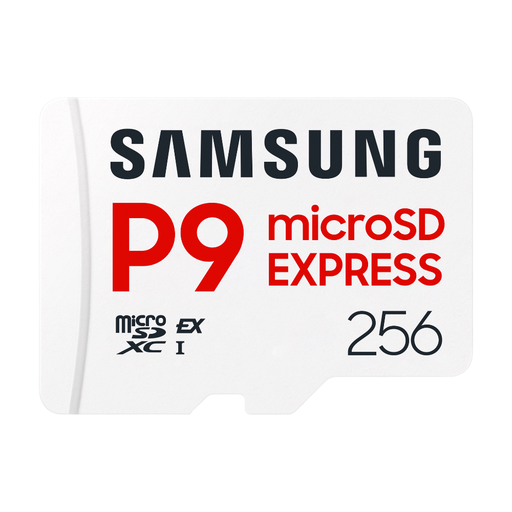
What sets it apart: This Samsung microSD card leverages the new SD Express standard to deliver cutting-edge performance. It was designed for professionals who demand uncompromising transfer speeds.
Key features:
Who is it for? Professional photographers and videographers using high-end mirrorless cameras or SD Express-compatible workstations. A smart investment for the future, aimed at those who juggle very large files daily.
See details for the Samsung P9 Express 256GB card
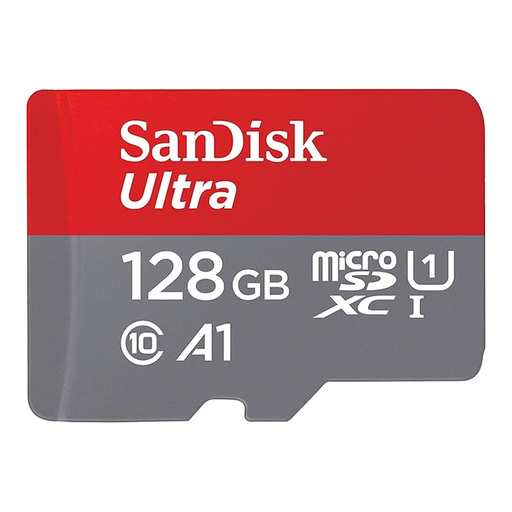
What sets it apart: The SanDisk microSD Ultra is the go-to choice for its excellent performance-to-price ratio. It's the quintessential reliable and affordable solution for expanding the storage on your everyday devices.
Key features:
Who is it for? Users of Android smartphones and tablets looking to boost their storage space for everyday use (photos, music, Full HD videos) without breaking the bank.
See details for the SanDisk Ultra 128GB card
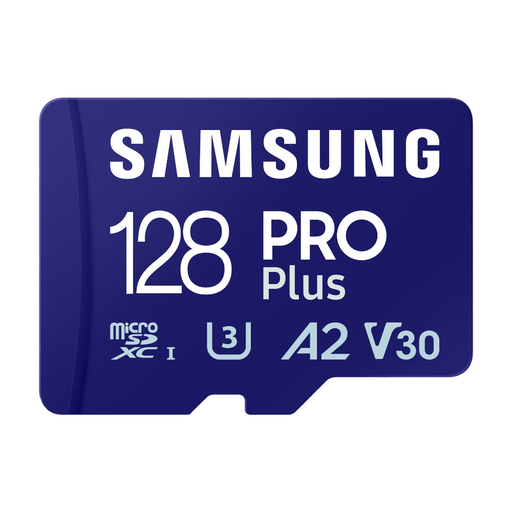
What sets it apart: The Samsung microSD PRO Plus is aimed at content creators and demanding users. It's a fast microSD card that shines with its high write speeds, an essential asset for capturing high-resolution video.
Key features:
Who is it for? Owners of drones, action cameras, and smartphones that shoot in 4K. It's also an excellent choice for handheld gaming console players (Nintendo Switch, Steam Deck...) who want to reduce their loading times.
See details for the Samsung PRO Plus 128GB card
This selection covers the most common needs, but the memory card market is vast. For a different capacity or to simply explore other models, take a look at our complete category.
And to transfer your files without wasting time, a good reader is essential. Discover our selection of memory card readers for fast, reliable transfers between all your devices.
Explore our range of memory card readers
1. What is the difference between an SD card and a microSD card? The difference is primarily one of size. The SD card is the larger, standard format found mainly in cameras and laptops. The much more compact microSD card has become the standard for smartphones, tablets, drones, and action cameras. In fact, most microSD cards are sold with an adapter that allows them to be used in a standard SD card slot.
2. Can I use any microSD card in my smartphone? Not necessarily. There are two things to check before you buy: the maximum capacity supported by your smartphone (e.g., up to 1TB) and the format type (SDHC or SDXC). While almost all recent smartphones accept microSDXC cards, the safest bet is to consult your device's manual to be certain.
3. Does a fast microSD card improve my device's performance? Yes, but in specific ways. A fast card directly impacts any task that involves reading or writing data: recording 4K video, shooting photos in burst mode, transferring large files, and launching apps installed on the card (especially if it's A1 or A2 class). However, it won't speed up your device's overall performance, which primarily depends on its processor and RAM.