
Livraison le jour même ou le lendemain

Qualité garantie

Débloquez vos offres de bienvenue: Livraison GRATUITE | Jusqu'à -80 % | 30 jours d'essai gratuits à JoyPlus
Téléchargez l'application
A Microplane kitchen grater transforms lemon zest, a piece of Parmesan or a clove of garlic into a fine, even preparation. However, not all graters are designed for the same tasks. A surface that is too fine for vegetables, an unstable handle or poorly designed cleaning process can quickly make the utensil frustrating to use every day.
Before placing your order, here are the main pitfalls to avoid, the criteria to consider and a selection of models suited to different types of home cooks in France.
A fine grater is ideal for citrus zest, nutmeg, ginger, garlic, chocolate and Parmesan. However, it is not designed to quickly produce thick shreds of carrot, potato or cabbage.
By contrast, a vegetable grater with large holes is effective for preparing larger quantities, but produces a result that is too coarse for zest and spices. The grating surface should therefore match the recipes you prepare most often.
Very sharp blades make grating easier, but they also require a little more care. Safety depends on more than sharpness: the stability of the support, the shape of the handle and the way you hold the food also play an important role.
A stainless-steel grater with a non-slip base and ergonomic handle is easier to control on a dry, stable worktop. A blade guard or protective cover can also be particularly useful when storing it.
Residue from cheese, garlic or chocolate can become lodged in the openings. Check whether the model is dishwasher-safe and whether the manufacturer recommends hand-washing to preserve the sharpness of the blades.
A long, fine grater can be highly effective, provided it can be stored without leaving its sharp surface exposed. A protective cover or hanging hole provides an additional layer of safety.
For versatile use, these are the main categories to distinguish:
For some Microplane models, the manufacturer highlights a stainless-steel surface created using photo-etching. In practical terms, this type of blade cuts through food rather than crushing it, generally producing a lighter, airier texture.
Stainless steel is widely used for grating surfaces. Under normal conditions of use and cleaning, it resists corrosion. It is still best to rinse off residue promptly, dry the grater after cleaning and avoid prolonged contact with particularly acidic foods or harsh products.
The plastic handle and support should provide a secure grip. A rubber base or a base covered with non-slip material is especially useful when the grater is positioned on a chopping board or over a bowl.
Choose a handle that remains secure in your hand, even with damp fingers, along with a base that sits firmly on the worktop. For small pieces of food, use a food holder or stop before your fingers get too close to the blade.
Even a compact grater has sharp blades. Keep it out of the reach of children and handle it carefully while washing. A dishwasher can simplify maintenance, but hand-washing with a soft brush allows you to clean the surface in the direction of the blades.
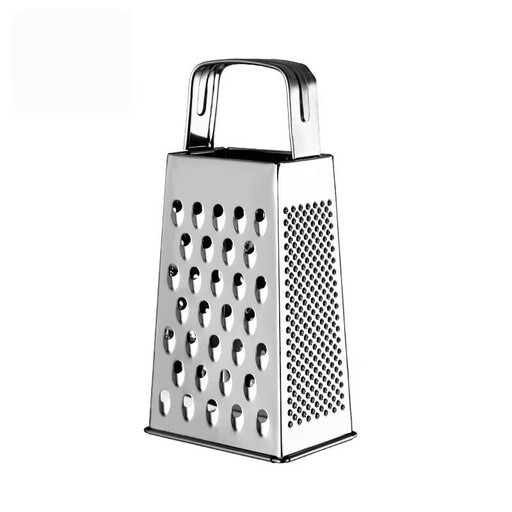
Why this model suits this profile: its four sides let you create different textures for vegetables, cheeses and everyday homemade preparations.
With four surfaces, it does not limit you to a single grating fineness. You can choose the side that delivers the result you want.
Four-sided design, stainless-steel surfaces and multifunctional performance for everyday preparations.
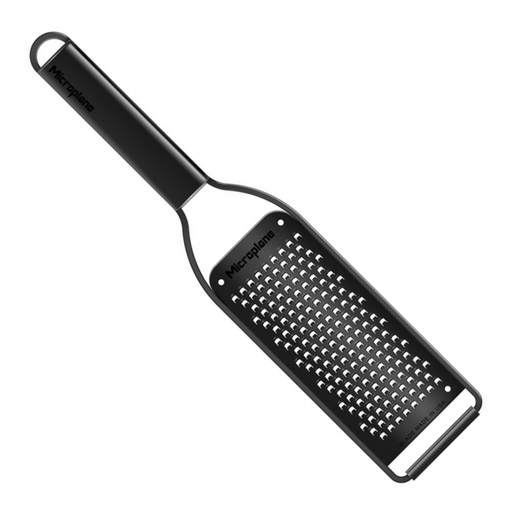
Why this model suits this profile: its fine surface is designed for zest, spices, garlic, ginger, Parmesan, chocolate and hard cheeses.
Its clearly defined fine-grating surface prevents it from being mistaken for a zester or a coarse shredder.
Stainless-steel blades, ergonomic handle, non-slip base and stated dishwasher compatibility.
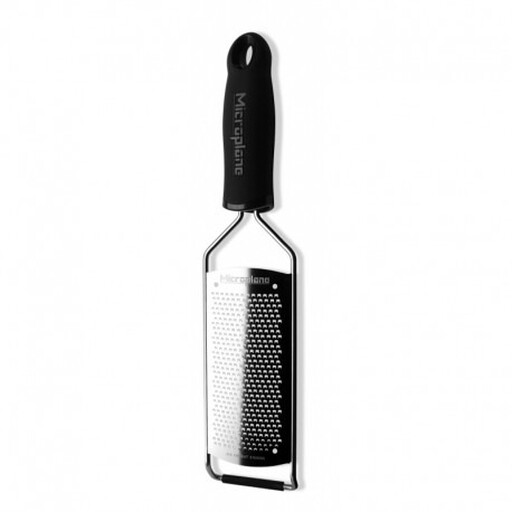
Why this model suits this profile: its extra-coarse surface is intended for firm vegetables, cabbage, certain cheeses and quick preparations.
Its grating surface is clearly distinct from a fine grater: it prioritises output and volume rather than claiming to be suitable for zest.
Extra-coarse stainless-steel surface, non-slip base, ergonomic handle and stated dishwasher-safe cleaning.
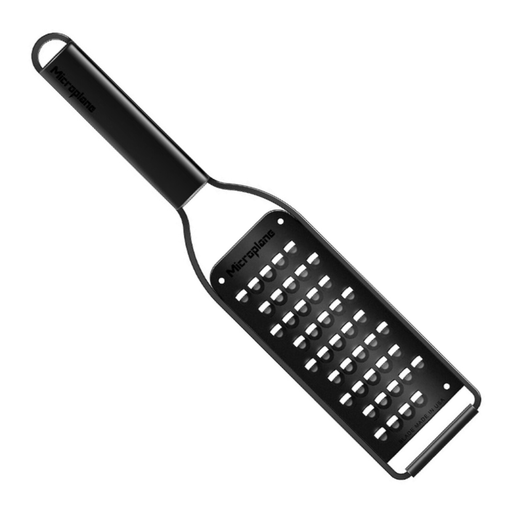
Why this model suits this profile: its medium surface is suitable for chocolate, citrus, ginger, garlic, firm vegetables and semi-hard cheeses.
Its intermediate fineness prevents you from choosing a grater that is too specialised when recipes move from baking to savoury cooking, with vegetables in the mix.
Stainless-steel blades, soft-touch handle, non-slip rubber foot and stated dishwasher-safe cleaning.
Explore our updated selection of graters and utensils suited to different levels of fineness, applications and storage requirements.
Yes. Fine-surface models are designed for Parmesan, pecorino and other hard cheeses. To create thicker shreds or grate a large quantity quickly, choose a medium or extra-coarse surface.
Hold the grater by its handle and use a soft brush, following the direction of the blades. If the manufacturer states that the model is dishwasher-safe, place it in the dishwasher according to the instructions. Never run your fingers directly over the sharp surface.
For lemon zest, nutmeg, cinnamon, garlic and ginger, choose a fine grater. A medium surface is more suitable if you also want to grate chocolate, vegetables or semi-hard cheeses.