
Livraison le jour même ou le lendemain

Qualité garantie

Débloquez vos offres de bienvenue: Livraison GRATUITE | Jusqu'à -80 % | 30 jours d'essai gratuits à JoyPlus
Téléchargez l'application
Metallic finishes bring a touch of shimmer and originality to any creative project. Whether for greeting cards, object decoration, or artistic drawings, the appeal of metallic-effect art supplies continues to grow. Faced with a wide array of options, it can be difficult to navigate the market and choose a product that combines versatility, safety, and great value. Our role is to shed light on the essential criteria to help you make an informed decision, steering clear of potentially misleading marketing claims.
Before we present our top picks, here are a few key points to guide your decision. This advice is based on objective criteria and standards applicable in the European market.
A good metallic craft kit should be adaptable to your various projects. Some products are designed exclusively for paper, while others offer excellent adhesion on non-porous surfaces.
Safety is a non-negotiable aspect, especially if the materials are intended for use by children. In France and across the EU, craft products are subject to strict regulations.
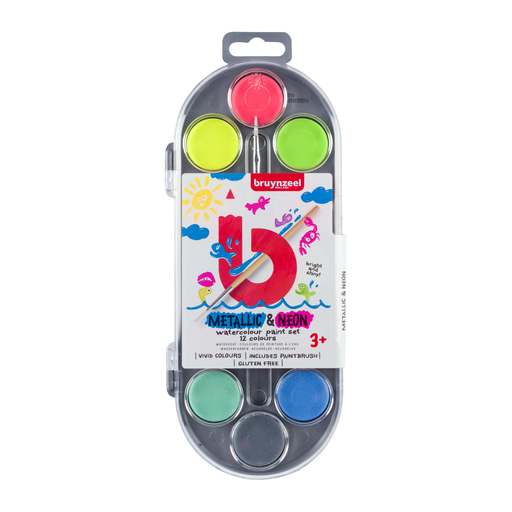
A kit that seems budget-friendly at first can prove costly in the long run if it is of poor quality. Consider the durability of the tools. For example, a metallic brush pen with replaceable tips offers a much longer lifespan than a disposable model. Similarly, a complete set that includes a brush and a mixing palette, like a neon and metallic creative set, is a practical and cost-effective solution for beginners, eliminating the need to buy extra accessories.
Taking these criteria into account, we have identified two products that meet distinct yet complementary needs.
Why We Recommend It
This set from the Dutch brand Royal Talens is an excellent entry point into the world of vibrant colours. It cleverly combines seven metallic and five fluorescent colours, offering a very broad creative palette. Its water-based and gluten-free formula makes it particularly suitable for young artists. The sturdy case is designed for practicality: its lid features wells to serve as a mixing palette, making it an all-in-one creative studio. The effect is striking on both white and black paper, where the colours reveal their full intensity.
Pros
Who Is This Product For?
This kit is especially recommended for families with children, watercolour beginners, and craft enthusiasts who enjoy scrapbooking or card making and work primarily on paper.
Why We Recommend It
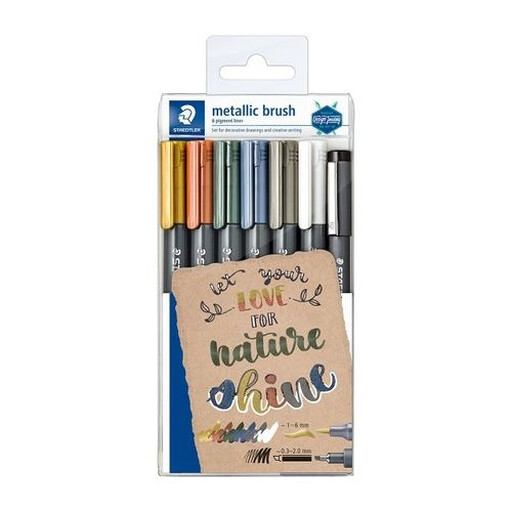
The STAEDTLER 8321 marker stands out for its robust design and almost industrial-grade quality. Its metallic fibre brush tip is built to last and allows you to vary the line width from fine to broad. It is designed for marking on a wide variety of smooth, non-porous surfaces like metal, glass, plastic, or ceramic. Its pigmented ink dries quickly and is resistant to water and friction, ensuring a durable mark. The real advantage of this product is its longevity: it comes with seven replacement tips, a detail that makes all the difference for regular use.
Pros
Who Is This Product For?
This marker is a prime solution for DIY enthusiasts, artisans, and anyone needing to make durable decorative or functional marks on objects. It is also perfect for the customisation of decorations, storage boxes, or equipment.
Our selection highlights two well-defined uses: creating on paper and marking on objects. If your projects require other types of tools, such as fine-tip metallic markers, acrylic paints in tubes, or other specific finishes, we invite you to browse our complete category. There you will find a wider range of solutions to bring all your ideas to life.
Explore our collection of metallic tools.
For optimal results on black paper, the technique is slightly different from that on white paper. Generously wet your brush and pick up a good amount of pigment from the pan to create a creamy paste. Apply the paint in a sufficiently thick layer. Unlike traditional watercolour where transparency is desired, here it is the opacity of the metallic pigments that will create a striking contrast against the dark background.
Yes, but not all markers are created equal. For good adhesion on smooth, non-porous surfaces like plastic or glass, it is essential to choose a marker with ink specifically designed for this purpose. Pigment-based markers, like the STAEDTLER 8321 model, are generally more suitable. They dry to form a thin layer of colour on the material's surface, which gives them good resistance to water and friction once the ink has cured.
The main difference lies in the tip. A classic marker usually has a rigid bullet or chisel tip, which produces a line of consistent width. A metallic brush pen, on the other hand, has a soft, flexible tip, similar to that of a paintbrush. This flexibility allows you to vary the line thickness depending on the pressure and angle applied. It is an ideal tool for calligraphy, illustration, or any creative work that requires varying between thick and thin strokes.