
Livraison le jour même ou le lendemain

Qualité garantie

Débloquez vos offres de bienvenue: Livraison GRATUITE | Jusqu'à -80 % | 30 jours d'essai gratuits à JoyPlus
Téléchargez l'application
Metal scrapbooking dies let you personalise cards, photo albums, gift wrap and invitations using a compatible die-cutting machine. But a set can quickly disappoint if you haven't checked its dimensions, designs or compatibility before buying.
Before you choose your cutting dies, take a moment to identify the three most common pitfalls.
A die can look impressive in a photo yet turn out to be suitable only for a small card. For a photo album, a birthday decoration or a wedding invitation, measure the space you have available and compare it with the dimensions listed on the product page.
This issue is especially common with frame dies, border designs and cutting stencils. A border that is too short or a frame that is too narrow can quickly limit your layout options.
Not all die-cutting machines accept the same die formats. Be sure to check:
Embossing folders and cutting dies are not necessarily used in the same way. Consult your machine's manual before ordering, and do a test run on a scrap piece of paper.
A very varied bundle can contain plenty of shapes you will hardly ever use. To build a coherent card-making kit, start from your main need: text, frames, floral motifs, numbers or seasonal decorations.
Alphabet and number dies are ideal for personalising names, dates and short messages. Flower and foliage dies lend themselves better to decorative compositions, while border dies structure the edges of a card or an album page.
The product page should state the material used when it plays an important role. Some items are described as metal or carbon steel dies, but this alone does not guarantee the same result on every type of paper.
For very fine designs, choose lines that are spaced far enough apart. Cardstock, decorative paper and lighter-weight sheets do not react in the same way. A particularly detailed cut may require several passes or an adjusted pressure setting.
Note the length and width of each die, rather than relying only on the packaging dimensions. On a standard card, a small design will work as a central decoration. For an album page, a set of shapes or a large background die will usually be more suitable.
Nested frame dies let you create several outlines from a single set. Border dies, meanwhile, can decorate the edge of a card, a page or an envelope, provided their length matches your project.
A commercial title may suggest several functions, while the actual contents are sometimes limited to just a few shapes. Check the number of pieces and what they are:
This check avoids duplicates and lets you gradually build a collection suited to your DIY craft projects.
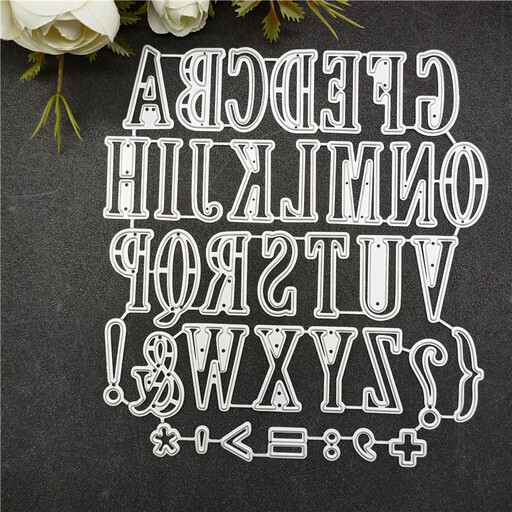
Why this choice suits this profile: With a complete alphabet, a single set is enough to create names, initials and short messages on cards or album pages.
The product page clearly states 26 capital letters, so you can easily check the set contents before buying.
An alphabet of 26 capital letters, presented as a set of metal dies for scrapbooking and card making.
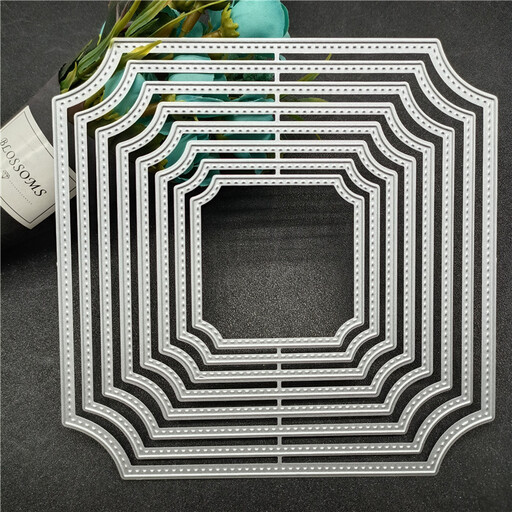
Why this choice suits this profile: Creators who care about fine details can vary the outlines of a wedding card, an invitation or an album page.
The set states eight pieces dedicated to irregular frames, so you can check the variety offered rather than relying on a single image.
A set of eight dies in varied shapes, designed for cards, albums and decorative projects.
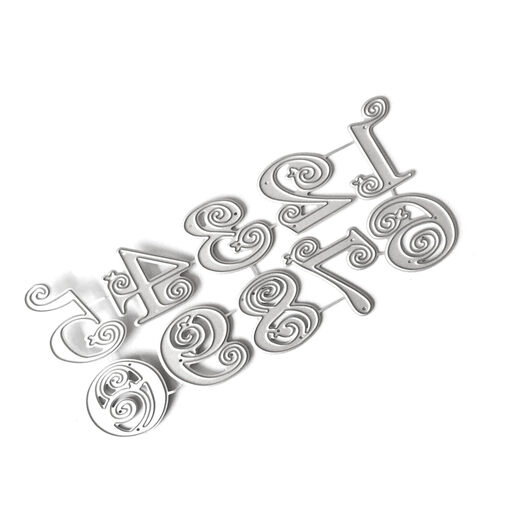
Why this choice suits this profile: People who regularly create calendars, dates, gift wrap or personalised cards can complete their alphabet with a set of numbers.
The product page explicitly mentions numbers and carbon steel. This reduces the risk of confusing this set with a general-purpose letter assortment.
Number dies, described as carbon steel, designed for card making and scrapbooking.

Why this choice suits this profile: This design works well for projects that need a decorative finish for an invitation, a greeting card or an album page.
Its title specifies that it is a floral border, so its use is easier to anticipate than that of a set without a clearly defined theme.
A metal border die with a floral lace pattern, suitable for card making and invitations.
We have put together a complete selection, updated in real time, of products that meet these demanding criteria and European safety regulations.
No. Compatibility depends on the machine model, the thickness of the plates and the die format. Check the manufacturer's recommendations before ordering.
Its lifespan depends on how often you use it, the type of paper and the pressure applied. To preserve your cutting dies, use the recommended platform, avoid materials not intended for this purpose and remove any residue after each session.
For a birthday card, numbers, letters and candle designs let you easily personalise the message. For a wedding invitation, frame dies, floral borders and foliage motifs provide an elegant decorative base. In any case, first check the dimensions of the design and the weight of the paper you are using.