
Livraison le jour même ou le lendemain

Qualité garantie

Débloquez vos offres de bienvenue: Livraison GRATUITE | Jusqu'à -80 % | 30 jours d'essai gratuits à JoyPlus
Téléchargez l'application
Personalising a card, invitation or photo album page becomes much easier with the right metal scrapbooking cutting dies for your machine. But between flattering photographs and sometimes vague descriptions, unwelcome surprises are never far away: a design that is too delicate for the paper you are using, an incompatible size or a less precise cut than expected.
This guide from the Joybuy Product Recommendation Officer helps you sort through the options using practical criteria: how you plan to use the dies, the stated material, and compatibility with your cutting and embossing machine.
The terms cutting dies, cutting stencils and embossing dies are sometimes incorrectly used as synonyms. A metal die is placed in a compatible machine to cut a shape from paper, card or any other material approved by the manufacturer.
A stencil is mainly used to apply ink, paste or paint. An embossing die, on the other hand, primarily creates a raised effect. Before ordering, check the function actually advertised: cutting, embossing or both.
A highly detailed flower may look large in a photograph even though it is actually intended for a small card. Likewise, a border die will not necessarily cover the full width of an album or invitation.
The product listing should specify the dimensions of each element. If it does not, check the available information or contact the seller. This check is particularly important for card making, wedding menus and photo album layouts.
An intricate design behaves differently on thin paper, textured paper or thick card. If the pressure is not right, small details may remain stuck in the die or tear when being removed.
Start by testing the die on a scrap of paper. Then adjust the plates, pressure and number of passes according to your machine’s recommendations. The presence of a carbon steel die does not mean you can ignore the settings specified by the manufacturer.
Several products in this selection mention carbon steel. This material is commonly used for metal dies, but this information alone is not enough to guarantee their lifespan or cutting quality in every situation.
Look at the consistency of the edges, the fineness of the details and the protection against moisture. After each use, remove paper residue and store the dies in a dry pouch. Avoid leaving them loose in a box: they could become misshapen or scratch other scrapbooking accessories.
Not all machines offer the same opening width or pressure. Before buying, compare:
A die may be perfect for cutting paper in one machine and much less practical in another. If the product listing does not specify compatibility, treat this as something to check before placing your order.
Choose the shape according to your actual projects. Flower and leaf dies, butterflies and botanical designs work well in a wide range of creations. Dies featuring letters, festive designs or specific themes are more suited to occasional needs: birthdays, births, weddings or seasonal decorations.
For regular use, choose designs that are fairly easy to release and clean. Highly intricate shapes can be particularly decorative, but they require more patience when removing the paper.
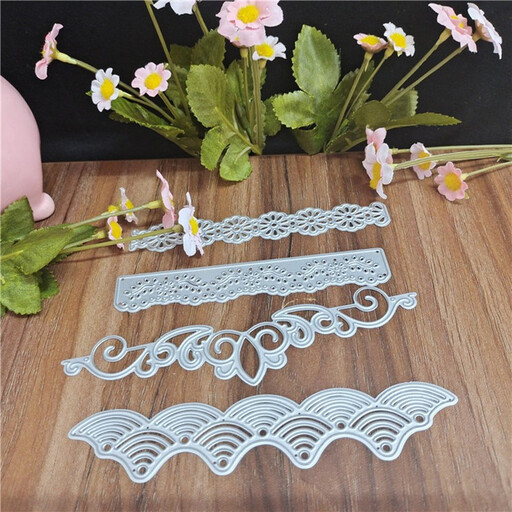
Why this choice suits this profile : this set of four dies lets you get started with paper cutting and embossing using several shapes, without immediately investing in a large collection of designs.
The listing states that there are four carbon steel pieces. Even so, check the dimensions and compatibility with your machine before buying.
A set of four dies made from advertised carbon steel, suitable for cards and DIY craft projects.
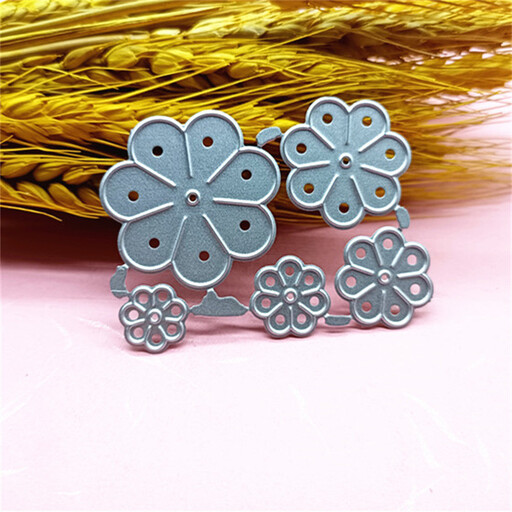
Why this choice suits this profile : the layered petal and leaf designs are ideal for creations that focus on dimension, volume and personalised floral compositions.
The petals and leaves are cut separately, allowing you to arrange your creations freely rather than being limited to a single design. Check the stated dimensions before ordering.
A set dedicated to petals and leaves, suitable for card making, albums and paper decorations.

Why this choice suits this profile : this border die is ideal for repeated card-making, invitation and album-decoration projects that require a consistent finish.
This border design is specifically suited to edging work, so you avoid buying a general-purpose set. Measure the area to be decorated before using it.
An intricate floral design created for borders, wedding invitations and card making.
We have put together a comprehensive, real-time updated selection of products that meet these demanding criteria as well as European safety requirements.
For a clean cut, place the paper on a suitable plate and position the die with the cutting edge facing the material, following your machine’s instructions. If the handle or mechanism meets unusual resistance, do not force it.
After cutting:
These simple steps help prevent fibres from building up and make it easier to reuse the dies. Their lifespan depends in particular on the pressure applied, the materials cut, maintenance and the number of passes.
You need a cutting and embossing machine that is compatible with metal dies and their dimensions. Check your device’s manual for the plate thickness, recommended pressure and approved materials. If in doubt, test the die with a similarly sized one.
It depends on the die and machine you use. Thick card may require several passes or a particular setting. Excessive pressure could, however, damage the plates or mechanism. Check the available guidance and always start with a sample.
Clean them after every session, dry them if necessary and avoid storing them in a damp environment. Do not use them on materials for which they are not designed. For very fine designs, remove the paper gradually to avoid bending the metal details.