
Livraison le jour même ou le lendemain

Qualité garantie

Débloquez vos offres de bienvenue: Livraison GRATUITE | Jusqu'à -80 % | 30 jours d'essai gratuits à JoyPlus
Téléchargez l'application
A metal garden shed can help clear space in your garage, protect a lawn mower or keep the tools you use on the patio together. But attractive photos and promises of durability aren’t enough to help you choose the right one. A shed that’s the wrong size, poorly ventilated or difficult to lock can quickly become more of a nuisance than a help.
Before you buy, there are three common pitfalls to watch out for:
If space is limited, a 150 x 90 cm metal shed is suitable for long-handled tools, watering cans, patio accessories or a few pieces of foldable equipment. However, check the external dimensions, the floor area you can actually use and the height beneath the roof.
For a lawn mower, several bicycles or garden furniture, a large 235 x 171 cm garden shed gives you much more room to move around. A wide double door makes it easier to get bulky equipment inside. Remember to measure every access point: the gate, path, steps and shed doorway.
Also leave clear space around the structure so you can open the doors fully and clean the shed easily.
A galvanised steel garden shed will generally resist oxidation better than an untreated steel model, depending on the quality of the coating and the conditions it’s exposed to. However, galvanising doesn’t remove the need to check for scratches, cut edges and areas where water might collect.
A sloping roof helps rainwater run off. It’s a better choice than a completely flat roof if your shed will be installed in a wet area or somewhere regularly exposed to heavy rainfall. If you live in an area with snow or strong winds, or your garden is particularly exposed, read the instructions and the manufacturer’s fixing recommendations carefully.
The base matters just as much: a stable, perfectly level surface helps prevent the doors from warping and keeps the whole structure steady. Descriptions such as ‘weather-resistant’ refer to the product’s design; they aren’t a guarantee against every type of weather.
Built-in ventilation helps air circulate and can reduce condensation. It’s useful when storing tools, pool accessories or furniture, but it doesn’t replace good organisation inside the shed. Avoid placing items right up against the walls and leave enough room for air to circulate.
A lockable double door makes it easier to get inside and lets you use a padlock that’s compatible with the fitting. The level of protection is generally basic, so avoid storing valuables inside unless you add suitable security.
Finally, check what’s included in the box: numbered parts, illustrated instructions, gloves and fixings. For many metal models, assembly is safer with two people. The edges may be sharp during assembly, so wear gloves and keep children away from the work area.
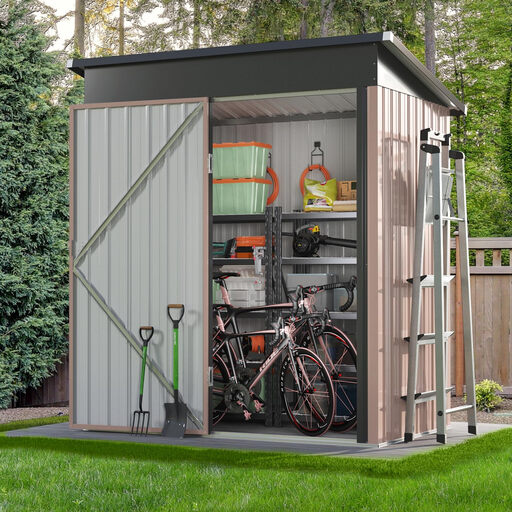
Why it’s a good fit for this type of user: Its compact size makes it a good choice for a large balcony, patio or small garden, keeping everyday tools together without taking up too much room.
The dimensions are clearly listed, and the product details mention ventilation openings and a sloping roof: two things to check before choosing a compact model.
Galvanised steel, dimensions of around 150 x 90 cm, double doors with a hasp for a padlock and built-in ventilation.
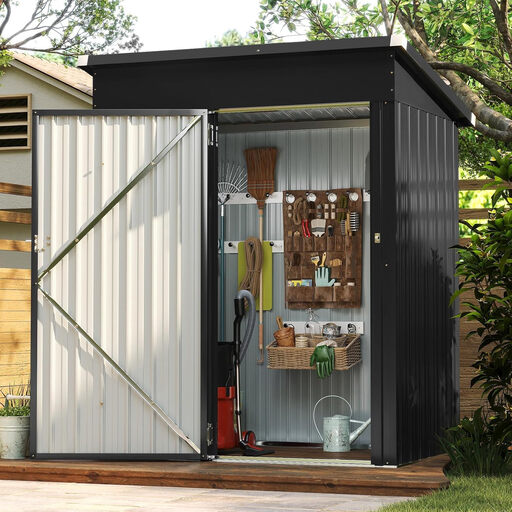
Why it’s a good fit for this type of user: This compact version is ideal for households looking for a simple outdoor storage solution for garden tools and patio accessories.
The product details specify a sloping roof, airflow and a fitting for a padlock, rather than relying on a general promise of durability.
Galvanised steel frame, space-saving design, double doors and ventilation openings.
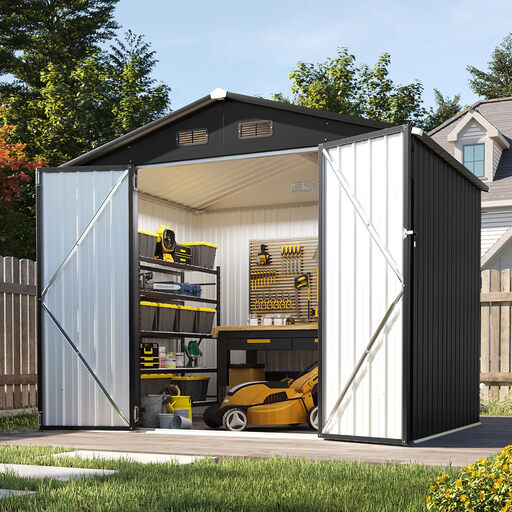
Why it’s a good fit for this type of user: Its spacious interior suits homeowners with a large garden who want to store bicycles, a lawn mower, furniture and tools all in one shed.
The dimensions of 235 x 171 x 196 cm are clearly stated, so you can check how much floor space it will take up before buying. Assembly is designed for 3 to 4 people, so make sure you plan for that too.
Wide double-door access, galvanised steel, a pitched roof, built-in ventilation and a lockable fastening.
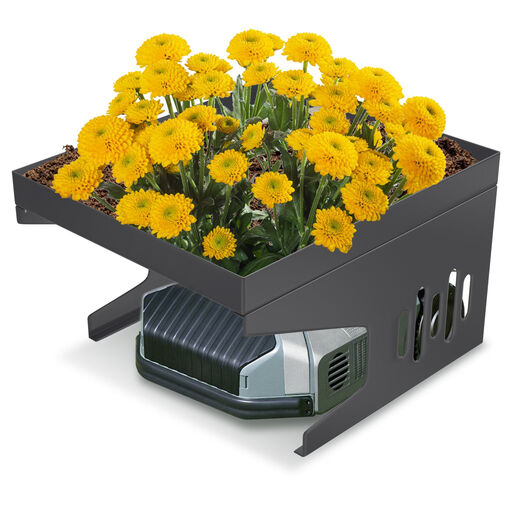
Why it’s a good fit for this type of user: This purpose-designed shelter protects a robot lawn mower in the garden without taking up the space a large shed would need.
Its small dimensions are designed for a specific purpose. It shouldn’t be chosen as a shed for tools, bicycles or a conventional lawn mower.
Compact 70 x 60 x 42,5 cm design, described as offering protection from rain and UV rays.
We’ve put together a comprehensive, regularly updated list of products that meet these strict selection criteria and comply with European safety regulations.
Install the structure on stable, level, well-drained ground. A concrete base can make anchoring easier, but always check the instructions for your chosen model and the rules that apply in your local area. Depending on the shed’s footprint and the location, you may need to submit a prior planning application : check with your local council.
For maintenance, regularly clear leaves and debris from the roof, wipe the walls with a damp cloth and inspect the fixings. Keep an eye on any deep scratches or signs of oxidation and, if necessary, touch them up with paint suitable for metal. Inside, use compatible shelves or hooks to keep tools separate and allow air to circulate.
A size of around 150 x 90 cm may be enough for a few tools and accessories. For two bicycles, a lawn mower and furniture, measure each item and choose a larger model, such as one around 235 x 171 cm, with double doors.
Galvanised steel and an outdoor-grade finish help limit corrosion and sun damage. However, the shed’s lifespan depends on the quality of the coating, anchoring, ventilation and maintenance. Whatever the material, you should inspect the structure regularly.
Yes. Suitable fixings improve stability, particularly in a garden exposed to wind. The type of anchor you need depends on the surface — a concrete base, paving or compacted ground — and the manufacturer’s instructions. A perfectly level surface also helps keep the doors aligned and the lock working properly.