
Livraison le jour même ou le lendemain

Qualité garantie

Débloquez vos offres de bienvenue: Livraison GRATUITE | Jusqu'à -80 % | 30 jours d'essai gratuits à JoyPlus
Téléchargez l'application
A cluttered garage isn’t necessarily short on space – it’s often lacking the right organisation. Tools, boxes, containers, sports equipment and DIY accessories end up on the floor, exposed to damp and hard to find when you need them. Metal garage storage can free up valuable room, provided you check a few key features before buying.
A stated capacity of several hundred kilos can sound reassuring. However, the most useful figure is the maximum static load per shelf. This tells you the weight a single shelf can support when the load is stationary and evenly distributed.
Even a robust shelving unit with a high total capacity shouldn’t be loaded entirely on one shelf. Place heavy items on the bottom and never exceed the manufacturer’s stated limit.
Width alone isn’t enough when choosing a metal garage shelf. You also need to measure:
An adjustable industrial shelf is particularly practical if its levels can be adapted to your items. This stops you wasting space between shelves that are too far apart.
A tall, loaded unit needs to be stabilised. The presence of an anti-tip kit is a good starting point, but its effectiveness also depends on wall fixing and the type of wall surface. In a damp cellar or garage, also check the usage recommendations – some models aren’t designed for very humid environments.
Finally, MDF panels that are coated or combined with a metal frame don’t behave like solid steel. Avoid standing water and distribute loads evenly.
A steel storage unit, whether painted or galvanised, provides a solid base for tools, supplies and bulky equipment. However, check the thickness of the uprights, the presence of cross braces and the type of assembly.
Clip-together systems can be assembled without bolts or tools, but it’s still essential to follow the instructions and wear gloves during installation. Quick assembly doesn’t mean you can skip checking the stability of each level.
Compare these separately:
A workshop shelf intended for paint pots, machinery and heavy boxes needs a sufficient safety margin. The values shown in the selection below are based on the data provided for the products concerned; they don’t replace the assembly and safety instructions.
Adjustable levels make it easier to store items of different sizes. Some shelving units can also be split into two separate units or converted into workbenches with storage space. For smaller accessories, a wall-mounted tool rack prevents overloading shelves and keeps your most-used tools within easy reach.
For personal items or products you want to keep separate, a lockable metal cabinet offers a more practical solution than open shelving. It can hold documents, consumables and small equipment, as long as you respect the maximum shelf load.
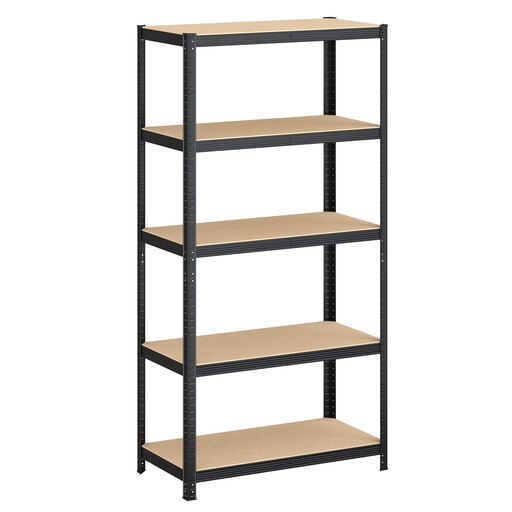
Why this suits this profile: its five adjustable levels (in 5 cm increments) let you gradually organise a garage, cellar or storeroom without needing multiple units.
The stated load is 120 kg per shelf and 600 kg total. The included anti-tip fixing must be installed before use.
Size 50 × 100 × 200 cm, galvanised steel construction and tool-free clip-together assembly.
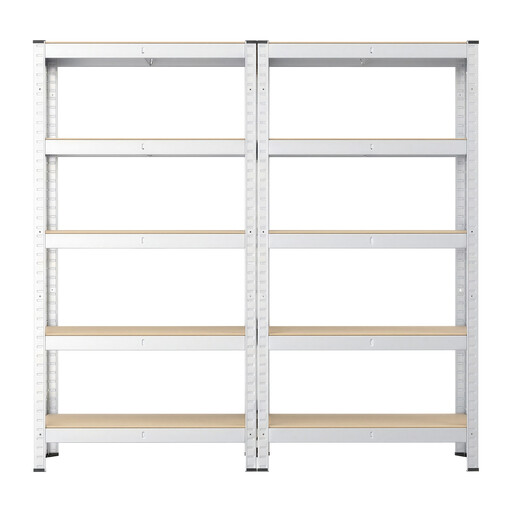
Why this suits this profile: this set offers flexible organisation, letting you spread tools, supplies and equipment across several areas of the garage or workshop.
The two units can be used separately, and each shelf supports up to 130 kg according to the provided data.
Five adjustable shelves, total stated capacity of 650 kg and two anti-tip kits included.
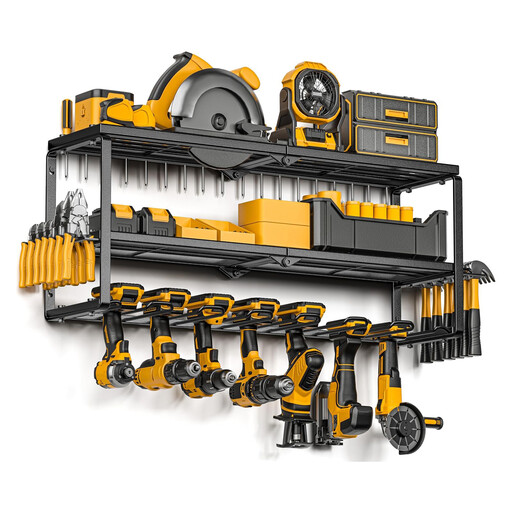
Why this suits this profile: it’s ideal for DIYers who regularly use drills, screwdrivers and accessories and want to keep their work surface clear.
Wall storage reduces unstable piles on the floor, but the fixing must be suitable for your wall and the actual weight hung on it.
Seven levels, cordless tool holders and a stated capacity of up to 68 kg.
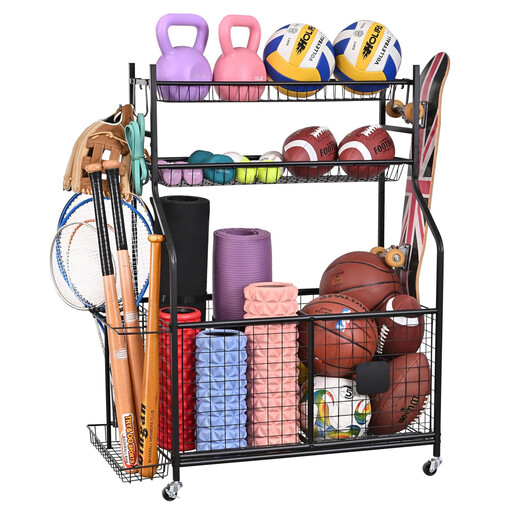
Why this suits this profile: this rack brings together balls, yoga mats, dumbbells and kettlebells in one mobile unit.
The compartments and hooks separate different sizes instead of stacking them. However, check the dimensions and load before placing bulky equipment on it.
Basket, hooks and castors for easier movement around the garage.
We’ve put together a comprehensive, real-time updated list of products that fully meet these strict selection criteria and European safety regulations.
Before assembly, clear the area and check that the floor is reasonably level. For a shelf designed for heavy loads, install the lower levels before the higher ones, then check each connection. Fix the unit to the wall using the supplied device when recommended.
To extend its lifespan:
Allow for the depth of the shelf itself, plus a walkway in front of it. A depth of 30 to 40 cm is often suitable for boxes and small tools, while a 50 cm model can accommodate bulkier equipment. Always measure the available space with the doors open.
Use the supplied anti-tip kit if one is included, and choose a fixing that’s compatible with your wall. Don’t place heavy items high up and never exceed the maximum static load per shelf. A properly distributed load improves overall stability.
Yes, if its dimensions, capacity and usage conditions match your space. It’s practical for keeping documents, accessories or small items separate, but it should also be fixed if the manufacturer provides an anti-tip device. Metal surfaces should also be protected from persistent damp and standing water.