
Livraison le jour même ou le lendemain

Qualité garantie

Débloquez vos offres de bienvenue: Livraison GRATUITE | Jusqu'à -80 % | 30 jours d'essai gratuits à JoyPlus
Téléchargez l'application
Metal flower cutting dies let you create regular shapes quickly for card making, photo albums and paper decorations. But a well-presented product page doesn't always guarantee a smooth experience with your cutting machine.
Before buying dies for scrapbooking, check three points that are often overlooked: compatibility, the intricacy of the patterns, and the exact contents of the set. This approach will help you avoid disappointing purchases and choose designs that are genuinely suited to your DIY projects.
Some products mix up the terms "cutting" and "embossing". Yet these two functions produce very different results. A cutting die separates the paper by following its outline, whereas an embossing die is mainly used to create a raised pattern.
The same die can sometimes be used for both techniques, but it all depends on your machine, the plates and the accessories you have. So it's best to read the description carefully before placing your order.
A highly detailed floral pattern can look stunning in a photo, but then become a pain to remove once cut, especially if it's small or has lots of internal cut-outs. On the other hand, a large die might overhang a standard card or take up too much space in an album.
For paper cutting, always compare the stated dimensions with:
A set with lots of shapes isn't necessarily more worthwhile. Patterns that are too similar to each other or too small are likely to end up at the bottom of a drawer. To build a versatile collection, look instead for an assortment of flowers, leaves, frames or tags.
Rose and leaf patterns, for example, can be used to create a border, a bouquet or a cover decoration. They generally offer far more possibilities than a single large silhouette.
Cutting machine dies aren't universal. Check your machine's manual and verify:
If the product page doesn't specify compatibility, treat this as an essential check before buying. Excessive pressure can damage the paper, the die or the plates.
The word "metal" isn't enough to tell you about a die's rigidity, durability or precision. When the specifications aren't listed, don't assume it will last for ages.
Look in particular at:
For embossing, the paper thickness and the combination of plates also play a crucial role. Always test on a scrap piece before tackling a finished card.
Small floral dies get mixed up very easily. A pouch, a compartment box or a magnetic sheet will help you keep your DIY supplies organised and find each pattern quickly.
After use, remove paper fibres with a soft brush. Keep dies away from moisture and store them flat. These simple steps help limit oxidation and warping, though they can't guarantee a specific lifespan.
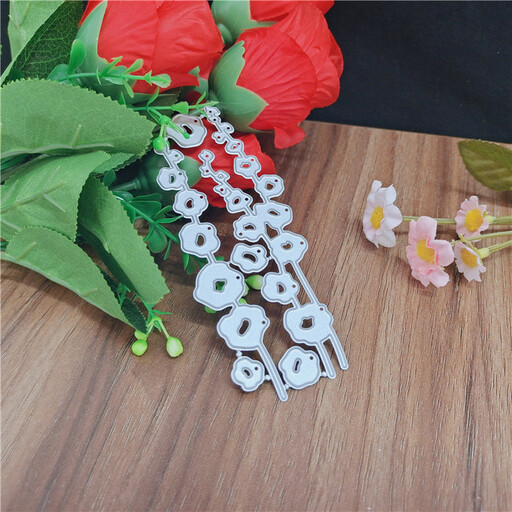
Why this choice suits this profile: Its assortment of small flowers is ideal for first attempts at card making, album decorating and paper compositions.
The focus on small patterns lets you start with elements that are easy to combine, without investing in a highly specialised set straight away.
Kit presented for cutting, embossing and scrapbooking; floral patterns suitable for cards and paper creations.
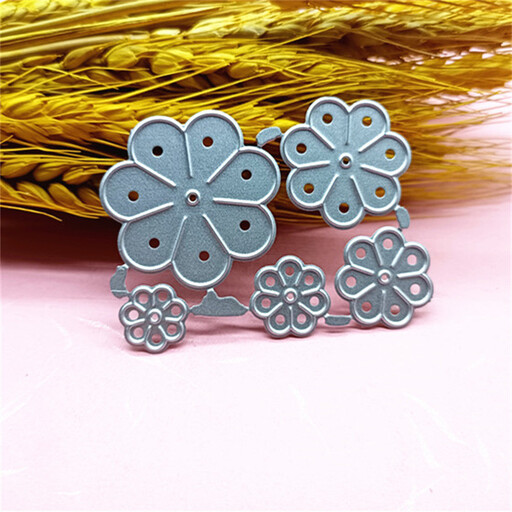
Why this choice suits this profile: Creators who love intricate compositions can layer the petals and leaves to build multi-level flowers.
The layered approach prevents the decoration from looking too flat when your project calls for more depth and dimension.
Set dedicated to petals and leaves; suitable for cards, albums and decorative paper creations.
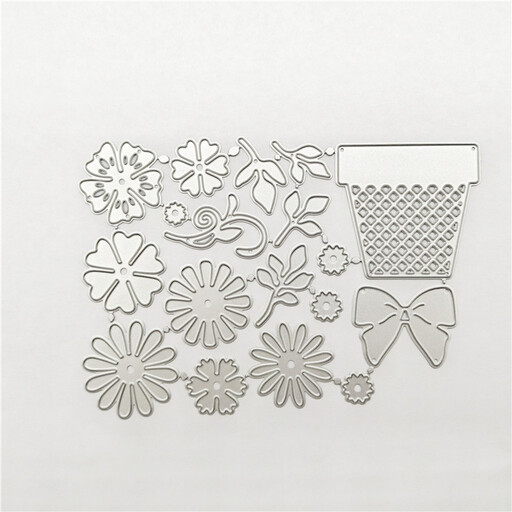
Why this choice suits this profile: The background and frame patterns are ideal for people who regularly make cards, album pages or decorative frames.
A background or frame pattern can be reused across multiple formats, rather than limiting your purchase to a single decoration.
Functions stated as stencil, embossing and cutting; combination of flowers, leaves and framing patterns.
We've put together a comprehensive list, updated in real time, of products that meet these demanding selection criteria and European safety standards.
For a clean cut, use paper that's suitable for your machine and place the die with the cutting side facing the base, following the manufacturer's instructions. A precision mat or a thin sheet of paper can sometimes make it easier to remove waste, as long as you stick to the configuration recommended by your machine.
For card making, start with a simple composition: one main flower, two leaves and a tag. You can then attach the elements with foam adhesive to create dimension. The dies can also complement flower stencils, stamps or printed papers.
No. Compatibility depends on the plate system, the pressure applied and the machine's size. Check your machine's manual and the product page before buying.
It depends on the machine and the die. Standard card-making paper often works for simple cuts, while very intricate patterns may need a different weight. Always test on a scrap piece first.
Store them flat, away from moisture, and remove any residue after each use. If the die is difficult to pass between the plates, don't force the machine.