
Livraison le jour même ou le lendemain

Qualité garantie

Débloquez vos offres de bienvenue: Livraison GRATUITE | Jusqu'à -80 % | 30 jours d'essai gratuits à JoyPlus
Téléchargez l'application
Metal die-cutting templates for scrapbooking let you quickly transform paper, thin cardstock or textured paper into decorative motifs. They are ideal for making DIY cards, decorating photo albums and creating layered compositions using a die-cutting and embossing machine.
However, not all products meet the same needs. A design that is too delicate can be difficult to remove from the die, a poorly sized template may not fit your machine, and an overly specialised set could end up languishing in a drawer. Here are the key criteria to check before buying, followed by a selection suited to different creative profiles.
A die may be marketed as suitable for scrapbooking without actually working with every machine. Dimensions, material thickness and plate systems vary from one device to another.
Before ordering, check:
A set containing many pieces is not necessarily more practical. Very small elements can be fiddly to handle, tricky to remove from the die or difficult to glue onto a card.
For a metal die intended for card making, focus instead on the variety of shapes and their actual use: borders, frames, letters, flowers, foliage or seasonal motifs.
Paper residue can build up in fine details. Without cleaning, ejection becomes less consistent and the design may lose precision. A metal die should be stored flat, away from moisture and separated from tools that could scratch it.
A cutting mat can also protect your work surface while preparing papers and cleaning small elements.
Die-cutting templates for creative hobbies are usually made from thin metal, with edges designed to score or cut paper under pressure. Where available, the product listing should specify the material, dimensions and intended use.
For beginners, choose designs with clear outlines. Highly detailed models are better suited to users who are already comfortable adjusting pressure and positioning plates.
Measure the available space on your cards and album pages. A narrow border serves a different purpose to a large frame or a central motif.
Compare the stated dimensions with your final base, taking into account the margins needed for gluing.
Depending on its design and the accessories used, a die can be used for cutting, embossing or creating a stencil. These uses are not always interchangeable. If you are looking for embossing dies, make sure the product is specifically designed to create a raised effect, not just for cutting.
For a clean result, use suitable paper, test on a scrap piece first, and do not force the machine if the resistance feels excessive.
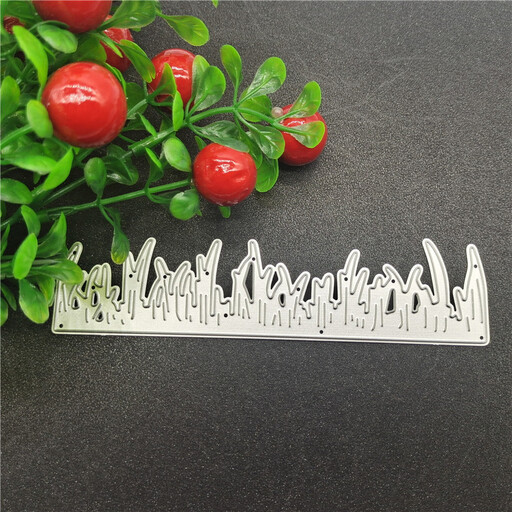
Why this choice suits this profile: this grass-inspired border lets you create landscapes, nature-themed cards or album pages adorned with a repeating pattern.
The shape is clearly specialised: you can quickly decide if it matches your projects before buying, without being guided solely by the number of pieces.
A border usable for albums, cards and paper decorations. Check the dimensions before ordering.
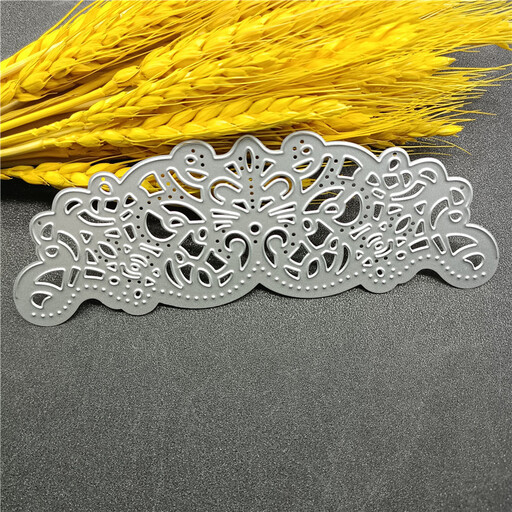
Why this choice suits this profile: a lace border is ideal for wedding cards, album pages and compositions where framing takes centre stage.
The border function is identifiable before purchase. You can therefore check the length, the scale of the pattern and its suitability for your card.
A design intended for decorating cards and albums. Embossing depends on the machine and plates used.
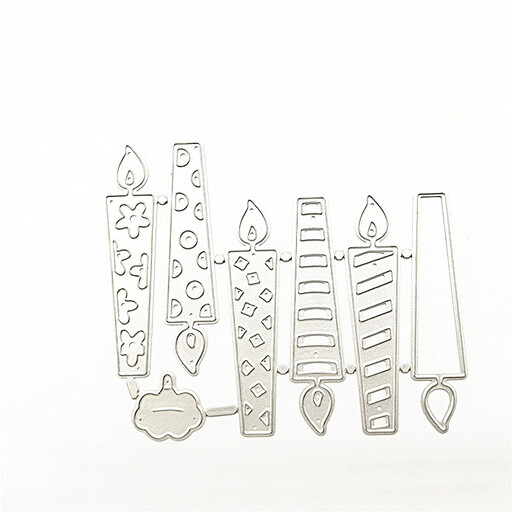
Why this choice suits this profile: this candle motif is designed for birthday, congratulations, wedding or greeting cards.
The theme is precise and easy to evaluate. This reduces the risk of buying a multi-purpose set where several shapes would not suit your projects.
A design suitable for several occasions. The quality of the result depends on the paper, pressure and machine compatibility.
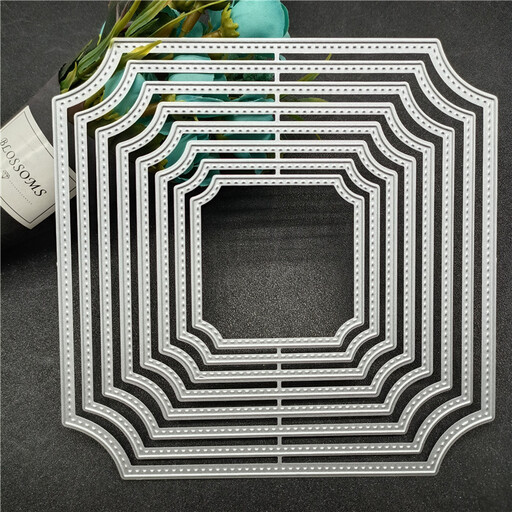
Why this choice suits this profile: several frame sizes allow you to structure cards, scrapbooking pages and photo album decorations.
The set clearly states its focus on frames. However, check the size of each piece to avoid formats that are unusable with your machine.
Eight shapes offered to vary your framing. Embossing requires an appropriate setting.
A few scrapbooking accessories can simplify preparation and finishing:
For nature-inspired designs, explore flower and butterfly dies, as well as leaves and botanical borders. For personalised projects, frames, letters and themed shapes offer more composition possibilities.
We have compiled an up-to-date list of products that meet these selection criteria and the general requirements for creative hobby items sold in the European Union.
No. Compatibility depends on the die size, the working area and the combination of plates used. Consult your machine's manual and the dimensions stated on the product listing before purchasing.
Cardstock is often preferred for its stability, but the compatible weight varies depending on the machine and the design. Test on a scrap piece before cutting your decorative paper. For fine details, paper that is too thick can make ejection difficult.
Remove residue after each session, avoid knocking the edges and store dies flat. Do not apply excessive pressure to compensate for incompatibility: first check the plates, mat and material thickness.