
Livraison le jour même ou le lendemain

Qualité garantie

Débloquez vos offres de bienvenue: Livraison GRATUITE | Jusqu'à -80 % | 30 jours d'essai gratuits à JoyPlus
Téléchargez l'application
Metal cutting dies for scrapbooking let you create patterns quickly for card making, photo albums and craft projects. But you need to pick the right set – a poorly thought-out purchase can leave you with a set that's difficult to use, or even incompatible with your cutting machine.
Before you decide, focus on three things: the type of design, technical compatibility and how easy it is to remove the cut pieces. These factors matter far more than fancy packaging or a large number of shapes advertised on the box.
Some dies are designed to cut paper, while embossing dies are primarily intended to create a raised pattern. Certain models combine both functions, but the result depends on the machine you use, the plates fitted and the pressure setting.
For your card-making projects, check that the product description clearly states:
A product described as a "cutting stencil" doesn't necessarily replace a metal die with a sharp cutting edge.
Highly detailed designs are often the most appealing, but they may need several passes through the machine. With thick, textured or fibrous paper, small cut pieces can stay stuck or tear when you try to remove them.
To start with, floral shapes, leaves, frames and borders are generally easier to use across different projects. Letter dies and border dies also work well on birthday cards, invitations or album pages.
A set with lots of shapes isn't necessarily more practical. If the dies are hard to store or their designs only get used once, some of the pieces may end up languishing at the back of a drawer.
Before you order, ask yourself a few questions:
Most metal dies are used with a cutting machine that has plates and a pressure system. However, the platform size, plate thickness and available pressure can vary significantly from one machine to another.
Check your machine's manual before placing an order. If the product description doesn't clearly mention compatibility, go for a medium-sized design and compare the dimensions carefully.
A metal die must have a sufficiently sharp outline to follow the design accurately. Some products state they are made from carbon steel, like the set of four dies featured in this selection. For other references, check the product description to confirm the exact material.
Also look at:
These details have a direct impact on paper cutting, waste removal and the lifespan of the die.
A compact design will suit small cards, while a frame or border needs to be long enough to cover the area you want. Take the time to measure your card blanks before buying.
For your first attempts, start with standard paper, then gradually increase the thickness. Card-making card, decorative paper and textured sheets all behave differently. A suitable cutting mat and a pick tool can also help with removing the finest details.
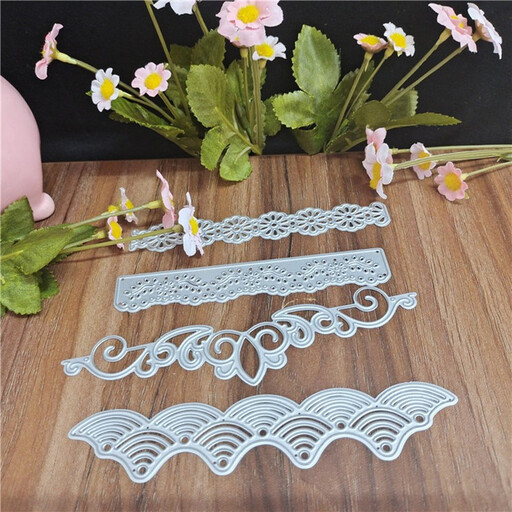
Why this choice suits this profile: With four different shapes, this set lets you practise on several projects without buying lots of separate dies. The mention of carbon steel gives you a useful indication of the material – just confirm it in the product description before ordering.
The number of pieces is clearly stated. You can compare the actual contents of the set rather than relying on a vague promise of versatility.
A set of four pieces with an indication of carbon steel. Remember to check the dimensions and compatibility with your machine.
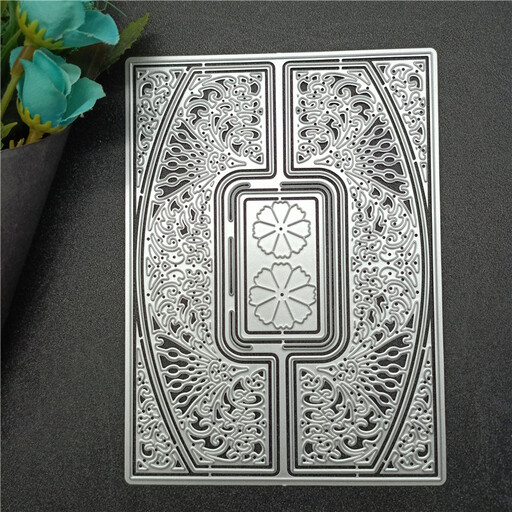
Why this choice suits this profile: Creators looking for a structured decorative composition can use this floral design as a frame or as a central element on a card.
The frame function gives you a clearer design direction than a random assortment of unrelated motifs. It helps you create a harmonious layout.
A floral frame design, described for card making, embossing and scrapbooking machines.
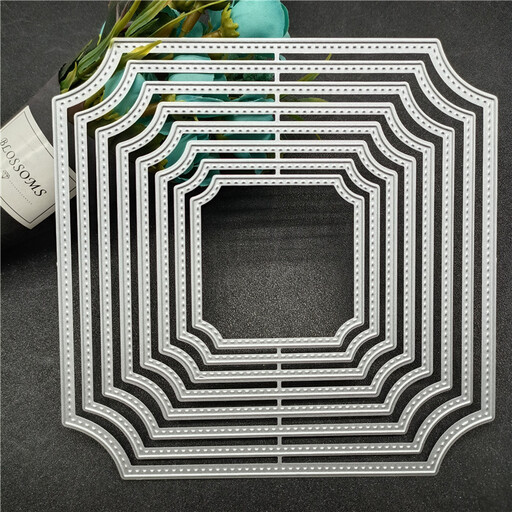
Why this choice suits this profile: These eight frames can work well for making batches of invitations, wedding cards or repeated decorations for photo albums.
The stated quantity lets you plan for batch projects and avoids having to change design for every card.
A set of eight irregular frames, described for wedding cards, scrapbooking and embossing.
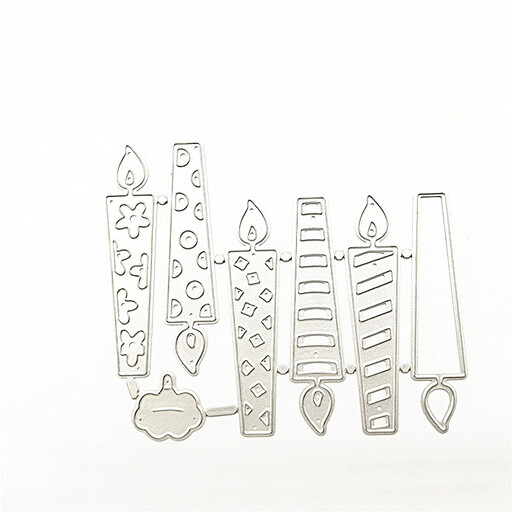
Why this choice suits this profile: This design is aimed at people who create birthday, congratulations or celebration cards around an instantly recognisable theme.
The theme is clearly defined: you choose a design suited to a specific use, rather than a too-general assortment.
A candle design described for congratulations cards, birthdays, weddings and scrapbooking.
We've put together a comprehensive, real-time updated list of products that fully meet these strict selection criteria and European safety regulations.
How long a die lasts depends on how often you use it, the pressure applied and the materials you cut. To keep your equipment in good condition:
There's no need to increase the pressure beyond the recommended settings. Too much pressure can damage the plates or the die.
You need a cutting machine with a platform and plates that are compatible with physical dies. Compatibility depends on the size, thickness and pressure system. Check your machine's manual and compare the dimensions with those given in the product description before buying.
Some dies can handle card-making card or thin card, but their capabilities vary depending on the design and the machine. Very fine details are generally easier to cut in soft paper. Test on a scrap piece before working on your final card.
Choose a suitable paper, set up the plates correctly and run it through the machine at a steady pace. For detailed designs, a cutting mat or a pick tool can help remove small waste pieces. Avoid pulling the paper sharply to reduce the risk of tearing.