
Livraison le jour même ou le lendemain

Qualité garantie

Débloquez vos offres de bienvenue: Livraison GRATUITE | Jusqu'à -80 % | 30 jours d'essai gratuits à JoyPlus
Téléchargez l'application
A poorly chosen die can quickly turn a creative session into a real obstacle course. Incomplete cuts, details that remain trapped in the paper, dimensions that don't fit your machine, or a design that's too intricate – there's no shortage of unpleasant surprises when you buy metal cutting dies for scrapbooking online.
Whether you want to create personalised cards, decorate a photo album, or prepare Christmas decorations, it's better to compare the shape, size and intended use rather than being seduced by a simple photo. Here are the criteria to review before choosing your next cutting dies.
Not all metal dies work automatically with every cutting machine. The result depends on the thickness of the die, the plate system used, and the pressure applied.
Before placing an order, check:
A die may work perfectly with one manual machine and produce a different result on another model. If the information is missing, consult the product page or contact customer service before ordering.
Lace-style patterns, very fine flowers and complex borders are appealing, but they can be more difficult to release from the paper. Paper that is too thick may get stuck in the small openings, while paper that is too thin can tear.
To avoid disappointment, match the paper to the design:
A scrap piece of paper also lets you adjust the pressure and check the result before cutting into a finished card.
Accumulating nearly identical designs quickly limits your options. For a first scrapbooking collection, it's better to invest in a balanced set: a frame, a border, a few decorative elements, plus some letters or numbers.
Dies for card making can then be used for birthdays, weddings, thank-you notes or festive occasions. Flowers, butterflies, snowflakes and Christmas motifs combine easily, while alphabet and number dies let you personalise your messages.
The size of the die must match your project. On a standard card, a large border can be used to create a frame, but it will probably be too big for a small tag. For cutting intended for a photo album, measure the available area to avoid a design spilling over the edge of the page.
In particular, check:
Nesting frame sets are especially useful for varying your borders and creating layered effects with different papers.
A cutting die separates the paper by following its outline. An embossing die is mainly used to create a raised pattern or texture. Some products are described as cutting and embossing tools, but the result depends on the machine, the plates and the paper used.
If you want a clean outline, choose a die clearly described as a cutting die. For a textured effect, make sure the product page mentions the embossing function. This check avoids confusing a cutting tool with an accessory meant to produce deep relief.
After each use, remove small pieces of paper with a soft brush, an embossing tool, or a wax sheet designed for cutting. Avoid metal objects, which could scratch the die or damage its details.
Store dies flat, in a pouch or a compartmentalised box. Fine designs should be protected from moisture and knocks. Organising by theme – flowers, alphabet, Christmas, frames – will save you time when preparing your projects.
The options below cover several common uses for paper crafts, from personalised cards to album decoration.
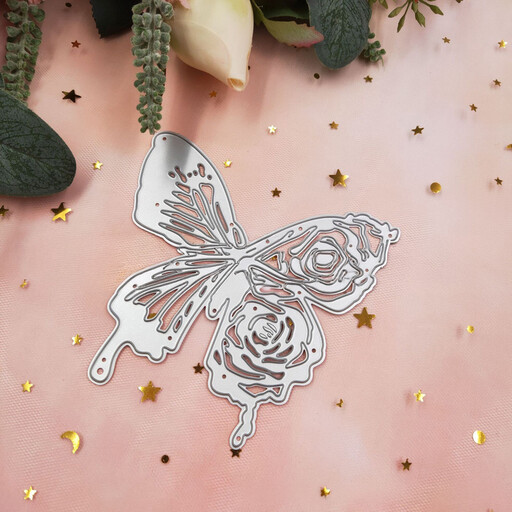
Why this choice suits this profile: With a single design, you can explore cutting, paper layering and card decoration without needing multiple references from the start.
Its themed format means you don't invest in a set that's too specialised, and you can test compatibility with your machine on different papers.
A butterfly design in a size suitable for cards, albums and paper compositions.
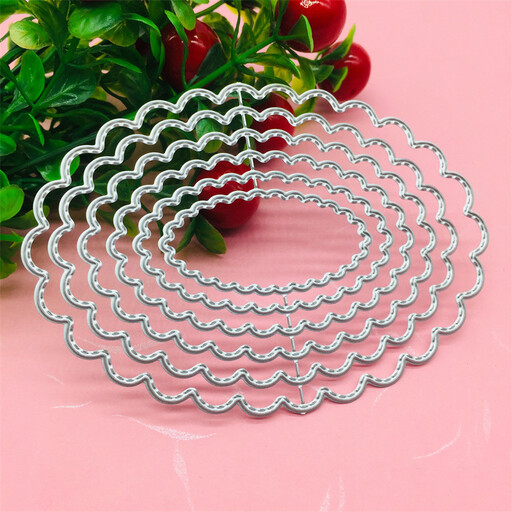
Why this choice suits this profile: Nesting frames multiply the possibilities for creating structured cards, invitations and album pages with several border layers.
The different nesting sizes let you adapt the frame to your project, rather than using one border everywhere.
Nesting lace frames, described for cards, scrapbooking and embossing.
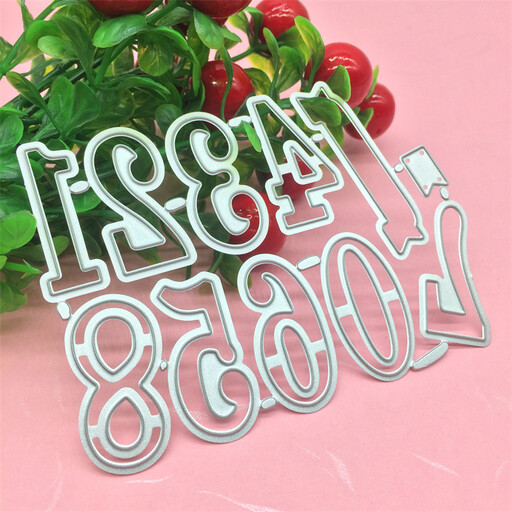
Why this choice suits this profile: Creators who regularly personalise cards, albums or tags can compose names, dates and messages thanks to this set of letters and numbers.
The stated inclusion of 26 capital letters and 10 numbers means you don't need to buy several sets to create short texts.
An alphabet of 26 capital letters and a set of 10 numbers to personalise your paper projects.
To complement these profiles with a seasonal touch, flower, butterfly, snowflake and Christmas dies are ideal. Wreath, snowflake or floral frame designs will find their place on greeting cards and decorative album pages. Always check their dimensions and compatibility with your machine before buying.
We've put together a comprehensive, real-time updated list of products that fully meet these strict selection criteria and European safety regulations.
Compatibility depends on the size of the die, the opening of your machine, and the plate stack. Check your machine's manual and compare it with the information on the product page. A metal die is not necessarily compatible with a machine designed only for embossing.
This varies depending on the metal used, the fineness of the design, the pressure applied, and the type of paper. Regular use with abrasive or very thick paper can accelerate wear. Storing flat, cleaning gently and using appropriate pressure all help preserve the details for longer.
Yes, provided you choose a suitable design and dimensions. Frames and borders work well for cards, alphabets for personalised messages, while flowers and butterflies lend themselves to decorative layering. For a photo album, measure the available space and check that the final thickness remains compatible with the binding.