
Livraison le jour même ou le lendemain

Qualité garantie

Débloquez vos offres de bienvenue: Livraison GRATUITE | Jusqu'à -80 % | 30 jours d'essai gratuits à JoyPlus
Téléchargez l'application
Metal cutting dies for scrapbooking let you create clean, regular shapes for cards, photo albums and paper decorations. But a poorly planned purchase can quickly lead to disappointment: a motif that's too small, details that don't cut cleanly, or a die that's incompatible with your machine.
Before you fill your basket, here are the main pitfalls to avoid, the technical criteria to check, and a selection of options suited to different types of crafters.
The terms cutting dies, stencils and templates are sometimes used interchangeably. However, these accessories don't always serve the same purpose:
Read the description carefully and check whether the product is listed as compatible with paper cutting, embossing, or both.
A die photographed in close-up can look substantial when its actual size is only suitable for a small card. For creative card making, remember to check:
Dies featuring flowers, butterflies or foliage are particularly versatile. Their size is still crucial, though: it might suit a subtle decoration, a central composition or a full border.
A die featuring a wedding message will be perfect for one specific card, but far less useful for an everyday album. To get the most from your craft accessories, look for a good balance between decorative motifs and shapes that are easy to reuse: frames, leaves, borders, flowers and letters.
Models described as being made from carbon steel or metal intended for cutting are designed to produce clean outlines when used with a compatible machine. That doesn't guarantee the same result on every device, though: the pressure applied, the plates used and your machine's settings all play a part.
Avoid forcing a die into a machine whose size or plate system isn't designed for it. Excessive pressure can distort the motif or damage your accessories.
Before ordering, check:
For soft materials, a metal die is used to form the outline, while a separate tool may be needed to prepare or adjust the material. If you regularly cut card, you can also browse our dedicated selection for cutting card.
Scrapbooking paper, cardstock and thin card don't all behave the same way. To avoid crushed edges:
Dies designed for paper shouldn't automatically be used on leather, thick plastic or rubber. For these materials, an electric rotary cutter or cordless electric scissors can be a more suitable solution, with specific precautions.
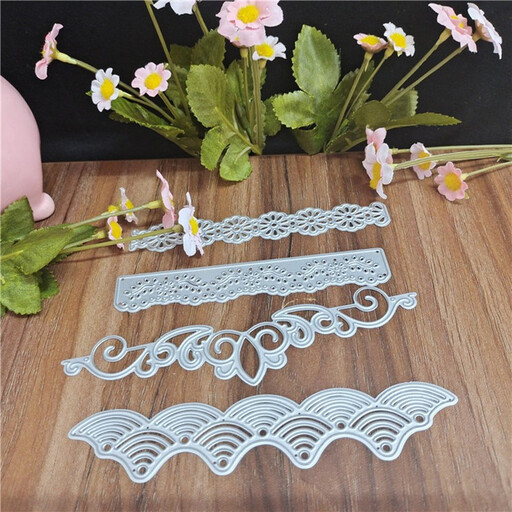
Why this suits this profile: This set of four dies is ideal for your first card-making, album and paper decoration projects, without being limited to a single theme.
The multi-pack format reduces the risk of buying a single, less versatile shape, while letting you vary your compositions.
A set of four pieces described as carbon steel dies for card making and paper crafts.
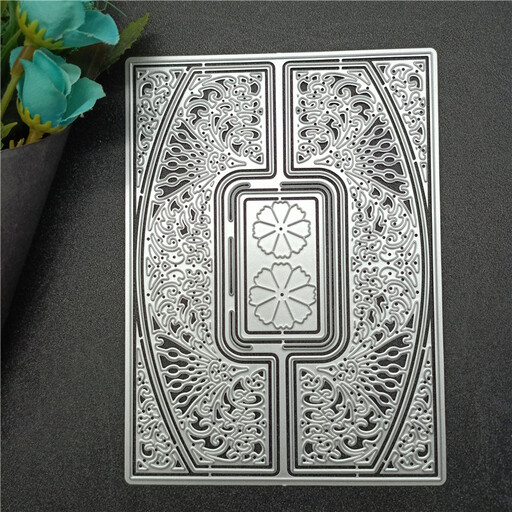
Why this suits this profile: Its floral frame motif can serve as a visual structure for polished cards, album pages or invitations.
The frame shape structures the composition more than a small isolated motif and can be incorporated into many different layouts.
A floral frame-style motif, presented as a kit for card making and scrapbooking.
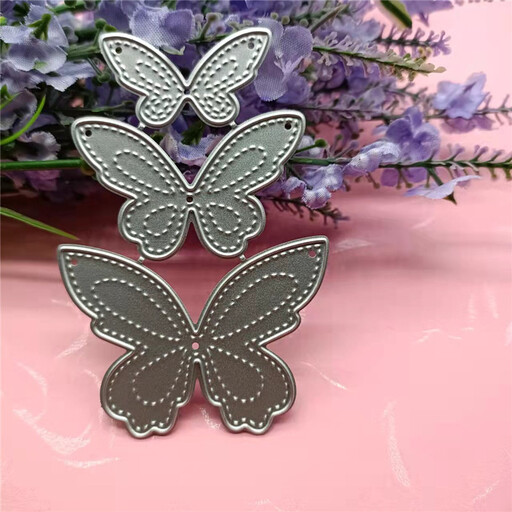
Why this suits this profile: The three butterflies let you create light, airy decorations for a birthday card, wedding card or memory page.
The different silhouettes make layering easy and prevent a monotonous look on a single project.
A set of three butterfly shapes, advertised for use on paper, cards and albums.

Why this suits this profile: This cordless tool is for people who also cut card, felt, leather, plastic or fabric, as a complement to standard dies.
It doesn't replace a cutting die, but stops you from using one on materials that need a suitable blade.
A 4V rechargeable lithium battery, advertised USB-C charging and a stated weight of 0.386 kg.
We've put together a comprehensive, real-time updated list of products that meet these demanding selection criteria and European safety regulations.
No. Compatibility depends on the size of the die, your machine's opening and the plate system you're using. Always check your machine's manual and the dimensions listed on the product page.
Its lifespan varies depending on how often you cut, the materials used, the pressure applied and how well you maintain it. Paper and thin card are generally less demanding than plastic or leather. Store your dies flat, away from moisture, and remove any residue after each session.
The budget depends on how many motifs you want, the machine and accessories you already own. A small set of dies lets you start with several shapes, while a specialised set will suit a specific project better. Remember to also budget for a mat, compatible plates and suitable paper to avoid incomplete purchases.