
Livraison le jour même ou le lendemain

Qualité garantie

Débloquez vos offres de bienvenue: Livraison GRATUITE | Jusqu'à -80 % | 30 jours d'essai gratuits à JoyPlus
Téléchargez l'application
A metal bathroom towel rack can free up space and make daily drying much simpler. Yet some purchases quickly disappoint: dimensions that don't fit your wall, a finish that can't handle humidity, or a structure too narrow to hold several towels.
Before you order, it's worth separating marketing claims from features you can actually verify. Here are the points to check, followed by a selection suited to different types of users.
A wall-mounted towel rack might look discreet in a photo, but an extra few centimetres of depth can block a door from opening or make it hard to move around in a small bathroom. Always check the full dimensions: width, depth and height.
For example, the metal model measuring 600 × 85 × 110 mm only protrudes 85 mm from the wall. That detail is far more useful than a vague claim like "space-saving", which doesn't tell you how much room it actually takes up.
Steam, splashes and soap residue put metal surfaces through their paces. A poorly chosen material or finish can lead to marks, oxidation and a build-up of grime.
No finish lets you skip regular cleaning. After a shower, wipe down areas that get wet often and avoid abrasive products, which can damage the coating. In a room with poor ventilation, position the rack so air can circulate freely around the towels.
Three tiers don't necessarily mean you can comfortably hang three thick bath towels. A damp bath towel takes up much more space than a flannel or a small hand towel. Look at the spacing between the tiers, the stability of the base and the usable width.
A 3-tier towel rack can work well for a family or for use near a pool. For a single person, a more compact stand is often enough.
For a wall-mounted towel rack, measure the available width and note any nearby sockets, skirting boards or furniture. A width of 600 mm can hold several items, but the actual capacity also depends on how you fold or space out the towels.
For a freestanding towel rack, check instead:
The term metal towel rack covers a whole family of products, not a specific quality level. Check whether the listing states the type of metal, the finish and the care instructions. A description that mentions resistance to damp environments should be taken as a claimed feature of the product, not a guarantee against all corrosion.
Sturdiness also depends on the construction: welds, screws, joints and wall fixings. If the maximum load isn't stated, avoid hanging several very heavy items or leaning on the structure.
A wall-mounted rack needs wall plugs and screws suited to your wall type. The hardware required will differ depending on whether you have a solid wall, tiles, plasterboard or a hollow partition. Check for pipes before drilling and follow the instructions that come with the product.
The term wall-mounted towel dryer can refer to a simple drying rack or a heated unit. These two categories shouldn't be confused: a passive model isn't designed to heat the room and doesn't need any electrical connection.
The products below are designed for different uses. The information is limited to what's available in the product listings: check the dimensions, maximum load and accessories before you buy.
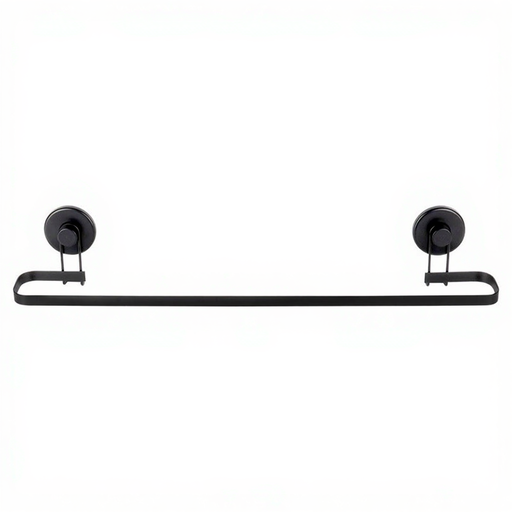
Why this choice suits this profile: Its wall-mounted design and stated dimensions make it ideal for a bathroom where every centimetre counts, especially in a flat or a small cloakroom.
The width, depth and height are all clearly stated, making it easy to compare with your available space before installation.
Stated size of 600 × 85 × 110 mm, clean lines and space for several towels.
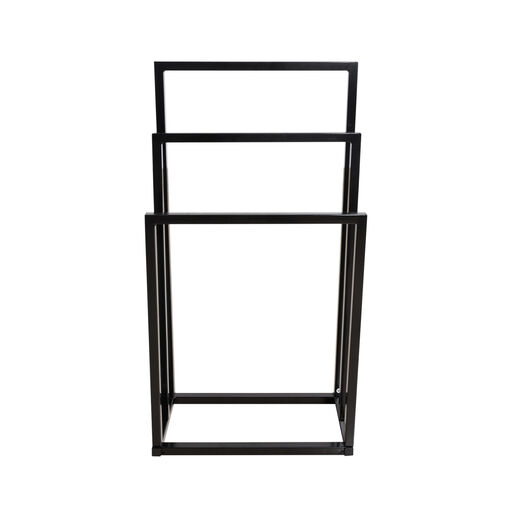
Why this choice suits this profile: Its freestanding design and three tiers are aimed at users who want to organise several large towels without drilling into the wall.
The self-supporting design means you don't have to worry about choosing the wrong fixings. However, do check the floor space it takes up and its stability when the towels are wet.
Freestanding structure, three tiers and intended use for bath towels, pool towels or blankets.
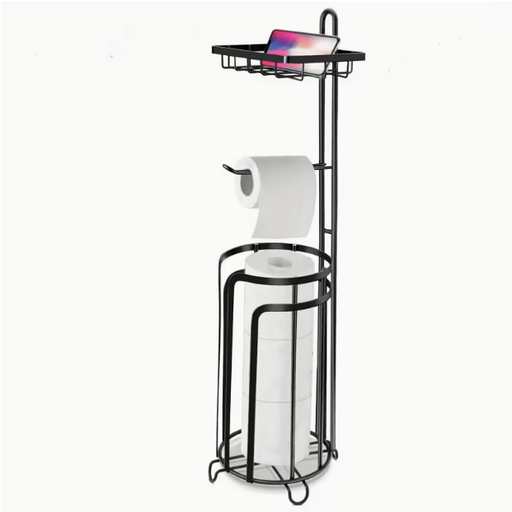
Why this choice suits this profile: This self-supporting steel stand is designed for storing several rolls or paper items, in a kitchen, utility room or service area.
Its stated use as a paper towel holder means you won't be misusing a bathroom towel rack for a purpose it wasn't designed for.
Self-supporting design, steel construction and multi-tier configuration, according to the product name.
We've put together a comprehensive list, updated in real time, of products that meet these strict selection criteria and European safety regulations.
To keep your towel storage practical:
The passive models shown here don't need any electrical supply. Their running cost therefore depends mainly on the purchase price, maintenance and, for a wall-mounted version, the fixing hardware. A heated unit belongs to a different category: it should be assessed on its power output and the installation requirements.
Locate the grout lines or the drilling area, use a tile drill bit and turn off the hammer action at first. Check beforehand that no pipes run behind the wall. The wall plugs must match the actual wall material, especially if it's plasterboard.
There's no universal capacity. It depends on the width of the bars, their spacing, the stated load and the thickness of the towels. A width of 600 mm can hold several items, but it's best to space them out to help them dry.
Yes, as long as its footprint doesn't get in the way. Measure the base and allow enough room to reach the bars. In a very tight space, a shallow wall-mounted towel rack can free up more floor area.