
Livraison le jour même ou le lendemain

Qualité garantie

Débloquez vos offres de bienvenue: Livraison GRATUITE | Jusqu'à -80 % | 30 jours d'essai gratuits à JoyPlus
Téléchargez l'application
There's nothing worse than a perfect day on the slopes ruined by a seemingly minor detail: the wrong pair of socks. Frozen feet, dampness, blisters… These minor miseries can quickly turn a great run into a bad memory. Yet, choosing the right pair of socks is as crucial as selecting your skis or snowboard.
This guide is here to help you navigate the world of merino wool ski socks. We'll break down the essential technical criteria and present our selection of the best models to help you find the perfect pair, cutting through the marketing jargon.
Before you jump on a particular model, it's essential to understand what makes a great ski sock. Here are three points you should never overlook.
For skiing, cotton is public enemy number one. It absorbs sweat but doesn't wick it away, leaving your feet damp and therefore cold. Merino wool is the ultimate fibre for winter sports. Its ultrafine fibres provide exceptional thermal insulation, even when damp, while being naturally breathable and odour-resistant. Blends with synthetic fibres (like polyamide and elastane) are added to improve the sock's durability and elasticity.
Compression ski socks are no longer just for elite athletes. Targeted compression (usually graduated, tighter at the ankle and decreasing towards the calf) stimulates blood circulation. The result: less muscle fatigue and faster recovery after a long day on the slopes. A real advantage for enjoying back-to-back days of skiing without ending up with heavy legs.
A good pair of men's or women's ski socks must come up higher than the boot to prevent painful rubbing on the shin. Look for models that feature:
Our editorial team has analysed the market to bring you a selection of models that meet a variety of needs, from the dedicated skier to the versatile athlete.
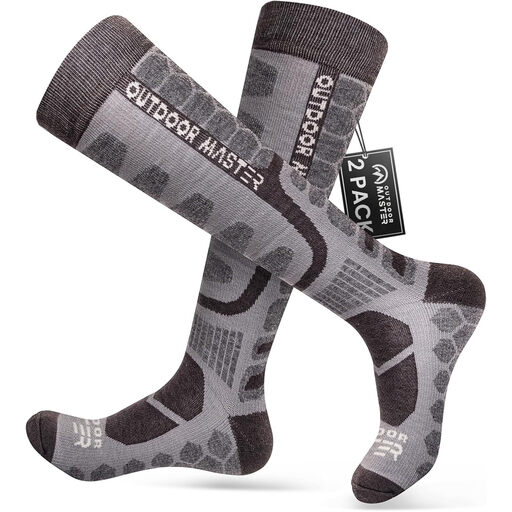
What Makes Them Stand Out
This model ticks all the boxes for winter sports: an effective blend containing 30% merino wool and a targeted compression design. Their technical weave ensures optimal moisture management, keeping feet dry even during intense activity. The reinforced padding zones on impact points make them an excellent choice for skiers and snowboarders.
Key Features
Who Is It For? For demanding skiers and snowboarders looking for a complete technical model that combines warmth, moisture-wicking, and muscle support to optimise performance and comfort.

The Practical Alternative
This product stands out for its ultra-practical and hygienic concept. Made of 100% polyester, these compressed socks are individually vacuum-packed. They won't replace a technical pair for regular use, but they are a brilliantly clever backup solution.
Key Features
Who Is It For? For nomads, travellers, or anyone who wants a clean, ready-to-use backup solution in their bag. An excellent option to slip into your suitcase or gym bag for emergencies.
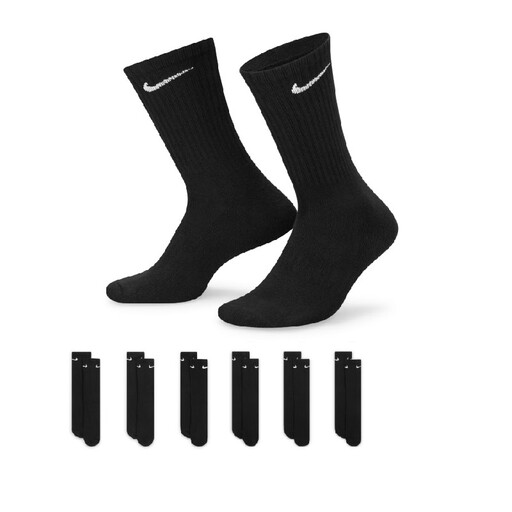
The Gold Standard for Training
While not strictly ski socks, this Nike model is a reliable choice for training and physical preparation. Equipped with Dri-FIT technology and a thick terry sole, they provide comfort and shock absorption—valuable qualities for any athletic activity.
Key Features
Who Is It For? For versatile athletes looking for a quality sock for their off-piste training. An ideal complement for physical preparation before and during the ski season.
While technical socks reign supreme on the slopes, everyday comfort shouldn't be overlooked. If you're also looking for options for other activities or are curious about the properties of alternative materials, feel free to explore other collections.
For example, our collection of soft-top bamboo socks for women offers a level of softness and breathability that is highly appreciated for daily wear.
Merino wool is the star of technical materials for one simple reason: its thermoregulation. It keeps you warm in cold weather and remains breathable when your effort intensifies. Unlike traditional wools, its fibres are so fine that it doesn't itch and feels soft against the skin. Finally, its natural antibacterial properties limit the development of unpleasant odours.
No, thicker does not mean warmer—quite the opposite. Socks that are too bulky can compress your foot inside the boot, cutting off blood circulation and thus causing a sensation of cold. It's better to opt for a well-fitting sock of moderate thickness. Warmth should come from the quality of the fibre (like merino), not its volume.