
Livraison le jour même ou le lendemain

Qualité garantie

Débloquez vos offres de bienvenue: Livraison GRATUITE | Jusqu'à -80 % | 30 jours d'essai gratuits à JoyPlus
Téléchargez l'application
A men’s waterproof jacket might seem straightforward to choose… until the first downpour that just won’t let up. Between promises of “water-repellent” fabric, cuts that are too snug, and technical figures thrown at you without explanation, the wrong decision can quickly prove costly and ruin your comfort.
Before you place an order, start by distinguishing the jacket you need for daily commutes from the waterproof hiking jacket designed for hours of walking. A lightweight men’s windbreaker doesn’t meet the same demands as a hardshell intended for camping, trekking or outdoor activities.
A water-repellent treatment helps droplets slide off the fabric, but it doesn’t guarantee lasting protection in heavy rain. For regular use in rainy regions, the mountains, or urban commutes in wet weather, check for a waterproof membrane, a laminate, or clearly stated technical specifications.
The seams deserve the same attention. A jacket may have protective fabric but still let water in through the zips or joins if these vulnerable areas aren’t properly designed.
A thick jacket isn’t necessarily more effective in the rain. A lightweight hardshell protects against water and wind, but it doesn’t always replace an insulating layer. In winter, a men’s warm jacket can incorporate a fleece lining or be worn with multiple layers.
A 3-in-1 technical jacket usually lets you wear the shell on its own, the lining on its own, or both together. This versatility comes in handy when temperatures change, provided you check the overall weight and freedom of movement.
A cut that’s too tight restricts movement and compresses the clothes you wear underneath. Conversely, a jacket that’s too loose can let the wind sneak in. Measure your chest circumference and compare it with the product’s size guide. For hiking or trekking, allow enough room for a jumper or fleece.
Adjustable cuffs, an adjustable hood, and a drawcord at the hem all help to block out draughts. These details are far more useful than a flashy logo or a trendy colour.
The water column height, expressed in mm H₂O, indicates the water pressure the fabric can withstand during a test. With comparable methods, the higher the value, the more the material is supposed to resist significant pressure. However, this figure alone isn’t enough: the design of the seams, the hood, and the zips all play a crucial role.
For the PELLIOT fleece-lined jacket featured below, the product page states 35,900 mm H₂O according to the JIS standard. This is a figure provided by the manufacturer, so compare it cautiously with products tested using other methods.
A breathable outdoor jacket must help wick away the vapour your body produces. Breathability is usually expressed in g/m²/24 h, according to a specific test method. The product page for the PELLIOT 3-in-1 model mentions 16,000 g/(m²·24 h), according to JIS.
This value doesn’t guarantee you’ll stay perfectly dry in every situation. The intensity of your activity, the outside temperature, the layers you’re wearing, and ventilation all directly affect your comfort. Underarm ventilation zips can make all the difference during a climb or sustained activity.
For trail outings, choose a fabric described as abrasion-resistant, especially if you wear a rucksack or move near rocks and branches. The product page for the PELLIOT 3-in-1 model indicates over 40,000 abrasion cycles, according to the information provided for this product.
Follow the care instructions carefully: a gentle cold wash for some models, zips done up before machine washing, no bleach, and air drying. Incorrect care can damage the surface treatments and reduce comfort over time.
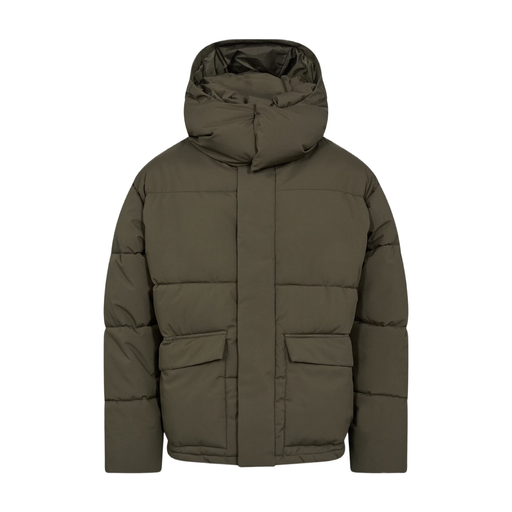
Why this choice suits this profile: this lightweight men’s jacket is ideal for daily commutes, mid-seasons and windy evenings when you’re mainly after an easy-to-carry layer.
The product page describes light protection against damp and wind, without presenting this model as a hardshell designed for prolonged heavy rain.
100% polyester, full-length zip, classic collar and machine washable at 30°C according to the care instructions provided.
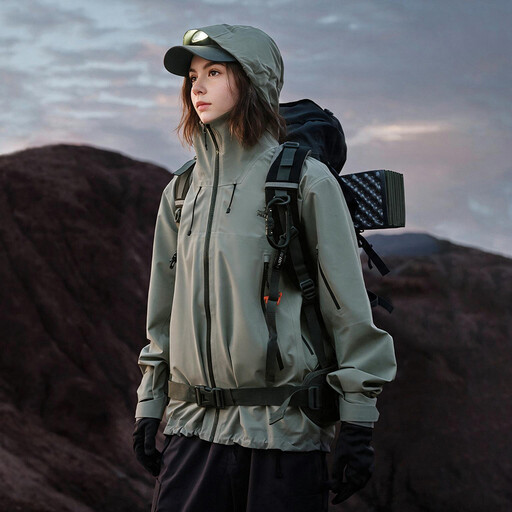
Why this choice suits this profile: its unisex format and outdoor-focused features can suit those who switch between hiking, urban commutes and outings in changeable weather.
The product page mentions underarm ventilation zips, a zipped sleeve pocket and a fabric described as lightweight and stretchy.
Hood, adjustable cuffs and hem, fabric described as waterproof, windproof and abrasion-resistant, with a RECCO reflector indicated on the product page.
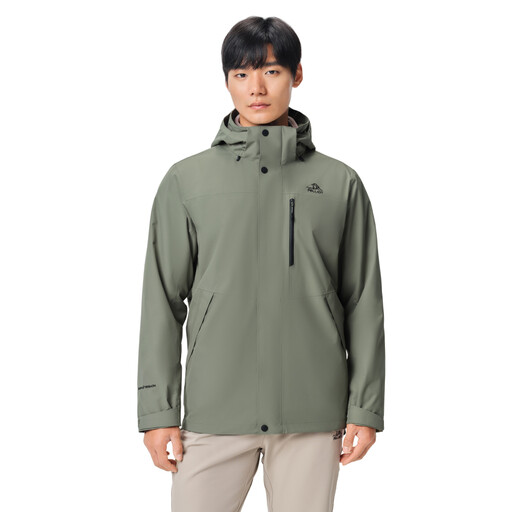
Why this choice suits this profile: its 3-in-1 design is aimed at camping and trekking enthusiasts, as well as those looking for a versatile men’s winter warm jacket.
The product page distinguishes between shell-only, lining-only and combined configurations. This helps avoid confusing rain protection with thermal insulation.
Stated values of 35,900 mm H₂O and 16,000 g/(m²·24 h) according to JIS, fleece lining, adjustable hood and cuffs.
We’ve put together a comprehensive selection, updated in real time, of products that meet these demanding criteria and European safety standards.
For a unisex waterproof jacket, the garment measurements are more reliable than the size label alone. Compare the dimensions in centimetres and take your base layer into account, especially for a hiking jacket or winter use.
Yes, provided its features match your environment. For city commutes, a lightweight jacket with a hood can be enough for a short shower. For cycling, long walks or regions that are very exposed to wind, choose a model with adjustments, protected seams and a clearly stated membrane.
A hardshell jacket focuses primarily on rain and wind protection, often with a lightweight construction. A 3-in-1 jacket adds a removable lining, usually fleece or insulating. This makes it adaptable across several seasons, but it’s often bulkier.
Its lifespan depends on how often you use it, friction, washing and exposure to the elements. Following the care instructions helps preserve the fabric and surface treatments. When water no longer beads up, the seams start to wear, or the membrane begins to peel, it’s time to consider replacing or repairing the garment.