
Livraison le jour même ou le lendemain

Qualité garantie

Débloquez vos offres de bienvenue: Livraison GRATUITE | Jusqu'à -80 % | 30 jours d'essai gratuits à JoyPlus
Téléchargez l'application
Choosing a men's waterproof hiking jacket can quickly become a headache. Between the technical jargon and marketing promises, it's easy to end up with a jacket that leaks during the first heavy downpour. To help you avoid this disappointment, we've broken down the criteria that really matter and the pitfalls to avoid before you buy.
The goal is simple: to help you find reliable protection for a mountain trek or a simple walk in the woods, without breaking the bank on unnecessary features.
The outdoor market is flooded with models, but they are far from equal. Here are two common mistakes that can turn your purchase into a major regret.
The illusion of waterproofness: confusing "water-repellent" with "waterproof". Many entry-level jackets only feature a water-repellent (DWR) treatment. While effective against a light drizzle, this surface-level protection wears off with washing and friction. The result: under driving rain, water eventually seeps through. A truly waterproof jacket, on the other hand, incorporates a technical membrane and taped seams that create an impenetrable physical barrier, even under the pressure of a backpack's shoulder straps.
The "sauna effect": overlooking breathability. A jacket can be a fortress against rain but leave you soaked in your own sweat. This is the infamous "sauna effect" of a low-end windbreaker or a cheap rain slicker. During exertion, your body releases water vapour. If it can't escape, it condenses on the inside, creating an unpleasant feeling of cold and dampness. The challenge for a good men's trekking jacket is twofold: block rain from getting in while letting perspiration out.
To avoid buying blind, you need to know how to decode a few key figures. They are the only way to objectively compare the performance of a technical rain coat.
A fabric's waterproofness is measured in Schmerber, a unit equivalent to millimetres (mm) of water column. This rating quantifies the water pressure the textile can withstand before it fails and lets water seep in.
Breathability is measured by the MVTR (Moisture Vapour Transmission Rate), expressed in grams per square metre per 24 hours (g/m?/24h). It indicates the amount of water vapour the fabric can evacuate.
A good versatile outdoor jacket is also about the details that make all the difference. Pay close attention to taped seams (or seam-sealing tape), without which water would seep through the needle holes. A well-fitting, multi-point adjustable hood is just as crucial for protecting your face without obstructing your view. Finally, zipped underarm vents are a real bonus for regulating your temperature on the move.
To help you see how these criteria apply in practice, here are a few user profiles and the options that might suit them.
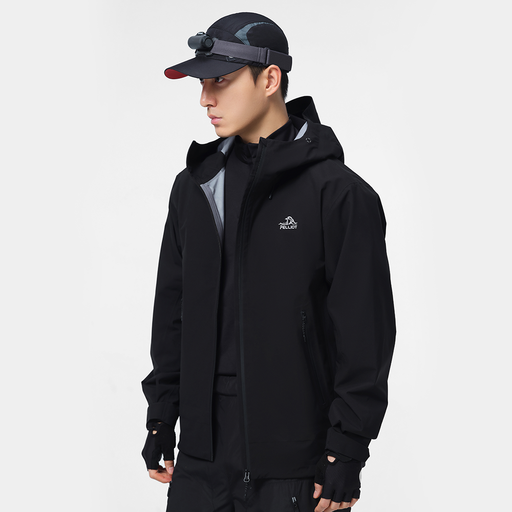
Why this choice: Ideal for the occasional hiker who needs reliable protection for weekend outings, as well as for daily commutes in the rain.
This is a true hardshell, offering waterproof and windproof protection designed to handle downpours, not just a passing drizzle.
Its breathable design efficiently wicks away sweat during exertion, preventing that damp feeling inside. The fabric is also designed to be highly resistant to abrasion.
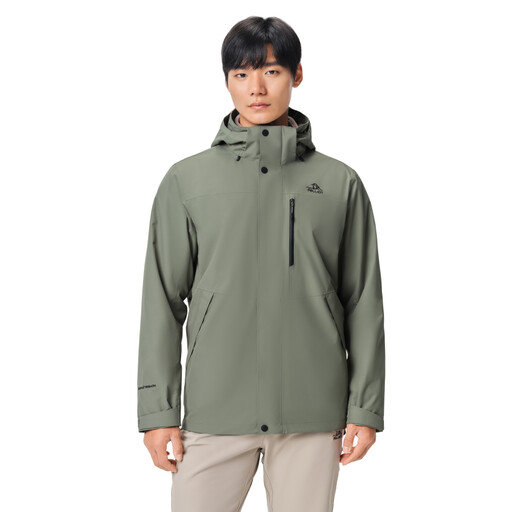
Why this choice: Designed for the adventurer who is out for several days and must face changeable weather. It's the ultimate all-in-one solution.
This is a true men's 3-in-1 jacket. The outer shell boasts top-tier performance (35,900 mm waterproofness and 16,000 g/m?/24h breathability, according to the manufacturer), while the removable fleece liner provides formidable thermal insulation.
Its modularity is its greatest asset. Wear the shell alone in rainy weather, the fleece alone in cool, dry conditions, or combine both to face the cold and damp.
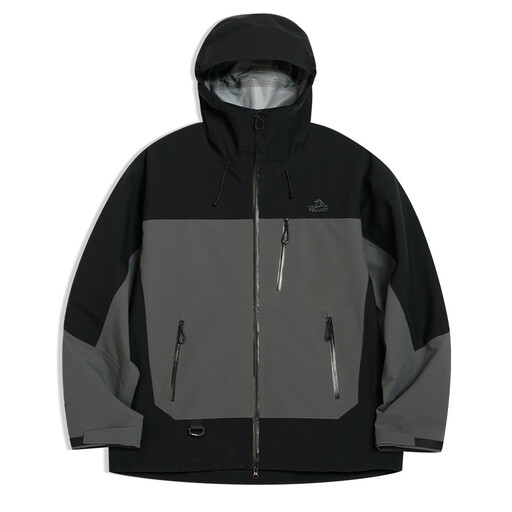
Why this choice: For the user who wants to make no compromises on technical performance, while sporting a modern design that looks just as good in the city.
It tackles the "sauna effect" head-on with a design focused on very high breathability, ensuring rapid sweat evacuation, even during intense effort.
Its fabric is not just a fortress against wind and rain; it's also highly resistant to abrasion. Its two-tone style clearly sets it apart from more traditional hiking jackets.
Explore our full selection of products, all chosen for their performance and compliance with current standards.
A water-repellent jacket has a surface treatment that causes water to bead up and roll off. It's sufficient for light rain, but during a prolonged downpour or under pressure (like from backpack straps), it will eventually let water through. A waterproof jacket, however, incorporates a membrane (like Gore-Tex) and taped seams that form an impenetrable physical barrier, offering much more robust and durable protection.
To maintain its performance, regular washing is essential. Use a gentle liquid detergent (and absolutely no fabric softener!) and close all zips. Run a delicate cycle at 30°C (86°F). Drying is a crucial step: a low-heat tumble dry (if the label permits) or a quick pass with a cool iron (protecting the jacket with a cloth) will reactivate the DWR (Durable Water Repellent) treatment.
A men's 3-in-1 jacket is often an excellent solution due to its versatility. It combines a waterproof protective layer with an insulating liner (usually a fleece), which can be worn together or separately. It's a smart and economical formula for adapting to the weather from spring through winter. However, be sure to check the quality of each component: the outer jacket must be truly waterproof and breathable, and the liner should provide adequate insulation.