
Livraison le jour même ou le lendemain

Qualité garantie

Débloquez vos offres de bienvenue: Livraison GRATUITE | Jusqu'à -80 % | 30 jours d'essai gratuits à JoyPlus
Téléchargez l'application
Choosing a men's sports t-shirt? Simple, in theory. In practice, the market is saturated with models making promises they don't always keep. Between the marketing jargon and real-world performance, it's easy to end up with a shirt that's uncomfortable, wears out quickly, or is simply wrong for the job. To help you see things more clearly, we've broken down the pitfalls to avoid and the essential criteria to check before you buy.
Our goal isn't to tell you what to buy, but to give you the keys to making an informed choice, whether you're looking for a partner for your fitness sessions, your basketball games, or simply a stylish and comfortable everyday piece.
Before you even start looking at models, let's review the classic mistakes that turn a purchase into a disappointment.
To avoid these traps, focus on three objective criteria. These are what determine a t-shirt's quality and its suitability for your activity.
This is arguably the most important criterion.
The fit has a direct impact on your freedom of movement and comfort.
Major brands like Nike and Under Armour compete with a host of trademarked technologies. Without getting lost in the marketing, the principle is often the same: optimising moisture management. A technology like Nike's Dri-FIT, for example, uses a microfibre structure that pulls sweat away from the skin. This is what makes all the difference between staying relatively dry and feeling your t-shirt stick to you.
To illustrate these criteria, here are a few models that suit different profiles and needs.
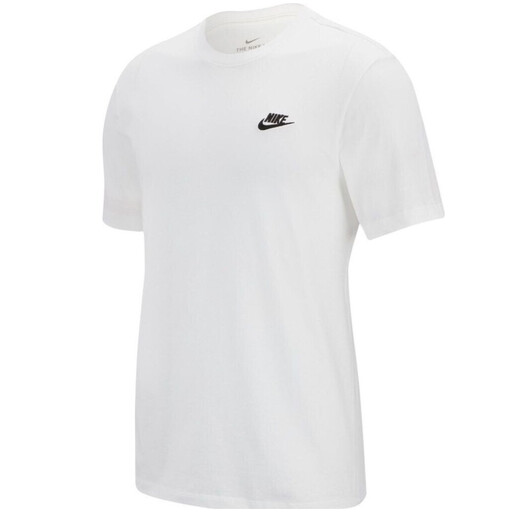
Why it stands out : This is the perfect model for those looking for an iconic brand-name t-shirt to wear every day. Its 100% cotton fabric offers optimal comfort for light activities or simply for a daily outfit, with the recognisable style of the embroidered logo.
This model is clearly positioned as a men's cotton t-shirt, designed for lifestyle. It doesn't pretend to be a high-performance garment, thus avoiding the trap of a false technical promise.
Soft and lightweight cotton fabric for absolute comfort; Classic, relaxed, and versatile fit.
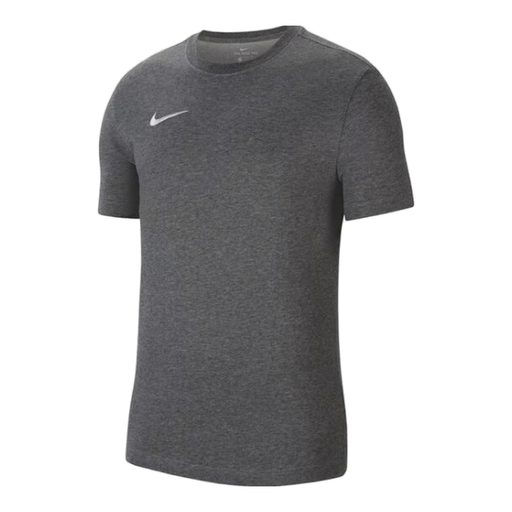
Why it stands out : Designed for the athlete who is serious about their training. This training t-shirt is the perfect example of functional apparel, where technology serves performance to keep you comfortable, even at peak intensity.
It directly tackles the problem of a sweat-soaked cotton t-shirt. Its fabric blend and Dri-FIT technology make it a true moisture-wicking t-shirt, fully justifying its status as technical apparel.
Dri-FIT technology for efficient sweat-wicking; 57% cotton and 43% polyester blend that combines comfort and performance.
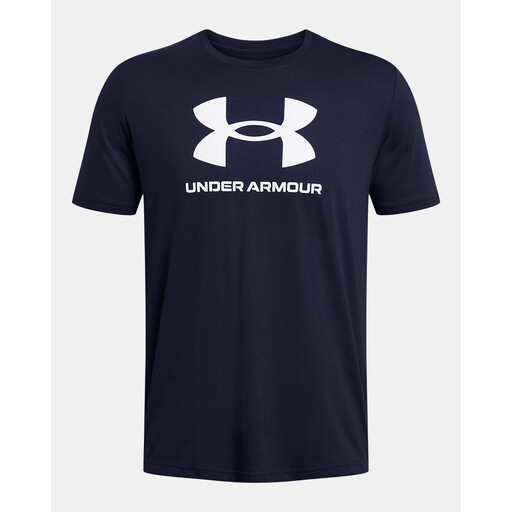
Why it stands out : For those who expect more from their Under Armour t-shirt than just a logo. It combines a high-performance, sweat-wicking fabric with technology that helps neutralise odours: a significant advantage for staying fresh longer.
This t-shirt justifies its performance apparel status by offering a concrete benefit that goes beyond simply wicking away sweat. The anti-odour technology is a real value-add.
Ultra-soft cotton-blend fabric that wicks sweat; Integrated technology that helps prevent the growth of odour-causing microbes.
Discover our full, up-to-date selection of products that meet our selection criteria and current standards.
To maximise the lifespan of your sports t-shirt, wash it inside out and at a low temperature (30°C / 86°F). Most importantly, never use fabric softener: it clogs the technical fibres and destroys their ability to wick sweat. Opt for air-drying rather than a machine dryer, which can also damage the fabric.
Not necessarily. For activities where you don't sweat much, like weightlifting, stretching, or yoga, its comfort is still highly appreciated. However, it should be avoided for endurance sports (running, cycling) or high-intensity interval training (HIIT), as it becomes saturated with moisture and quickly gets very uncomfortable.
A standard (or regular fit) cut is straight and offers classic ease of movement, ideal for versatile comfort. A slim (or slim fit) cut is closer to the body, without being skin-tight. It's often favoured for dynamic activities because it prevents the fabric from flapping and hindering movement. Ultimately, the choice depends on your personal preference and the sport you practice.