
Livraison le jour même ou le lendemain

Qualité garantie

Débloquez vos offres de bienvenue: Livraison GRATUITE | Jusqu'à -80 % | 30 jours d'essai gratuits à JoyPlus
Téléchargez l'application
A pair of men’s cushioned running shoes can work for road running, power walking, or versatile outdoor use. But a flattering product description doesn’t always guarantee a good choice. The width of the forefoot, stability, breathability and sole type all need to match your activity.
Here are the criteria to consider before buying, along with a selection of models suited to different profiles.
A very plush sole might feel nice in the first few minutes, but that doesn’t mean it suits your stride or your preferred terrain. For regular use, also check the heel stability, foot support and the midsole’s ability to maintain a balanced feel.
Good cushioned running shoes need to strike the right balance between shock absorption, controlled energy return and appropriate support. The amount of foam alone isn’t enough to tell two models apart.
A forefoot that’s too narrow compresses your toes, especially after a long walk or run. If you’re looking for wide-fit running shoes, focus on the shoe’s shape rather than just the size.
A wide toe box gives your toes more freedom without necessarily causing excessive movement at the heel. For the Li-Ning YUEYING 6, the product description mentions an optimised shape and extra space at the front of the foot.
A sole with moulded lugs can be ideal on specific ground, but uncomfortable on tarmac. Conversely, a road-designed sole may lack grip in mud, on stones or wet trails.
Before deciding between men’s running shoes and versatile men’s sports shoes, identify your usual routes: pavement, track, forest path or natural terrain.
The midsole is usually made from EVA foam, a proprietary foam or a combination of materials. Check its length, stated thickness and the type of feel you’re after:
According to information provided by the manufacturer, the Li-Ning YUEYING 6 uses a full-length Tempo Bounce midsole. It also features a 2 mm wider heel base and the PROBAR LOC support system.
Stable running shoes should hold the heel without restricting the foot’s natural movement. Examine the heel counter shape, the lacing system, the base width and any lateral reinforcements.
A padded collar and a sufficiently thick tongue can enhance the feeling of support. However, they don’t replace trying them on: a stable shoe that’s too tight will quickly become uncomfortable.
Breathable running trainers often use a textile mesh or perforated fabric. This construction promotes air circulation, but generally offers less protection against rain or branches.
For all-terrain running shoes, choose a rubber outsole with clearly described grip zones. After each run, remove mud, clean the pair with a cloth or soft brush, then leave them to air dry. Machine washing is not recommended for the models shown here.
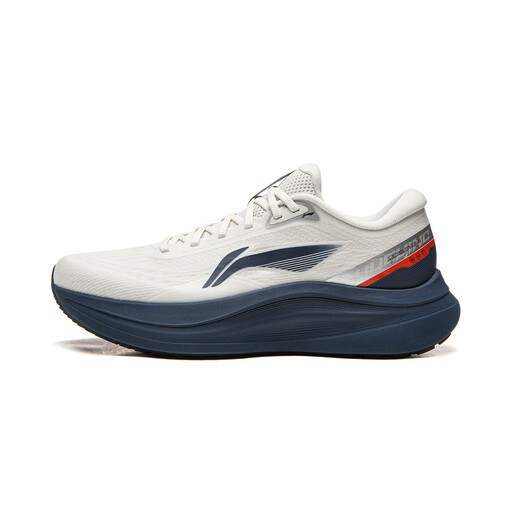
Why this model suits this profile: This pair combines full-length cushioning, a shape described as roomier at the front, and a rubber outsole. It’s suitable for beginners who mix light running, power walking and urban outings.
The product page details the heel width, PROBAR LOC support and the option to choose an extra half-size for wider feet.
Full-length Tempo Bounce sole, padded collar, textile upper and zonal rubber traction.
Why this model suits this profile: Users who value support and a cushioned feel can turn to this black version of the range, offered in a large size and designed for outdoor sports activities.
It doesn’t rely solely on soft foam: the description also mentions heel lockdown and midfoot support.
Described as having a wide toe box, Tempo Bounce midsole and rubber outsole suitable for multiple surfaces.
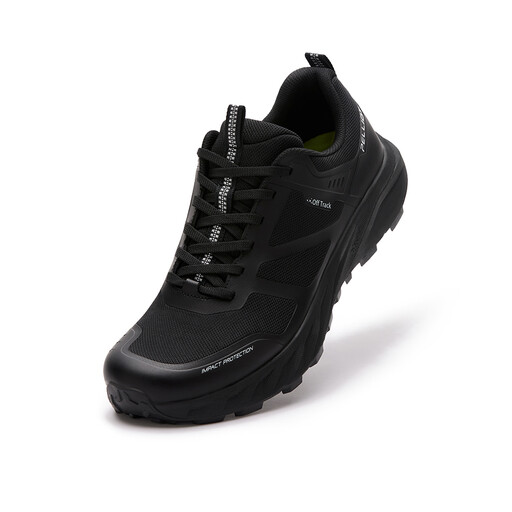
Why this model suits this profile: This pair is aimed at those who move from road to trails and want all-terrain running shoes with a lightweight upper and grippy sole.
The product page distinguishes between standard and narrow versions, and describes a ROCKYTEC rubber sole designed for loose or wet surfaces.
Elastic-return EVA foam, woven mesh upper and a sole described as abrasion-resistant.
We’ve put together a comprehensive, real-time updated selection of products that meet these demanding criteria and European safety standards.
Measure your foot at the end of the day, when it may be slightly longer and wider. Then compare this measurement in centimetres with the product’s size chart, rather than relying solely on your usual size.
For the Li-Ning YUEYING 6, the product page states that the fit generally corresponds to the chosen size and recommends going up half a size for wider feet or wearing thick socks. Leave a few millimetres of space in front of the toes, while making sure the heel stays firmly in place when walking.
It depends on the user’s weight, how often you run, the terrain and how you care for them. Regularly check the outsole for wear, visible compression of the foam and loss of support. Rotating a pair with another model can help it retain its qualities longer than wearing the same pair every day.
Yes. Many models work for power walking and daily commutes, provided the sole is stable enough and the fit suits your foot. However, models that are very trail-oriented or have pronounced lugs are less practical on urban surfaces.
Not necessarily. A wide-fit running shoe should first offer enough space in the forefoot. If your toes touch the end or you wear thick socks, going up half a size can be considered. Just make sure the heel remains properly secured.