
Livraison le jour même ou le lendemain

Qualité garantie

Débloquez vos offres de bienvenue: Livraison GRATUITE | Jusqu'à -80 % | 30 jours d'essai gratuits à JoyPlus
Téléchargez l'application
The market for men's clippers is overflowing with promises: professional-quality cuts at home, endless versatility, batteries that last for weeks… Yet, in the end, disappointment is often the result, with a device that's impractical, ineffective, or breaks down after just a few months. As a product expert for Joybuy, my mission is to help you decode the spec sheets and avoid the marketing traps.
Before you commit, let's review the three common mistakes that lead to a regrettable purchase:
To make the right choice, focus on the few technical specifications that truly make a difference in performance and durability.
The first question to ask yourself concerns your primary use. Are you looking for a single solution for all your grooming needs or specialised tools?
A cordless clipper offers unparalleled freedom of movement. However, not all batteries are created equal.
The quality of the cut depends entirely on the blades. Two aspects to watch for:
To illustrate how these criteria apply in practice, here are a few models suited to specific needs.
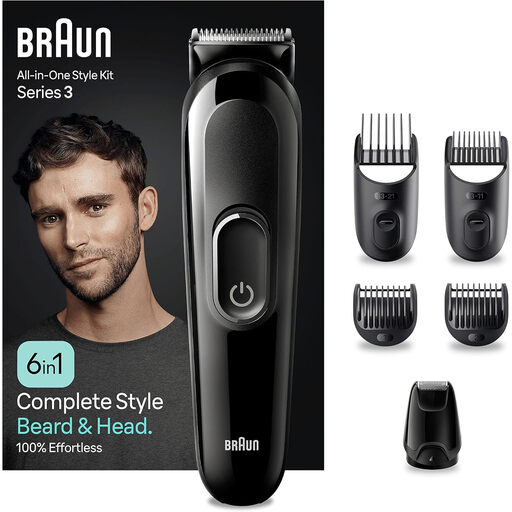
The ideal user : Perfect for anyone looking for a simple, reliable solution to maintain their beard and perform a few hair touch-ups. This kit gets straight to the point, backed by the trust of a renowned brand.
It doesn't rely on a single blade, but on a kit with dedicated accessories (combs for hair and beard, mini foil shaver). It doesn't promise to be fully waterproof, just that the heads are washable: it's clear, straightforward, and prevents unpleasant surprises.
Ultra-sharp blades for a clean cut. A wide range of cutting lengths (from 1 to 21 mm) thanks to the various combs, covering most needs.
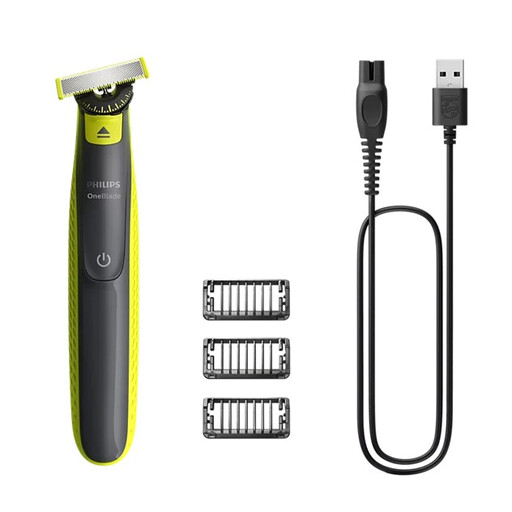
The ideal user : The dream tool for those who focus on the details of their beard. It's designed to trim, edge, and shave with great precision, without being a traditional razor.
It doesn't pretend to be a hair clipper; its specialisation for the face is its strength. Its clearly stated IPX7 waterproof rating allows for confident use in the shower and clears up any ambiguity between "washable" and "waterproof".
Its 360 flexible blade follows the contours of your face for constant contact and optimal control. The dual protection system (a glide coating and rounded tips) ensures a comfortable, irritation-free shave.
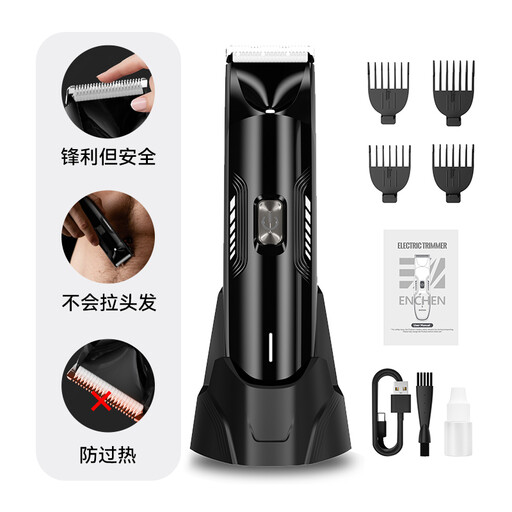
The ideal user : Designed for those seeking a safe and hygienic solution for body grooming, including the most sensitive areas. Here, safety and ease of cleaning take priority over everything else.
This model avoids the universal blade trap by incorporating a "Skin-Safe" ceramic blade, specially designed to reduce the risk of nicks and cuts on thin or folded skin, unlike classic steel blades.
Replaceable ceramic blades for perfect hygiene and lasting performance. Its waterproof design allows for use dry or on wet skin, as well as ultra-simple cleaning.
We have curated a complete selection of products that meet our selection criteria and safety standards.
How long do clipper blades last, and when should they be replaced? The lifespan depends on the blade material, frequency of use, and hair type. As a general rule, for regular use, it's advisable to replace stainless steel blades every 12 to 18 months. Ceramic or titanium blades can last longer. The tell-tale sign? The clipper starts to pull hair instead of cutting it cleanly. Some models, like the Philips OneBlade, have a wear indicator.
Can you really use a waterproof clipper in the shower? Yes, but only on one condition: it must have an IPX7 certification. This rating guarantees that the device can be submerged in up to 1 meter of water for 30 minutes. Models with a lower rating (IPX4, IPX5, or IPX6) are resistant to splashes or water jets and can be rinsed, but should not be submerged or used for extended periods under a powerful stream of water like a shower. Always check this information before buying.
Can a hair clipper be used for a beard? Technically, yes, but it's not ideal for precision work. The blades on a hair clipper are wider, which makes it difficult to sculpt clean lines on the face. Furthermore, their guide combs often offer less fine adjustment increments than those of a dedicated beard trimmer. For an occasional touch-up, it can get the job done. But for a well-groomed beard style, a specific tool or a multi-grooming kit with a precision head remains essential.