
Livraison le jour même ou le lendemain

Qualité garantie

Débloquez vos offres de bienvenue: Livraison GRATUITE | Jusqu'à -80 % | 30 jours d'essai gratuits à JoyPlus
Téléchargez l'application
Stiff neck when you wake up, tense shoulders, restless sleep… These minor discomforts often make you want to replace your pillow as soon as possible. However, just because a model is labelled “cervical” does not mean it will suit every body shape or sleeping position. Its shape, height, breathability and care requirements matter far more than a simple slogan on the packaging.
Here are the key points to consider before choosing a memory foam pillow, along with a selection of models suited to different needs.
A very thick pillow may feel comfortable straight away, but it can hold your head too high, particularly if you sleep on your back. Conversely, side sleepers generally need enough volume to fill the gap between their shoulder and head.
The ideal height therefore depends on your shoulder width, mattress firmness and usual sleeping position. A thickness of between 8 and 12 cm is a useful comparison point, not an absolute rule.
Viscoelastic foam generally provides gradual cushioning, but not every design feels the same. A single-piece block, perforated foam or a multi-layer structure will react differently to pressure and heat.
A cervical pillow must also retain enough structure. Foam that is too soft may allow your head to sink too far, while a model that is too firm may take a few nights to get used to.
Without channels or perforations, foam retains more heat than a highly ventilated filling. To choose a breathable pillow, check for perforations, air channels or a cover designed to promote air circulation.
Another detail that is often overlooked: the foam core generally cannot be machine washed. The cover should therefore be removable and washable to make everyday care easier.
For a pillow for side and back sleepers, look for a supportive area beneath the neck and a sufficiently recessed section to accommodate your head. An ergonomic shape can help maintain a more stable position, although it cannot guarantee that pain or tension will disappear.
Side sleepers should compare their shoulder width with the height of the pillow. Back sleepers may prefer a lower profile with a slightly recessed central area.
Here is the information to check first:
Certifications such as STANDARD 100 by OEKO-TEX relate to checks for certain undesirable substances in certified textiles and materials. They do not replace reading the product composition or its usage instructions. Claims such as hypoallergenic or dust mite-resistant should be checked in the product description and considered in light of the conditions specified by the manufacturer.
The 50 x 70 cm size fits many rectangular pillowcases sold in France. However, check the exact dimensions before buying, particularly if your pillowcase has a close fit. A cover that is too tight can alter the level of support and prevent the pillow from settling into the correct position.
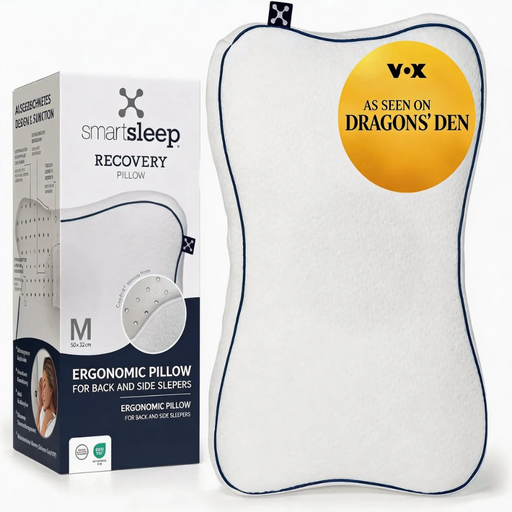
Why this choice suits this profile : Anyone who prioritises well-documented materials and a comfort-focused design may appreciate this model, which features built-in air channels and a certified cover, according to the product information.
The product description specifies the presence of air channels and viscoelastic foam, rather than making vague claims about breathability.
Head recess, stated support for back and side sleepers, and materials listed as OEKO-TEX certified.
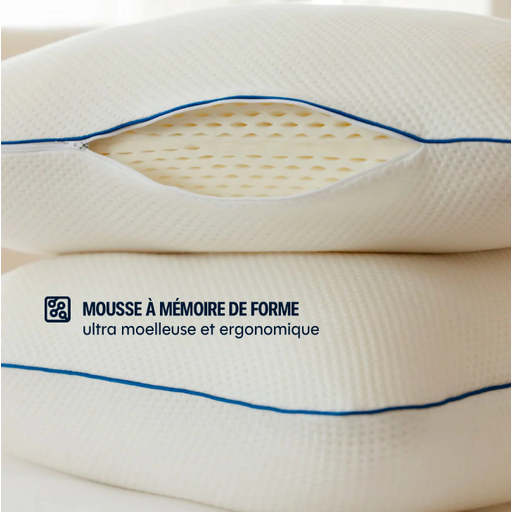
Why this choice suits this profile : Its 50 x 70 cm size and removable cover make it suitable for anyone looking for a cervical pillow in a classic size, with a regular care routine.
The product description specifies that only the cover is machine washable and recommends airing the pillow before first use. The foam core must not be washed.
50 x 70 cm size, stated thickness of 12 cm, perforated foam and removable, washable cover. The product description also mentions several certifications.
When your pillow arrives, allow it to regain its shape in a well-ventilated room, following the manufacturer’s instructions. A slight manufacturing smell may remain during the first few hours of airing. Use a suitable pillowcase and avoid folding the foam for extended periods.
To keep a washable pillow in good condition, remove only the cover when specified by the manufacturer. Wash it according to the label instructions, dry it completely and never wet the foam core. Replace the pillow if the foam starts to crumble, becomes permanently misshapen or no longer provides even support.
We have compiled a complete, real-time updated list of products that fully meet these strict selection criteria and European safety regulations.
For side sleeping, compare the pillow’s height with the space between your shoulder and head. When sleeping on your back, a more moderate thickness may help limit excessive neck flexion. Your mattress and body shape also play a part in the choice.
A few nights of adjustment are often needed when a new pillow significantly changes in shape or firmness. If persistent discomfort occurs, check its height, the position of your head and the seller’s return conditions.
Air it after unpacking, use a suitable pillowcase and wash the cover according to its label instructions. The foam core should generally be kept away from the washing machine. Always check the instructions specific to the model you have chosen.