
Livraison le jour même ou le lendemain

Qualité garantie

Débloquez vos offres de bienvenue: Livraison GRATUITE | Jusqu'à -80 % | 30 jours d'essai gratuits à JoyPlus
Téléchargez l'application
Buying a memory card seems simple, but the wrong choice can quickly turn into a nightmare: corrupted files, stuttering videos, or sluggish performance. Between the technical jargon and vague marketing promises, it's easy to get lost and make a purchase you'll regret. This guide is here to clarify everything and help you choose THE perfect card for your camera, smartphone, drone, or gaming console.
Before diving into our top picks, let's review the most common mistakes that can cost you dearly?:
To avoid these unpleasant surprises, focus on a few non-negotiable technical specifications. They are the key to your card's compatibility and real-world performance.
The format is the first criterion to consider. There are two main standards?:
This is the most important criterion, but also the most confusing. Here are the three indicators to master?:
The ideal capacity depends entirely on your usage. Here are a few benchmarks to guide you?:
We have selected models that meet specific needs, keeping in mind the pitfalls to avoid.
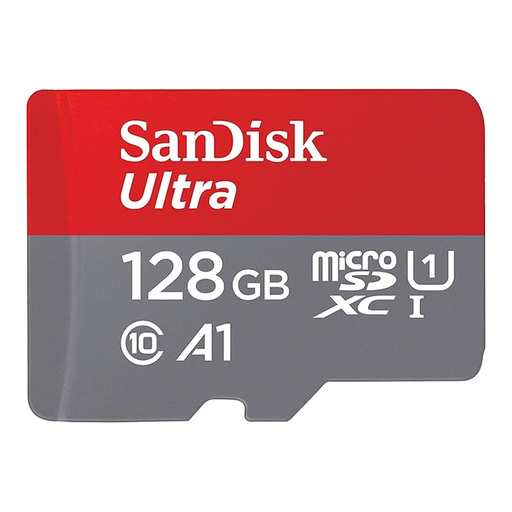
Why this card? It's the perfect balanced solution for expanding the storage of an Android smartphone or tablet. Its 128 GB offers ample space for photos, videos, and apps, all at an affordable price.
This card is certified A1 (Application Performance Class 1). This standard ensures that apps stored on it launch quickly—a detail often overlooked by entry-level cards that only focus on sequential transfer speeds.
Transfer speeds up to 140 MB/s to move your files to a computer in a flash. The included SD adapter ensures broad compatibility with cameras and laptops.
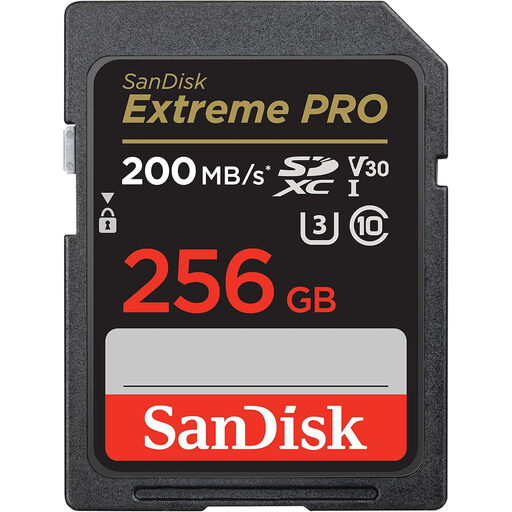
Why this card? The ideal compromise for content creators using a mirrorless or DSLR camera. It combines high write speeds with a comfortable 256 GB capacity, perfect for 4K video and long RAW photo shoots.
It clearly displays its U3 and V30 certifications, which guarantee a minimum write speed of 30 MB/s. This helps you sidestep the trap of cards that promise incredible read speeds but collapse during 4K recording.
Write speeds up to 140 MB/s, perfect for never missing a shot in burst mode. SanDisk QuickFlow technology speeds up file offloading, a real time-saver for post-production.
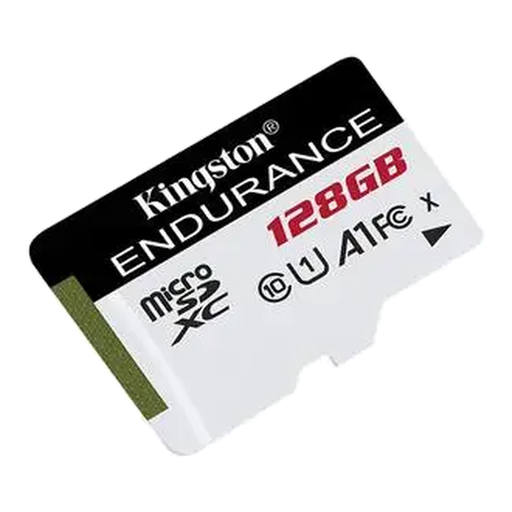
Why this card? Specially designed for devices that record in a loop, such as dashcams or security cameras. Its technology is optimised for rock-solid reliability, even when subjected to intensive write cycles.
It tackles the endurance pitfall head-on. Unlike a standard model, it's built to withstand thousands of hours of recording and rewriting, thus preventing failures and the loss of crucial video footage.
Engineered for extreme conditions, it withstands temperatures from -25 °C to 85 °C, as well as shocks and water. Its U1/A1 class ensures smooth Full HD 1080p recording.
Discover our complete and up-to-date selection of products that meet our demanding selection criteria.
Yes, it's essential. It is highly recommended to format any new SD or microSD card directly within the device that will use it (camera, smartphone, etc.). This process ensures perfect file system compatibility and prevents read or write errors.
For everyday use (apps, photos, a few videos), a 128?GB card is an excellent compromise. If you are a heavy media consumer (movies, games) or frequently shoot in 4K, a 256?GB or 512?GB card will give you more peace of mind.
The difference is both physical and technical, directly impacting transfer speed. A UHS-I card has a single row of pins and maxes out at 104 MB/s. A UHS-II card, with its second row of pins, can exceed 300 MB/s. To benefit from this, your camera and card reader must be UHS-II compatible. Note that a UHS-II card will work in a UHS-I port, but its speed will be throttled to that of the port.