
Livraison le jour même ou le lendemain

Qualité garantie

Débloquez vos offres de bienvenue: Livraison GRATUITE | Jusqu'à -80 % | 30 jours d'essai gratuits à JoyPlus
Téléchargez l'application
Choosing a mechanic's tool set can quickly become a headache. Between the overwhelming number of options, dazzling claims, and technical jargon, it's easy to get lost. A poor choice isn't just a waste of money—it's a source of frustration and risks compromising your repairs.
As a product expert at Joybuy, my mission is to help you see things more clearly. Let's cut through the marketing noise and focus on what's essential. Here are the pitfalls to avoid and the criteria that truly matter for choosing reliable equipment that's right for your needs.
The tool market is full of products that look appealing on the surface but often hide critical flaws. Here are the three most common issues to watch out for.
To make the right choice, focus on a few key technical specifications. These are the true indicators of the quality and durability of your future mechanic's tools.
The gold standard for quality hand tools is Chrome Vanadium (Cr-V) steel. This alloy offers an excellent balance of hardness, torque strength, and corrosion resistance. A "heat-treated" designation is an added guarantee of durability, ensuring the tool won't deform under high stress.
The ratchet is the heart of your socket set. Its effectiveness is measured by the number of teeth in its mechanism.
A good auto repair kit or car tool box should contain a logical and versatile selection of tools. Check for the presence of the following items:
Rather than an endless list, here are targeted options that each fit a specific user profile, all while avoiding the pitfalls we've just discussed.
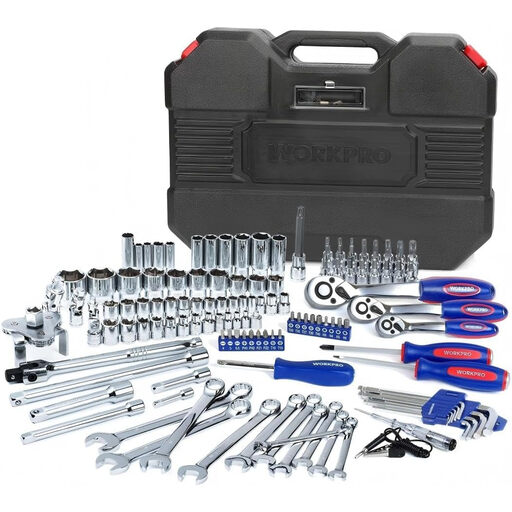
Why we chose it: This is the ideal starter set for routine car maintenance and small home repairs. It offers an excellent balance between the variety and relevance of its tools.
This set focuses on the mechanical essentials (sockets, ratchets, wrenches) without being cluttered with useless gadgets. Its sturdy, blow-molded case ensures durable and secure storage.
Cr-V steel tools with a chrome finish for enhanced corrosion resistance. The inclusion of all three ratchet sizes (1/4", 3/8", 1/2") gives it maximum versatility.
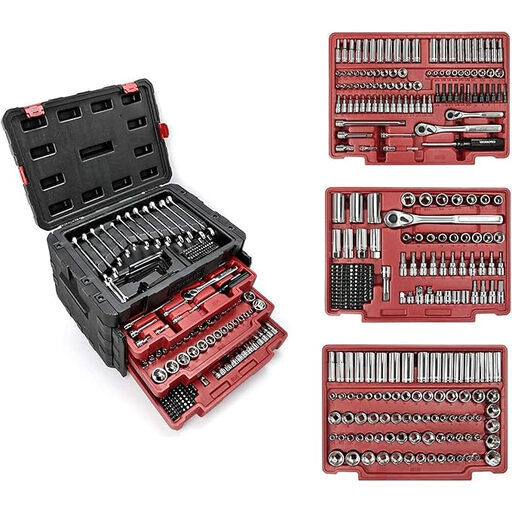
Why we chose it: For the seasoned home mechanic or the professional who wants to be prepared for any situation. This ultra-comprehensive set is designed to handle nearly any repair scenario.
Here, the high piece count doesn't come at the expense of quality. The organization into four distinct trays within a solid case makes it easy to find what you need and avoid chaos.
Nearly exhaustive coverage of needs: sockets, combination wrenches, bits, and hex keys are all included. The polished chrome finish provides effective protection against rust.
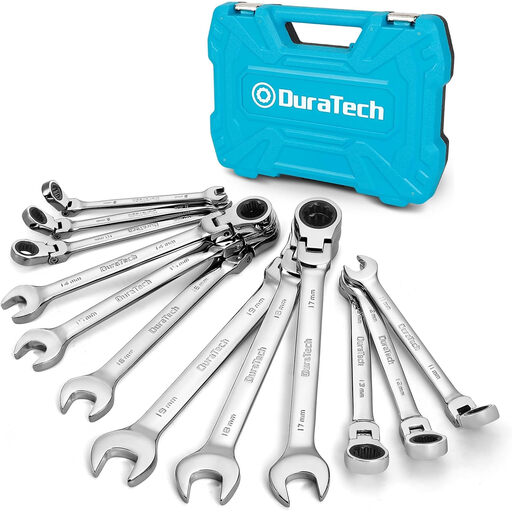
Why we chose it: The essential addition for anyone working on modern engines where every millimeter counts. These wrenches can replace a ratchet and socket where they simply won't fit.
This isn't a general-purpose set, but a high-quality, specialized tool set. It solves a specific problem (difficult access) with a fully dedicated, no-frills design.
The 180° flex-head and 72-tooth mechanism allow you to reach and turn otherwise inaccessible nuts. The Cr-V steel construction ensures the necessary toughness.
We have curated a complete and up-to-date selection of products that meet our strict selection criteria and safety standards.
6-point (hexagonal) sockets offer a better grip on the nut or bolt head. They are ideal for high-torque applications or stuck fasteners because they reduce the risk of slipping and rounding off the corners. 12-point sockets, on the other hand, are easier to position on a fastener in tight spaces, as they offer twice as many engagement points. They are practical for general use where torque is not critical.
Proper maintenance significantly extends the life of your tools. After each use, wipe the tools down with a cloth to remove grease and dirt. For ratchet mechanisms, a drop of light machine oil from time to time will keep them running smoothly. Finally, always store the case closed in a dry place to prevent rust.
For the vast majority of work on European and Asian vehicles, as well as for home DIY projects, you will only need metric sockets (measured in millimeters). SAE sockets (measured in fractions of an inch) are only necessary if you regularly work on classic American cars, Harley-Davidsons, or certain industrial equipment imported from the US. For everyday use, a comprehensive metric set is more than sufficient.