
Livraison le jour même ou le lendemain

Qualité garantie

Débloquez vos offres de bienvenue: Livraison GRATUITE | Jusqu'à -80 % | 30 jours d'essai gratuits à JoyPlus
Téléchargez l'application
Whether you're a weekend mechanic or just a car owner who's serious about maintenance, choosing a mechanic's tool case can quickly become a headache. On paper, the promises are enticing: hundreds of pieces, rock-solid durability... but the reality is often disappointing. A ratchet that gives out on the first bolt, rust spots appearing in just a few weeks... These scenarios are all too common, and they're as frustrating as they are costly.
To avoid falling into these traps, here’s how to see through the most common marketing ploys and make an informed decision.
To ensure you don't regret your purchase, focus on a few technical details that make all the difference. They are the true measure of the quality and durability of your future mechanic's repair kit.
Chrome-Vanadium (Cr-V) steel isn't just a marketing buzzword. It's an alloy specifically treated to offer high resistance to torsion, wear, and corrosion. A socket and ratchet set made from Cr-V will withstand high torque forces without deforming and will hold up much better to the humidity of a garage. It's an non-negotiable standard for any self-respecting mechanic's toolkit.
A good tool case should cover the majority of jobs on a car or motorcycle. To do this, check for the three main drive sizes:
A 72-tooth ratchet needs only a 5° swing arc to turn, a game-changer for navigating the cramped engine bays of modern cars.
Adhering to the manufacturer's recommended torque settings is fundamental.
Rather than a simple list, we've matched concrete solutions to specific user profiles.
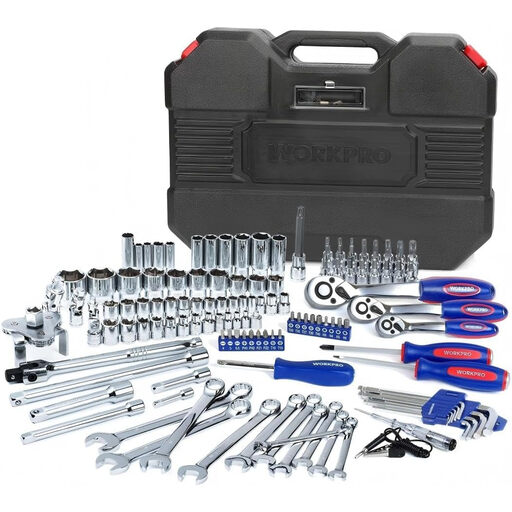
Why we chose it: Perfect for beginners or for varied needs (routine maintenance, minor car/moto repairs). It provides a solid, versatile foundation without the pro-grade price tag.
This set focuses on the essentials: a wide assortment of sockets (metric and SAE), all 3 ratchet sizes, and combination wrenches. No useless gadgets to artificially inflate the piece count.
Tools are made from heat-treated Cr-V steel with an anti-corrosion chrome finish. The moulded case ensures every tool stays securely in its place.
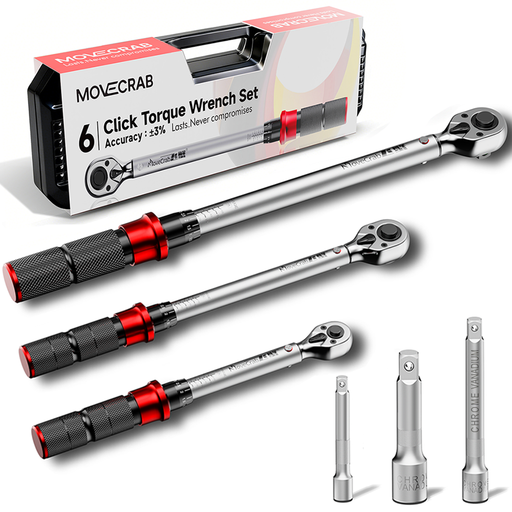
Why we chose it: Essential for those who perform critical jobs (wheels, brakes, cylinder heads) and for whom precise torque is non-negotiable.
It directly tackles the imprecision trap. This isn't a do-it-all case, but a specialised kit focused on the most critical function: controlled tightening. Each wrench even comes with its own calibration certificate.
High precision with a stated margin of error of ±3 %. The all-steel Cr-V construction guarantees excellent longevity. Its wide torque range (from 5 to 220 N.m) covers virtually all automotive and motorcycle needs.
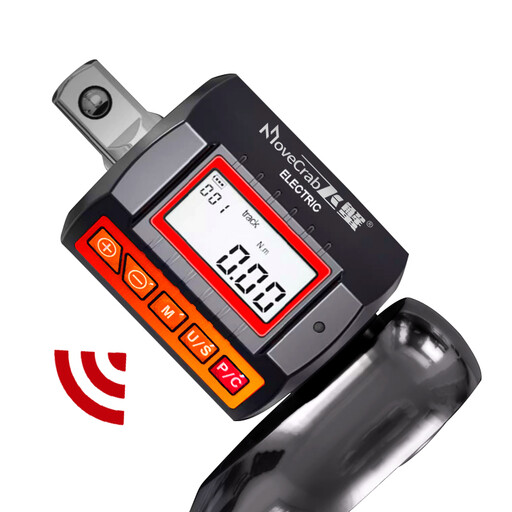
Why we chose it: For the mechanic who is already well-equipped with ratchets and wants to add high-precision torque functionality to their arsenal without buying multiple dedicated torque wrenches.
It offers digital accuracy (±2 % margin of error in both directions) that eliminates the guesswork of mechanical scales. The audible and visual alert prevents any risk of over-torquing.
Highly versatile thanks to the included 1/4" and 3/8" adapters. It offers multiple modes (real-time, peak value) and can store up to 1000 measurements—a real plus for rigorous tracking.
Explore our full selection of products that meet our criteria for quality and safety standards.
1. What's the difference between Cr-V steel and carbon steel? Carbon steel is hard, but it's also more brittle and prone to rust. Chrome-Vanadium (Cr-V) steel is an alloy that adds chromium for corrosion resistance and vanadium for toughness and fatigue resistance. For tools that withstand high stress, like sockets and wrenches, Cr-V ensures far superior longevity.
2. Is a torque wrench really essential for car maintenance? For a simple oil change, no, it's not mandatory. However, as soon as you work on safety-related parts (wheels, brakes, suspension) or sensitive engine components (spark plugs, valve covers), it becomes essential. Insufficient torque can cause a component to come loose while driving; over-torquing can irreversibly damage the threads.
3. How do I maintain my tool case to make it last? It's simple. After each use, give the tools a quick wipe with a dry cloth to remove grease and moisture. Always return each piece to its dedicated spot in the case. This prevents tools from knocking against each other and keeps you from losing them. Finally, store the case in a dry place to eliminate any risk of corrosion.