
Livraison le jour même ou le lendemain

Qualité garantie

Débloquez vos offres de bienvenue: Livraison GRATUITE | Jusqu'à -80 % | 30 jours d'essai gratuits à JoyPlus
Téléchargez l'application
In the gaming arena, every millisecond counts. A missed command, a key that registers a split-second too late, and defeat is certain. A good mechanical gaming keyboard isn't just a peripheral? it's an extension of your reflexes. But faced with a jungle of layouts, switches, and features, it's easy to get lost.
This guide is here to cut through the noise. Our mission: to decode the technical jargon and highlight models that truly make sense, whether you're an esports pro or a passionate gamer searching for the perfect setup.
Before diving into our top picks, here are a few essential criteria to guide your choice and help you understand the technologies that will make a difference in your gaming sessions.
The size of your keyboard directly impacts your ergonomics and the amount of space you have for your mouse.
The type of switch (the mechanical component under each key) defines everything: the typing feel, the responsiveness, and even your keyboard's sound signature.
The myth of the laggy wireless gaming keyboard is well and truly dead. Modern wireless technologies easily rival wired connections.
One last point: check for anti-ghosting and N-Key Rollover (NKRO). This technology ensures all your keystrokes are registered, even when you press a multitude of keys at once. And for style, an RGB gaming keyboard will let you customize the lighting for total immersion or simply to match your setup.
Here are three models that stand out for their technical specs and market positioning, catering to a variety of gamer profiles.
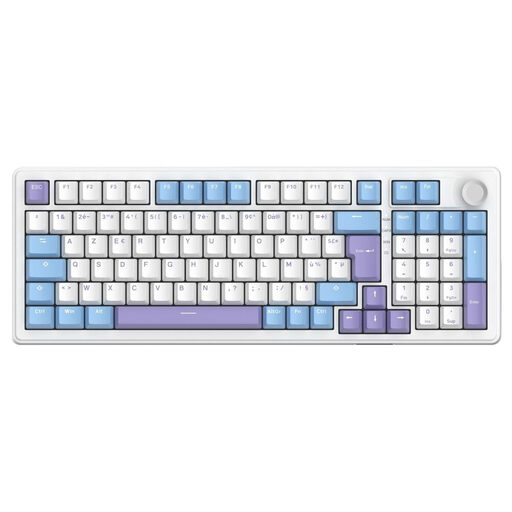
Why it stands out?: This model from The G-Lab is a true Swiss Army knife. It juggles triple connectivity (wired, 2.4?GHz, and Bluetooth) with a very clever 96% keyboard layout that retains the number pad in a compact form factor. Its 5-layer gasket mount structure, combined with pre-lubricated linear switches, delivers a remarkably smooth and quiet typing experience.
Key Strengths?:
Who is it for??: The versatile gamer who wants a keyboard that's as comfortable for gaming as it is for work, and who loves to customize their gear. It's a golden option for a clean setup that sacrifices no functionality. Note: This model has a QWERTY layout.
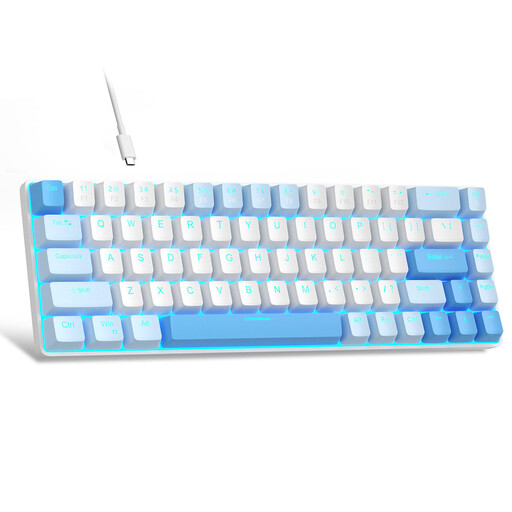
Why it stands out?: The MK-Box from MageGee plays the card of compactness and a budget-friendly price. Its 60% layout frees up maximum desk space, a significant advantage for FPS players who need ample room for their mouse. Equipped with linear red switches, it delivers the responsiveness expected from a mechanical keyboard in an ultra-minimalist chassis.
Key Strengths?:
Who is it for??: Gamers on a tight budget, those short on desk space, or digital nomads looking for a small mechanical keyboard to take anywhere. A simple and effective entry point into this universe. Note: This model has a US QWERTY layout.
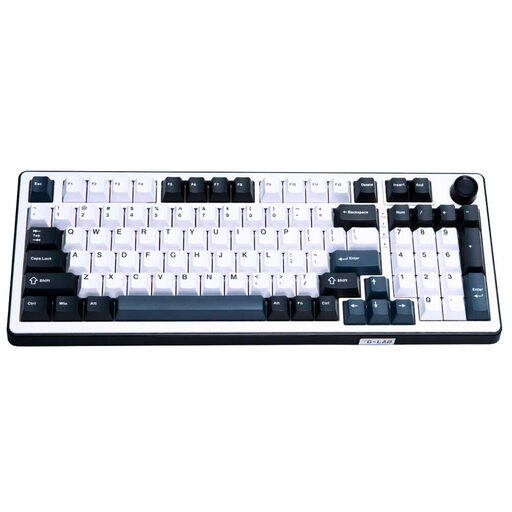
Why it stands out?: This version of the Keyz Elite 400 is a competitive beast. It features cutting-edge magnetic switch (Hall effect) technology, which allows for contactless detection for lightning-fast responsiveness. Paired with an 8000?Hz polling rate, its mission is simple: to obliterate latency.
Key Strengths?:
Who is it for??: The competitor and esports enthusiast for whom every millisecond counts. It's also the choice for tech aficionados who want a competitive edge with the most high-performance hardware available today. Note: This model has a US QWERTY layout.
If style matters as much to you as performance, our collection of cute PC keyboards might just catch your eye. Discover models that blend design and functionality for a setup that is uniquely yours.
1. What type of switch should I choose for a mechanical gaming keyboard? It's all about feel and use case! Linear switches (often red) are a gamer favorite for their smooth travel, which allows for fast, repeated actions without fatigue. Tactile switches (brown) offer an excellent compromise for mixed gaming/office use. As for magnetic switches, they represent the future: their speed and adjustable actuation point make them the ultimate weapon for competition.
2. Is a wireless gaming keyboard as good as a wired one? Absolutely. Today, a wireless gaming keyboard using 2.4?GHz technology offers a latency of around 1?ms, which is imperceptible and completely on par with a wired connection, even for pros. Bluetooth, while slightly slower, remains perfect for casual gaming and is unbeatable for versatility.
3. What are anti-ghosting and N-Key Rollover (NKRO)? Anti-ghosting prevents "ghost strokes" when multiple keys are pressed simultaneously. N-Key Rollover (NKRO) is its ultimate form: it guarantees that every single keypress is registered, no matter how many keys you press down at the same time. It's a non-negotiable feature for games that require complex combos.