
Livraison le jour même ou le lendemain

Qualité garantie

Débloquez vos offres de bienvenue: Livraison GRATUITE | Jusqu'à -80 % | 30 jours d'essai gratuits à JoyPlus
Téléchargez l'application
Choosing a mechanical gaming keyboard can often feel like a daunting task. Between the technical jargon, the siren song of marketing, and the jungle of available models, it's easy to feel overwhelmed and make a purchase you'll instantly regret. Our mission: to help you see things more clearly, separate fact from fiction, and guide you toward an informed choice that perfectly suits your needs.
Before diving into the technical details, let's review the most common traps that await unwary buyers:
To avoid these disappointments, focus on a few key technical points. These are what separate a good keyboard from a bad one.
Your keyboard's form factor isn't just a matter of style: it dictates your ergonomics and the amount of space available for your mouse.
Switches are the mechanisms under each key. Their design defines the typing feel, sound, and responsiveness of your keyboard.
The holy grail of customisation? The hot-swappable feature. A hot-swappable keyboard allows you to change switches on the fly, without any soldering. It's the gateway to near-infinite customisation and excellent life insurance for your keyboard: a faulty switch? Replace it in seconds.
Here, it's all about the trade-off between pure performance and freedom of movement.
The one-size-fits-all keyboard doesn't exist. The important thing is to find the one that's right for you. Here is a selection of models that meet specific needs.
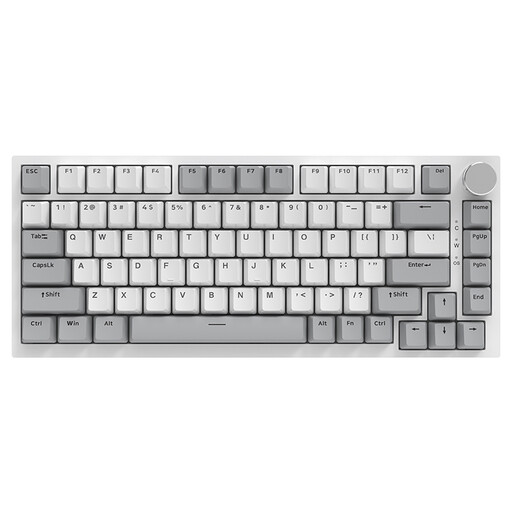
Why it's the right choice: Perfect for getting serious about mechanical keyboards without breaking the bank. It packs features worthy of much more expensive models, like a well-thought-out internal design and robust keycaps, all in a compact 75% form factor that frees up maximum space for your mouse.
This is a true mechanical keyboard with a Gasket mount (for a cushioned typing feel), not a cheap membrane imitation. Its hot-swappable PCB ensures you can upgrade your keyboard or replace a switch, avoiding the "disposable" model trap.
Gasket mount, PBT keycaps for a pleasant feel and great durability, CNC-machined metal volume knob.
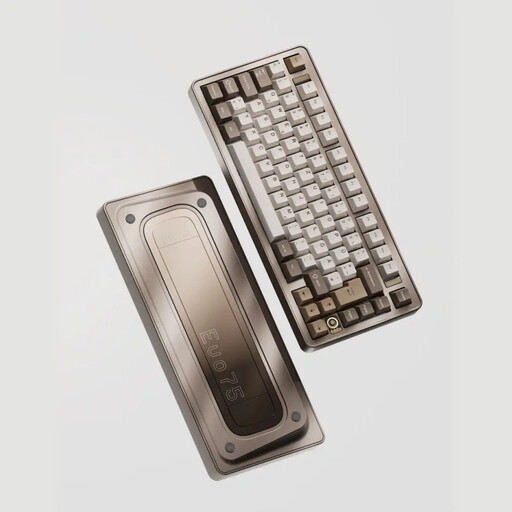
Why it's the right choice: For enthusiasts who love to get their hands dirty. Its all-aluminium chassis, triple-mode connectivity, and VIA compatibility make it an exceptional foundation for building a custom keyboard that's truly their own.
Here, customisation is total: the hot-swappable PCB (compatible with 3 and 5-pin switches) and support for the open-source VIA software give you absolute control, a far cry from the closed ecosystems of some falsely "custom" models.
CNC aluminium chassis, Leaf Spring mount for a flexible and responsive typing feel, VIA compatibility for complete remapping.
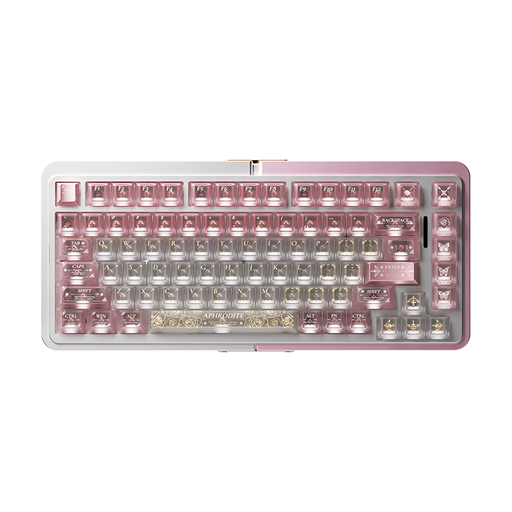
Why it's the right choice: The ultimate weapon for FPS players (CS2, Valorant) where every millisecond is crucial. This keyboard incorporates cutting-edge switch technology to provide a decisive competitive edge in responsiveness.
It goes far beyond simple "gamer" marketing. It features Hall effect magnetic switches with the Rapid Trigger function. The result: near-instantaneous key activation and reset, a technology that outperforms traditional mechanical switches for e-sports.
Magnetic switches with adjustable actuation point and Rapid Trigger function for outstanding responsiveness; CNC aluminium chassis.
Discover our full selection of keyboards that tick all the right boxes: quality, performance, and compliance with European standards.
hot-swappable keyboard really useful for a beginner?Yes, and for two excellent reasons! Even if you don't plan on changing all your switches right away, this feature is a safety net. On one hand, it allows you to easily experiment with different switch types to find your perfect match. On the other, if a switch happens to fail, you can replace it in seconds instead of having to throw away the keyboard or attempt a complex repair.
wireless keyboard and a wired keyboard for gaming?For the vast majority of gamers, including at a competitive level, the difference is virtually imperceptible. Modern 2.4 GHz wireless technologies boast very low latencies (often around 1 ms), which are entirely comparable to a wired USB connection. Bluetooth, on the other hand, is slower and less stable, and should be avoided for games that demand quick reflexes.
It's not rocket science! Remember to unplug your keyboard and dust it regularly with a soft brush or a can of compressed air to dislodge debris between the keys. For a deep clean, you can remove the keycaps with a keycap puller and wash them separately. And the golden rule: keep liquids far away from your precious keyboard