
Livraison le jour même ou le lendemain

Qualité garantie

Débloquez vos offres de bienvenue: Livraison GRATUITE | Jusqu'à -80 % | 30 jours d'essai gratuits à JoyPlus
Téléchargez l'application
The world of mechanical gaming keyboards is brimming with promises: lightning-fast responsiveness, a satisfying click, and endlessly customisable aesthetics. Faced with such a vast offering, finding your way can be a daunting task. Drowning in technical jargon and marketing hype, the risk of buyer's remorse is very real.
As the Head of Product Recommendations at Joybuy, my mission is to clear the path for you. Let's get straight to the point. To avoid falling into common traps, here are the 3 pitfalls to sidestep and the criteria that truly matter for making the right choice.
To hit the mark, three elements must be examined closely.
Your keyboard's form factor directly impacts your comfort and efficiency.
The "switch" is the mechanism under each key. It defines the feel, sound, and responsiveness of your keystrokes.
Don't underestimate the hot-swappable feature. A hot-swappable keyboard allows you to change out individual switches without any soldering. It's the gateway to deep customisation and enhanced durability.
Finally, a dedicated volume knob is a small detail that makes a big difference, allowing you to adjust audio on the fly without ever taking your eyes off the game.
Here are a few models that cater to specific needs, keeping in mind the criteria we've just discussed.
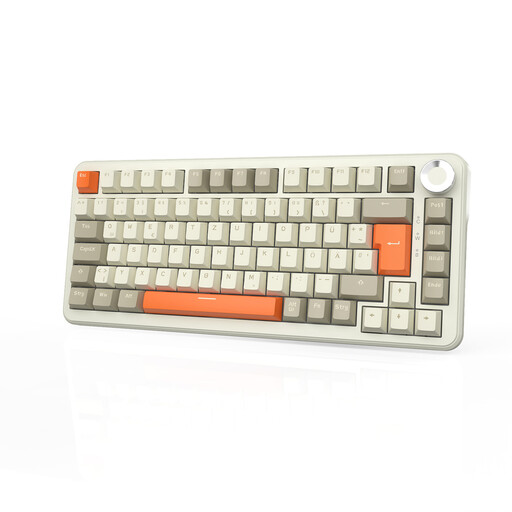
Why it stands out: This is the epitome of a do-it-all keyboard. Its 75% keyboard format optimises space, its triple connectivity (wired, 2.4G, Bluetooth) makes it ultra-versatile, and its 8000 mAh battery gives it massive battery life. Ideal for juggling a gaming session at home and a work session at a café. Note: This model has a QWERTZ (German) layout.
It shatters the "100% gaming" myth by integrating premium, productivity-focused features (XXL battery, multi-connection) and a compact format that avoids unnecessary bulk.
Hot-swappable keyboard for on-the-fly customisation and a metal volume knob for instant multimedia control.
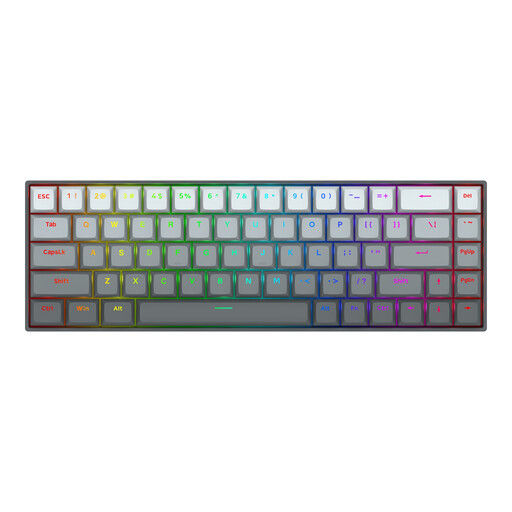
Why it stands out: Built for competition, this keyboard features magnetic switches with adjustable actuation (Rapid Trigger) and an 8000 Hz polling rate for lightning-fast responsiveness. Its compact 65% format frees up maximum space for the mouse, a key advantage in FPS games. Note: This keyboard has a QWERTY (US) layout.
It doesn't get lost in gimmicks. Every feature, from the magnetic switches to the insane polling rate, is entirely focused on delivering a measurable performance gain in-game.
Rapid Trigger technology for instant key reset, a decisive advantage in fast-paced movements. 8000 Hz polling rate for near-zero latency.
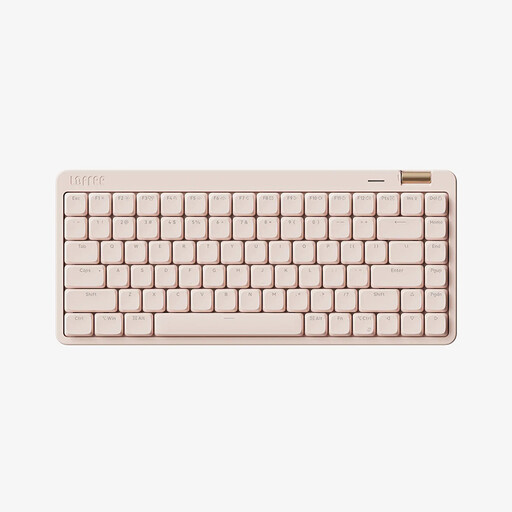
Why it stands out: Its sleek, minimalist design fits perfectly into a clean desk setup. Its low-profile switches offer quiet, comfortable typing reminiscent of a laptop, but with mechanical precision. Note: This keyboard has a QWERTY (US) layout.
It proves that a high-performance keyboard doesn't need a flood of RGB LEDs. Its understated white backlighting and polished design make it an excellent ally for both gaming and work.
Low-profile linear switches for swift and quiet typing. Triple-mode connectivity for absolute versatility across your devices.
Explore our full selection of products that meet our demanding selection criteria.
No, but it's almost essential if you regularly write in French. Using a QWERTY keyboard forces you to memorise the locations of special characters and accents, which is a real headache for daily use. Even if your operating system allows you to remap the keys, they will still display the wrong letter. Before any purchase, make sure the AZERTY label is present if it's an important criterion for you.
It's generally exceptional. Most mechanical switches are rated for 50 to 100 million keystrokes, which translates to years of heavy use. For maximum longevity, a hot-swappable model is a real bonus: if a switch ever fails, you can replace it in seconds without changing the entire keyboard.
For the vast majority of gamers, the answer is no. Modern 2.4 GHz wireless technology offers latency so low (often 1 ms) that it's imperceptible on a human scale and easily rivals wired models. Bluetooth, with its slightly higher latency, is better suited for office work or casual gaming. For total peace of mind in a competitive setting, wired remains the sure bet.