Households preparing meals for the week
You want to keep some meals fresh for the next few days and freeze other portions. A fridge freezer is worth considering if both compartments offer the space you need.


If you keep both fresh meals and frozen portions, start by comparing the usable capacity of the two compartments in a fridge freezer. If you need more freezer space, an upright freezer makes it easier to organise portions, while a chest freezer suits bulky containers if you have enough room. If you eat most of your prepared meals within a few days, prioritise fridge space and check your separate need for freezer capacity.
You want to keep some meals fresh for the next few days and freeze other portions. A fridge freezer is worth considering if both compartments offer the space you need.
You cook in large quantities or buy in bulk. In that case, freezer capacity matters more than the space you need for fresh food each day.
You have a compact kitchen or often take out an individual portion. Check the appliance dimensions and how easy it is to reach your containers: the drawers in an upright freezer may matter more than one large compartment.
First decide how much space to set aside for fresh meals and frozen portions. Then check that your chosen format makes it easy to store and retrieve your containers every day.
Consider this: if you eat most of your prepared meals fresh and only freeze food occasionally, or use another appliance for freezing.
Keep in mind: fridge space alone won’t give you room to stock up on frozen portions.
Consider this: if you need both types of food storage in one appliance.
Keep in mind: its capacity is split between the two compartments. Check how much freezer space is actually available before planning large meal-prep sessions.
Consider this: alongside a fridge, if you regularly freeze portions that you want to organise and take out individually.
Keep in mind: check that your containers fit in the drawers and that the door can open where you plan to put it.
Consider this: if you store large batches or containers and have a suitable spot for a top-opening appliance.
Keep in mind: you’ll need to organise portions in baskets or bins to reach those at the bottom.
| Criteria | What to check | Who it matters to |
|---|---|---|
| Balance of fresh and frozen storage | Compare the usable capacity of the fridge and freezer separately, then check the appliance dimensions. | If I keep some meals ready to eat and freeze others, I want to fit both in one appliance. Around 31% of consumers prioritise this balance. |
| Freezer capacity | Check the net capacity and the space needed to position and open a chest freezer, as well as its climate class if the room is poorly heated. | When I prepare large batches, my containers and bulky dishes need to fit in the freezer. Around 31% of consumers put this storage need first. |
| Access to portions | Check the number and depth of the drawers, as well as the space needed to open the door and pull them out. | When I regularly take out a small portion, I want to find it without moving the rest of my stock. Around 23% of consumers prioritise easy, organised access. |
| Fresh-food space and overall size | Measure the available space and compare the usable fridge capacity, door opening direction and clearances specified in the manual. | If I eat most of my prepared meals over the next few days, I want fridge space without overcrowding my kitchen. This is a priority for around 15% of consumers. |
For foods that need careful temperature control, Anses recommends maintaining a temperature of 4 °C in the coldest part of the fridge, following the manufacturer’s instructions. This check is important whichever format you choose.
A total capacity that looks sufficient can hide a freezer compartment that’s too small for your portions, or leave too little space for fresh meals.
Estimate how much space your containers will take up in each compartment, then compare the usable capacities listed for each one.
The operating temperature range depends on the model’s climate class, so a garage or utility room isn’t automatically suitable.
Compare the climate class in the manual with the room temperature, particularly in winter and summer.
Depending on the model, No Frost affects frost build-up and maintenance. It doesn’t tell you whether the capacity, drawers or location will suit your prepared meals.
Check these criteria separately, and remember to check the storage temperature after installation.
Beko France features upright and chest freezers: two different ways to organise your food, depending on the size of your containers and how often you access your portions.
Bosch offers fridge freezers, including integrated models, bringing fresh-food refrigeration and freezing together.
Whirlpool offers freestanding and integrated fridge freezers, including some models with No Frost.
Electrolux offers integrated fridge freezers and freezers, with product pages detailing the compartments for each model.
These appliances combine refrigeration and freezing for households that prepare fresh meals while keeping some portions frozen. Compare the space in each compartment and the appliance dimensions with your containers and kitchen.
 Image unavailable
Worth considering if you want to store fresh meals and frozen portions in a three-door appliance. The title lists Total No Frost, an E energy rating, Wi-Fi and My Zone.
Check the detailed product page for the space allocated to each compartment, and consult the manual for temperature settings suited to your food.
 Image unavailable
Worth considering if you plan to store fresh and frozen food in a four-door appliance. The title lists Total No Frost and an E energy rating.
Before choosing a location, check the appliance dimensions and the clearances required in the manual.
 Image unavailable
Worth considering if you need space for several prepared meals and want to compare a multi-door format. The title lists a total capacity of 495 L and an E energy rating.
Check how the space is divided between fresh-food refrigeration and freezing, as well as the interior layout, if you often take out frozen portions.
 Image unavailable
Worth considering if space is limited and you plan to store a moderate number of frozen portions. The title lists 153 L for the fridge, 74 L for the freezer and a width of 54 cm.
It also lists Low Frost, a reversible door and an E energy rating. Check that your containers fit in the 74 L freezer and allow for the defrosting it will need.
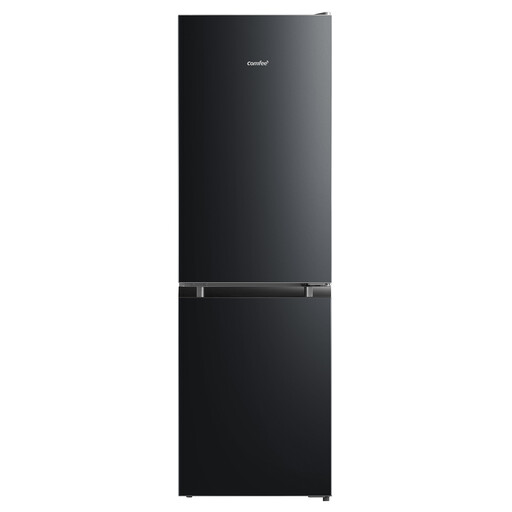 Image unavailable
Worth considering if you prepare moderate quantities and want a freestanding fridge freezer. The title lists a total capacity of 174 L, Low Frost, an adjustable thermostat and a reversible door.
Compare the capacities of both compartments with the portions you prepare, and measure the space before buying. Low Frost doesn’t eliminate the need to defrost.
A fridge freezer is worth considering if you want to keep fresh meals and frozen portions in one appliance. Compare the usable litres in each compartment with the number of containers you usually prepare.
An upright freezer generally makes it easier to organise food in drawers when you often take out small portions; Beko France describes this layout with separate compartments. A chest freezer offers one large compartment, but you’ll need baskets or bins to keep portions within easy reach.
Only consider this location if the room’s ambient temperatures are within the climate class specified for the model. Check the manual and take account of temperatures in both winter and summer.
Compare the energy rating, stated energy consumption, storage capacity and noise level in light of how you plan to use the appliance. The European Commission explains this information on fridge and freezer energy labels; it doesn’t replace checking how much space is available in each compartment.
As recommended by Anses, maintain a temperature of 4 °C in the coldest part of the fridge, following the manufacturer’s instructions. Anses also explains that freezing food at home at -18 °C stops bacteria from multiplying but does not eliminate most micro-organisms.